

Top 5 Interior Design Trends in Singapore for 2026:
HDB and Condo Design Ideas
Your complete guide to the biggest HDB and condominium interior design trends for 2026.
Interior design in Singapore continues to evolve as homeowners place greater emphasis on comfort, functionality, personal style and long-term value. New BTO launches, changing lifestyles and hybrid work arrangements are also influencing how homes are planned and designed.
In 2026, HDB and condominium interior design trends focus on warm minimalism, natural materials, functional layouts, integrated technology and understated luxury.
Whether you are planning a new BTO renovation, upgrading a resale HDB flat or refreshing a condominium, these five interior design themes can help inspire a practical and stylish home.
1. Soft Minimalism: Warm and Understated Luxury
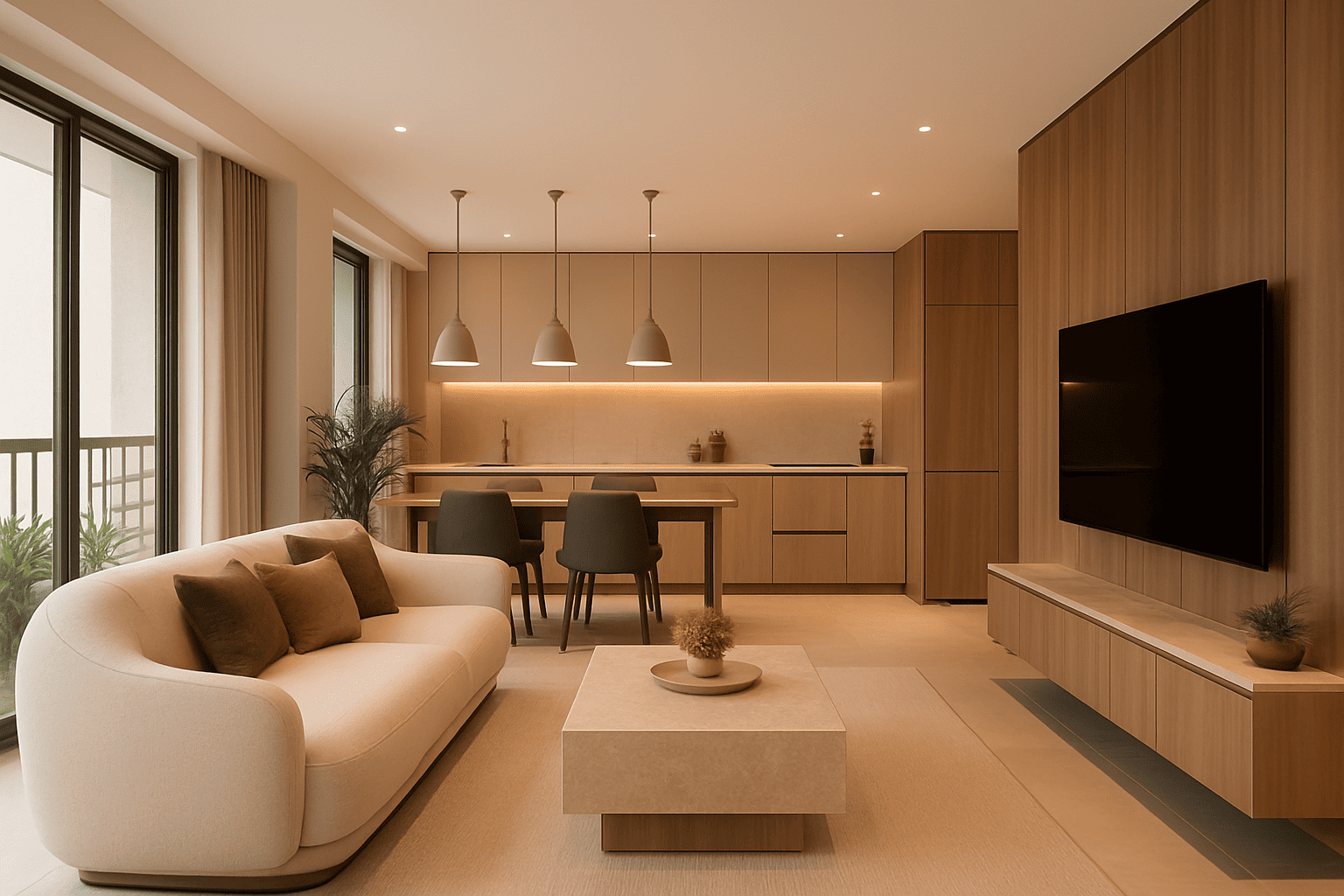
Soft Minimalism remains one of the leading interior design trends in Singapore for 2026. Unlike traditional minimalism, which can sometimes feel cold or sterile, this approach introduces warmth, texture and comfort while maintaining a clean and uncluttered appearance.
Aesthetic Characteristics
Soft Minimalism is based on simplicity with a warmer and more welcoming finish.
- Warm neutral colours such as cream, sand, latte and warm grey
- Curved edges and organic shapes
- Smooth and tactile finishes
- Layered lighting instead of harsh ceiling lights
- Streamlined cabinetry and concealed storage
- Simple but comfortable living room arrangements
This design style can make the home feel calm, refined and luxurious without relying on excessive decorative features.
Suitable Singapore Home Types
Soft Minimalism works particularly well for:
- 3-room HDB flats
- 4-room and 5-room HDB flats
- Older resale flats with limited natural light
- Condominiums with open living and dining layouts
Because many Singapore homes have compact floor plans, Soft Minimalism helps maintain visual openness while providing practical storage and comfortable living spaces.
Practical Benefits
- Easier daily cleaning and maintenance
- Suitable for family homes
- Works with durable and long-lasting materials
- Easy to update with new furniture and accessories
- Creates a timeless interior that is less dependent on short-term trends
Its flexibility and broad appeal make Soft Minimalism a strong choice for homeowners seeking a calm and practical interior.
2. Modern Japandi 2.0: Calm, Comfort and Practicality
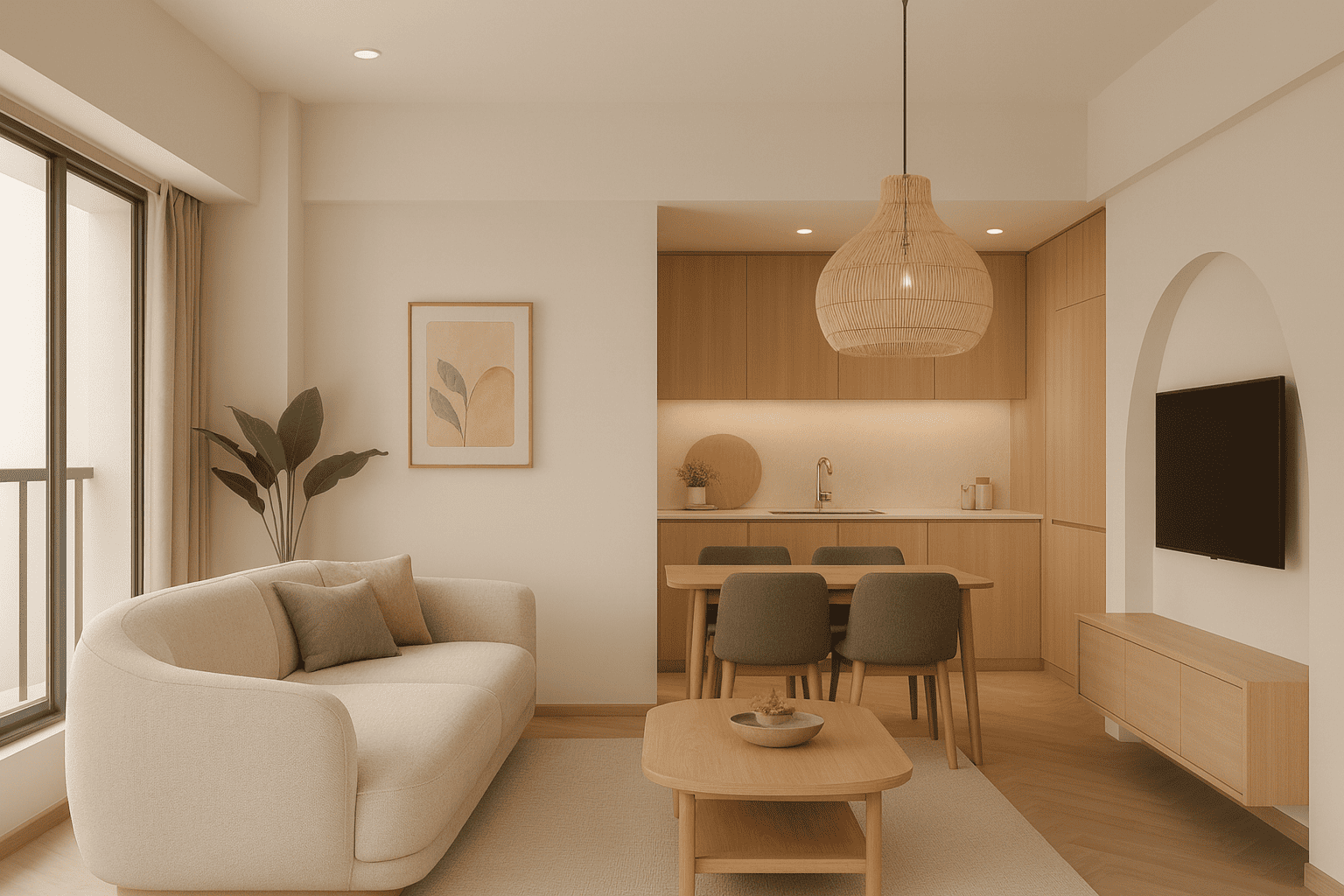
Japandi has been a popular choice among Singapore homeowners for several years. In 2026, the style evolves into a richer and more expressive version often described as Modern Japandi 2.0.
This updated approach retains the simplicity of Japanese design and the warmth of Scandinavian interiors while introducing deeper colours, more natural textures and stronger craftsmanship.
What Is New in Modern Japandi 2.0?
- Earthy colours such as clay, olive and deep brown
- Natural textures including linen, rattan, stone and oak
- Softer and more organic furniture shapes
- A stronger emphasis on craftsmanship and material details
- Low and visually grounded furniture
- A balance between open space and comfortable intimacy
These elements add depth and character while preserving the calm and simplicity associated with Japandi interiors.
Why Japandi Works for Singapore Homes
- Light colours can visually brighten compact rooms
- The style supports practical and integrated storage
- Natural materials create a calm and restful atmosphere
- Breathable fabrics can suit Singapore’s warm climate
- It combines Japanese elegance with Scandinavian warmth
Modern Japandi is suitable for homeowners who want a harmonious home that feels comfortable after a busy day.
Modern Japandi Design Ideas
- Built-in timber or wood-look feature walls
- Light-toned timber flooring or wood-look finishes
- Stone-look or fluted-panel TV feature walls
- Open shelving in warm neutral colours
- Functional dining areas with soft lighting
- Rounded furniture and natural fabrics
Modern Japandi works especially well in BTO and condominium layouts where space, storage and light need to be carefully balanced.
3. Smart Luxury: Technology Meets Modern Sophistication
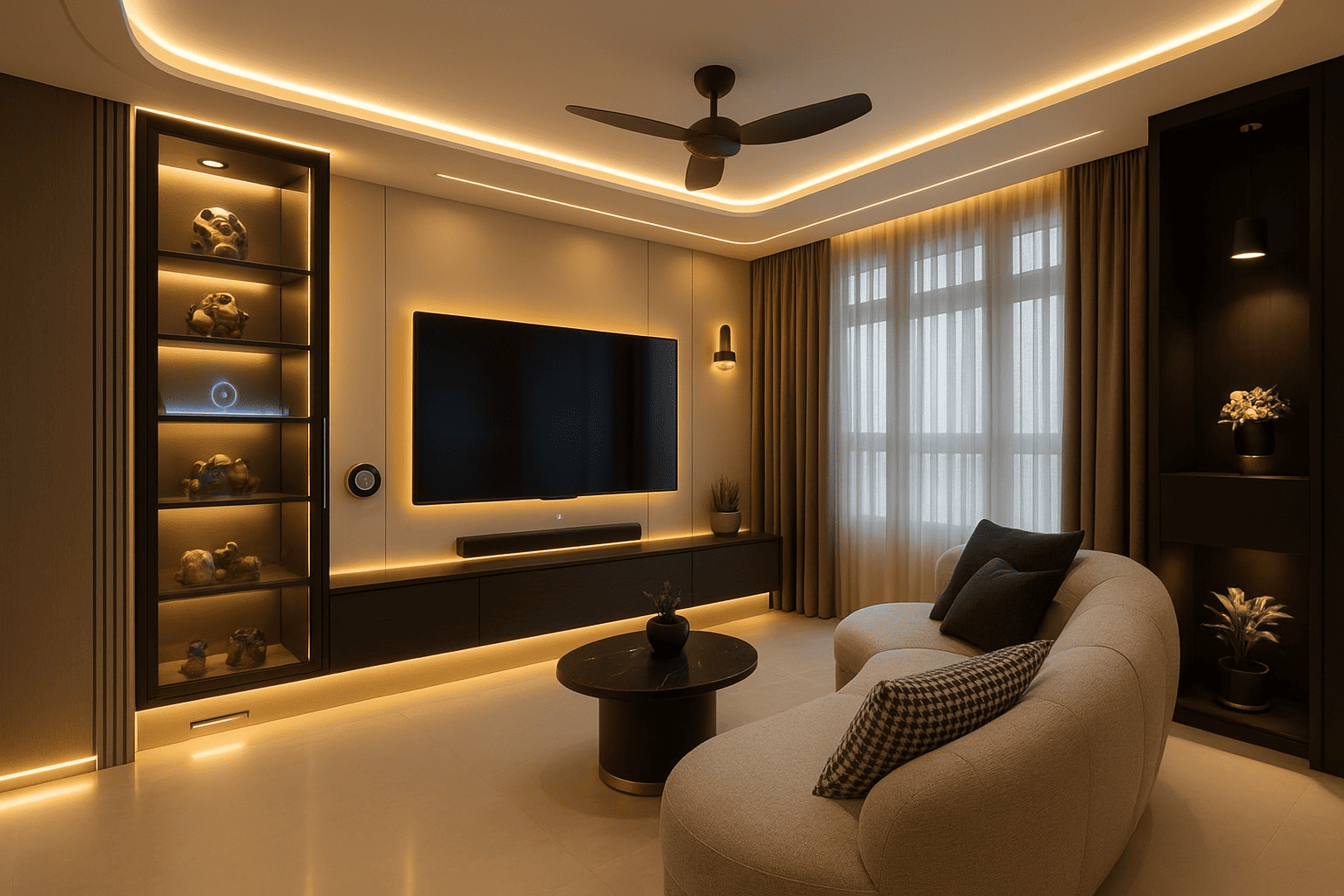
As smart home technology becomes more common, Smart Luxury is becoming an important interior design direction for Singapore homes.
This style is not simply about adding gadgets. It focuses on integrating lighting, appliances, security systems and home automation into the interior without creating visible clutter.
Defining Features
- Smart lighting with adjustable colour temperature and brightness
- Voice-controlled devices and automated blinds
- App-connected air conditioning, door locks and appliances
- Hidden wiring and technology-friendly carpentry
- Clean silhouettes and streamlined finishes
- Matte surfaces with selected metallic accents
- Integrated charging points and cable management
Smart Luxury is suitable for homeowners who value convenience, efficiency and a clean modern appearance.
Suitable Singapore Homes
- Newer condominium units with open layouts
- 4-room and 5-room HDB flats
- New BTO homes with smart home systems
- Homes with work-from-home arrangements
- Family homes that require improved security and convenience
Integrated technology can improve everyday living, particularly in smaller homes where multifunctional spaces and clutter-free surfaces are important.
Why Smart Luxury Is Growing
- Homeowners are investing more in long-term comfort
- Smart home devices have become more accessible
- Work-from-home lifestyles require better lighting and connectivity
- Home security and energy management are becoming more important
- Luxury design is shifting from visual excess to functional refinement
Smart Luxury combines modern technology with practical design, making it suitable for professionals, families and technology-focused homeowners.
4. Biophilic Comfort: A Wellness-Focused Home
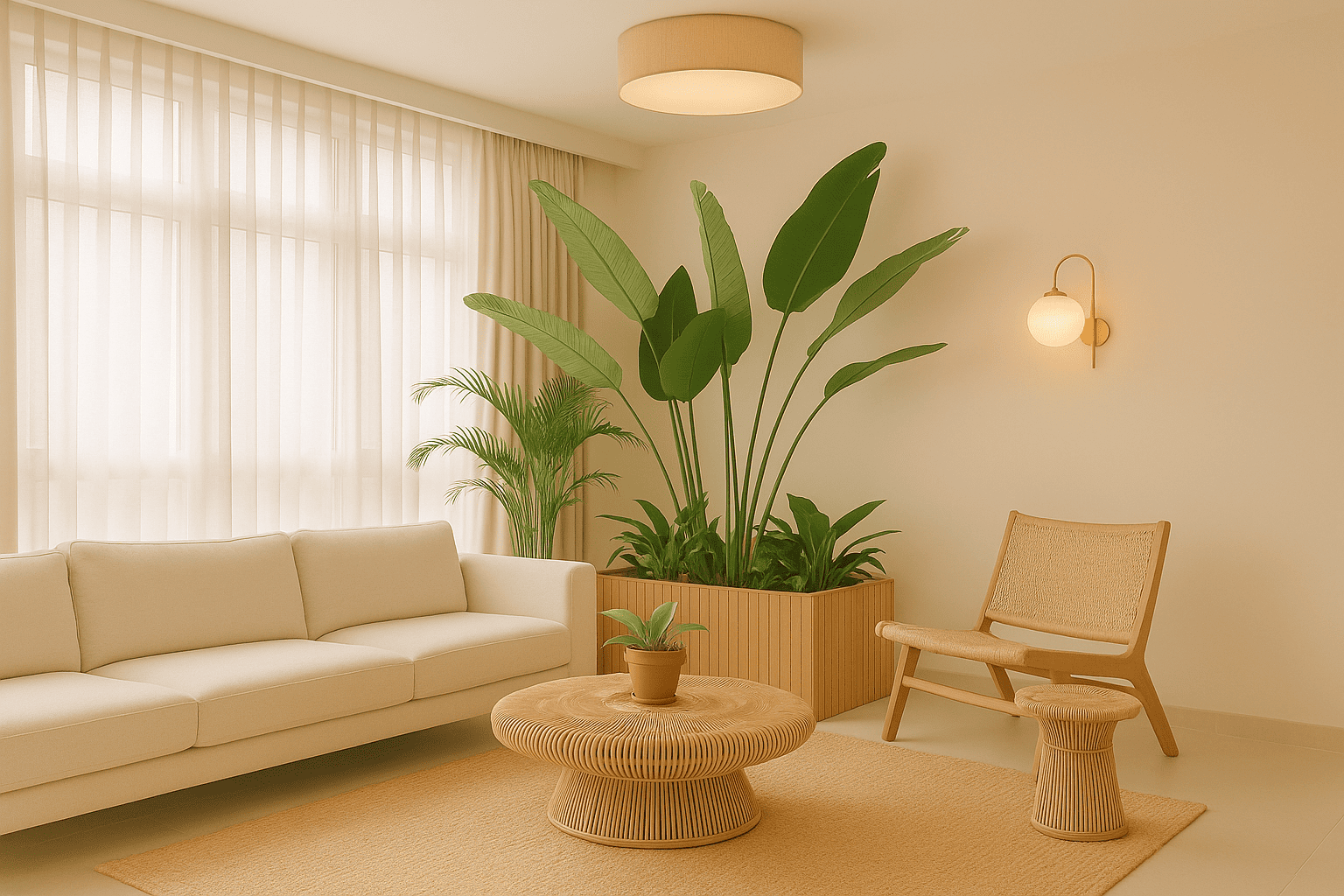
Wellness continues to influence interior design in Singapore. Biophilic Comfort strengthens the connection between the home and nature, which can be especially valuable in a high-density urban environment.
This design theme introduces natural colours, materials, light and greenery to create a more comfortable and restful living space.
Key Design Elements
- Indoor greenery and low-maintenance plants
- Natural stone textures and timber tones
- Earthy and nature-inspired colours
- Soft daylight filtered through sheer curtains
- Rounded and organic shapes
- Layouts that support ventilation and natural airflow
- Natural fabrics such as cotton and linen
The aim is to create a home that supports emotional calm, everyday comfort and a stronger sense of connection with nature.
Why It Works for Singapore Homes
- Natural elements visually soften compact HDB layouts
- The style can blend with existing furniture
- Light colours can enhance natural brightness
- Greenery creates a more restful family environment
- Natural materials support timeless design
- The theme works well with open living and dining layouts
Biophilic Comfort can be introduced gradually through plants, timber finishes, stone-look surfaces and soft natural fabrics without requiring a complete renovation.
5. Texture-on-Texture: Layered Luxury for Modern Homes
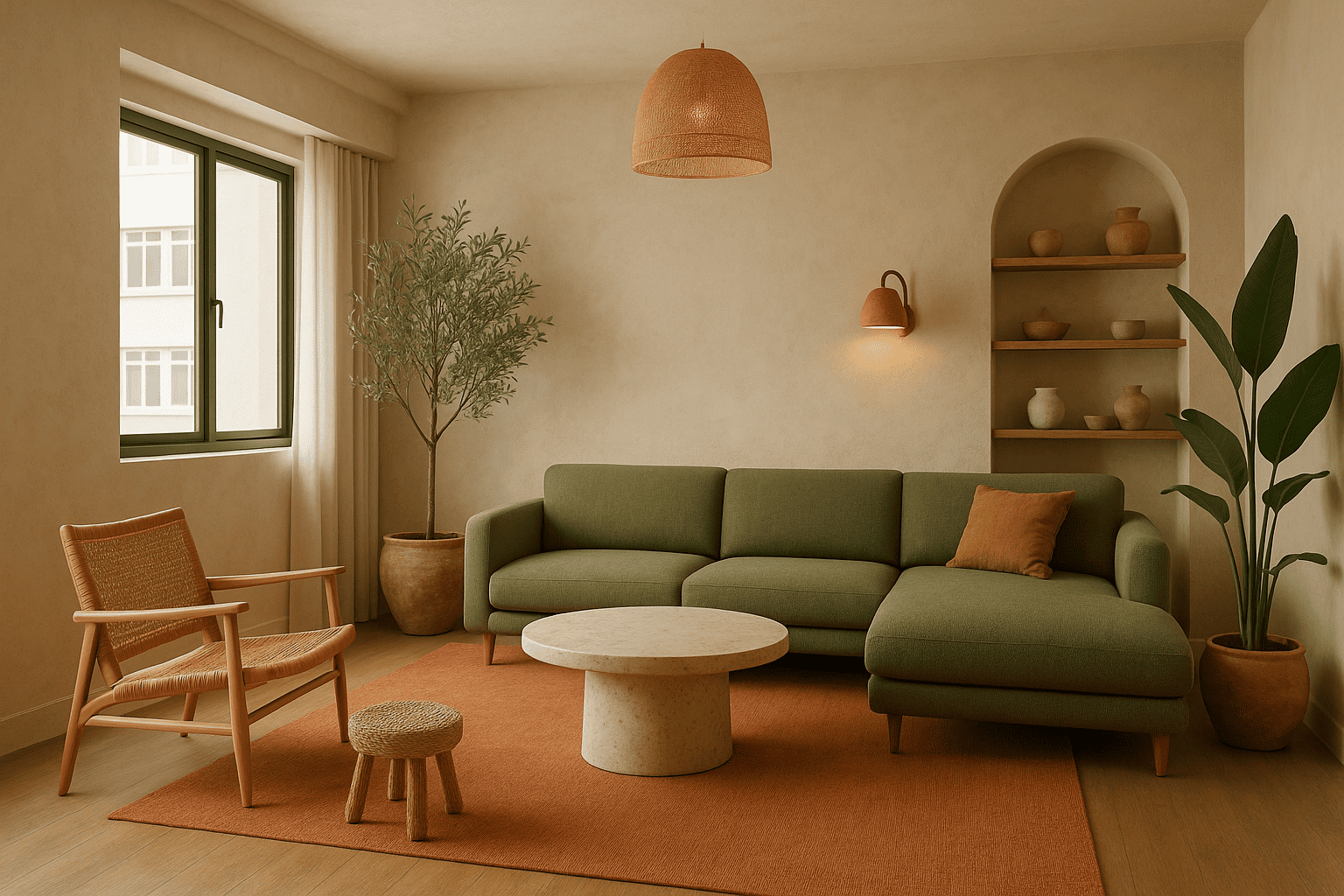
Texture-on-Texture is one of the most visually distinctive interior design trends for 2026. Instead of depending on bold colours, this style combines different surfaces, fabrics and finishes to create depth and visual interest.
The result can feel luxurious and refined while remaining suitable for modern HDB and condominium interiors.
Key Features
- Fluted or ribbed wall panels
- Bouclé, linen or woven furniture fabrics
- Stone-look surfaces and textured wall finishes
- Layered rugs and soft textiles
- Fabric headboards and upholstered feature walls
- Curved statement furniture
- A mixture of matte, smooth and lightly textured materials
The key is to use a consistent colour palette so the textures add depth without making the space feel visually crowded.
Where This Style Works Best
- Living rooms that require a hotel-inspired atmosphere
- Bedrooms where softness and comfort are priorities
- Dining areas that need greater visual interest
- Entrance foyers that create a strong first impression
- Feature walls that need depth without bold colours
Texture-on-Texture is suitable for homeowners who want an expressive interior while maintaining a calm and sophisticated appearance.
How to Choose the Right 2026 Interior Design Theme
Before selecting an interior design theme for your HDB flat or condominium, consider how it will support your daily routines, property layout and long-term preferences.
1. Consider Your Lifestyle
Think about how you and your family use the home.
- Do you require more storage?
- Do you work from home regularly?
- Do you host family members or guests?
- Do you have young children or elderly family members?
- How much time can you spend on maintenance?
2. Consider Your Property Type
A BTO, resale HDB flat and condominium may have different layout limitations, existing finishes and renovation requirements.
Choose a theme that works with the property instead of forcing extensive changes that may increase the renovation cost.
3. Review the Natural Light
Soft Minimalism and Japandi generally benefit from natural light and warm neutral colours. Darker materials may require more careful lighting planning.
4. Think About Maintenance
Textured finishes, open shelving, natural fabrics and smart systems may require different levels of cleaning and maintenance.
Select materials that are suitable for your lifestyle and the conditions of each room.
5. Focus on Long-Term Preferences
Interior design trends will continue to evolve, but your home should reflect your personal taste and remain comfortable over time.
Use trends as inspiration rather than applying every popular feature throughout the home.
How to Combine Different Interior Design Trends
You do not need to follow only one theme. Selected elements from different trends can be combined to create a more personalised home.
For example:
- Combine Soft Minimalism with smart lighting and automated blinds
- Add biophilic plants and natural textures to a Japandi interior
- Use textured fabrics within a neutral minimalist colour palette
- Introduce smart home features into a warm timber-based design
- Add selected metallic details to a simple modern interior
Keep the main colour palette and material direction consistent so the combined design still feels cohesive.
Why Homeowners Choose Crown Interior Design
Crown Interior Design creates personalised HDB and condominium interiors based on each homeowner’s lifestyle, preferences and available space.
HDB and BTO Renovation Experience
Our team plans practical interiors for new BTO flats, resale HDB homes and different HDB layouts across Singapore.
Condominium Interior Design
We help homeowners optimise condominium layouts while working with suitable existing flooring, cabinetry and fittings where possible.
Customised Carpentry
Storage and built-in furniture are planned around the proportions of the home and the homeowner’s practical requirements.
Smart Home and Lighting Planning
Electrical points, lighting, cable management and selected smart home features can be planned together with the interior design.
Thoughtful Space Planning
Layouts are developed to improve movement, storage, comfort and everyday functionality.
Personalised Design Direction
Whether you prefer Soft Minimalism, Modern Japandi, Smart Luxury, Biophilic Comfort or layered contemporary interiors, the design can be tailored around your lifestyle and preferences.
Begin Your 2026 Renovation Journey With Crown Interior Design
From space planning and design development to material selection, customised carpentry and renovation management, Crown Interior Design helps transform homes into practical and meaningful living spaces.
Whether you are renovating a new BTO, upgrading a resale HDB flat or refreshing a condominium, our team can help you develop an interior that balances current design trends with long-term comfort and functionality.
Request a free, no-obligation renovation quotation and begin planning your new home with Crown Interior Design.