
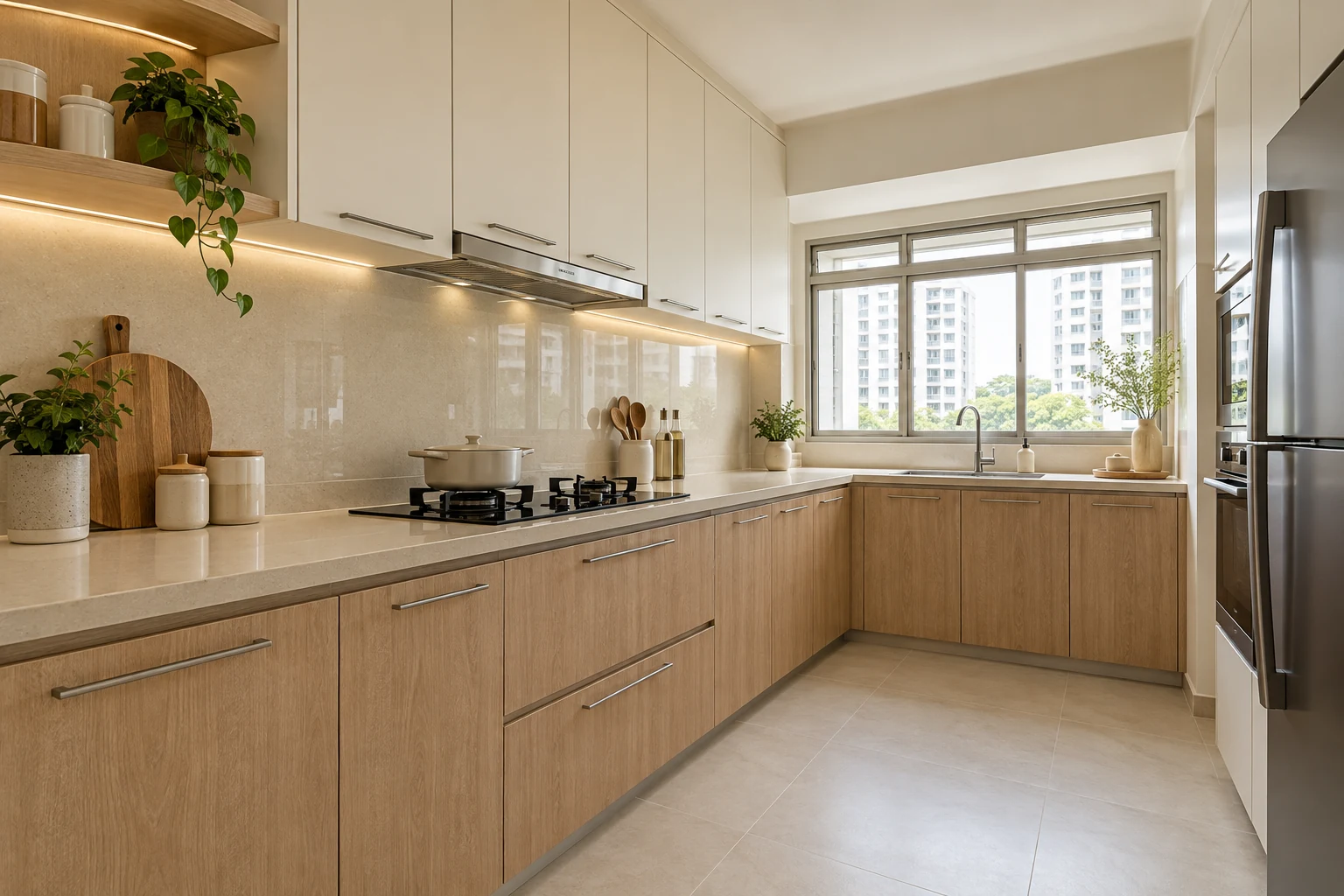
Kitchen cabinet handles affect daily use as much as the appearance of the doors. A slim pull that looks refined in a photograph may be awkward on a heavy drawer or catch another handle at a corner. Handle choice belongs in the cabinet planning stage, before holes are drilled.
For a Singapore kitchen renovation, compare a working sample with the actual door and drawer arrangement. Consider the users, the finish and the movement of neighbouring appliances together.
1. Test the actual grip
Try the shortlisted handle with dry and damp hands and with the users who will operate it. Review finger space, edges and opening effort. A small knob and a long pull can produce different experiences on the same drawer. Appearance alone cannot establish whether a handle is comfortable for the household.
2. Match handles to cabinet movement
Compare tall doors, broad drawers and smaller cupboards separately. The handle position should make the chosen movement manageable without encouraging awkward pulling. Ask the fabricator to demonstrate the intended arrangement. Where the design mixes mechanisms, coordinate the visual line without insisting on one handle size for every function.
3. Check corner and appliance conflicts
Mark the handles on the plan with adjacent doors open. Review the fridge, dishwasher and cabinet corners. Protruding fittings can meet another surface before the door reaches its useful position. Resolve this with the cabinet and appliance drawings rather than discovering the conflict after installation.
4. Compare cleaning demands
Look at joints, grooves and the areas behind the pull. Consider how the household will wipe the fronts and handle surfaces. No finish is universally maintenance-free. Ask the supplier for the selected product’s cleaning instructions, and avoid choosing solely from labels such as fingerprint resistant without checking the actual surface.
5. Review the finish in context
Place a physical sample beside the cabinet, tap and nearby fittings. Similar metallic colour names can describe visibly different finishes. Decide whether the handles should blend in or form an intentional contrast. Judge the combination under the planned lighting rather than requiring an exact match based on separate screen images.
6. Confirm fixing and replacement details
Record the selected model and fixing arrangement before fabrication. Ask how the handle is secured and replaced, including any limitations created by the chosen panel. Once fronts are drilled, changing to a different fixing pattern can leave visible consequences. Keep a spare or a replacement plan where the supplier recommends it.
7. Price the complete handle schedule
Count the fittings by size and finish and identify installation responsibilities. Compare the handle option with a properly specified handleless alternative, including its opening mechanism. An attractive unit price does not describe the full kitchen. Approve the schedule with the cabinet drawings so ordering and drilling follow the same decision.
Compare the options
| Option | Useful when | Resolve first |
|---|---|---|
| Knobs | A compact fitting suits the opening task | Grip and fixing |
| Pull handles | A defined grip is preferred | Projection and corner conflicts |
| Handleless system | The complete mechanism suits the users | Opening effort and internal details |
A practical planning example
An illustrative household selects identical long pulls for every cabinet. A corner drawing shows two pulls colliding, while a small overhead door would be awkward to grip. Revising the schedule by cabinet function can keep a consistent appearance with better operation. This is a planning example, not a completed Crown Interior Design kitchen.
Frequently asked questions
Should all handles be the same size?
Not necessarily. Coordinate their appearance while considering each cabinet’s operation.
Can I choose them after fabrication?
Choose before the fronts are drilled and confirm the fixing pattern.
Are handleless cabinets always easier?
Compare the actual opening mechanism and user experience rather than the label.
Related planning: Kitchen Cabinet Design Singapore: Layout & Storage Guide · Handleless Kitchen Cabinets: 7 Singapore Checks · Kitchen Drawers vs Cupboards: 6 Storage Decisions.
Explore the related decision in Matte vs Gloss Cabinets: 7 Singapore Finish Checks.
Plan your project with Crown Interior Design
Send your floor plan, photographs, intended use and budget priorities. Explore Crown Interior Design’s services and residential projects, then request a tailored quotation. Confirm the scope and any specialist involvement for your actual premises.