
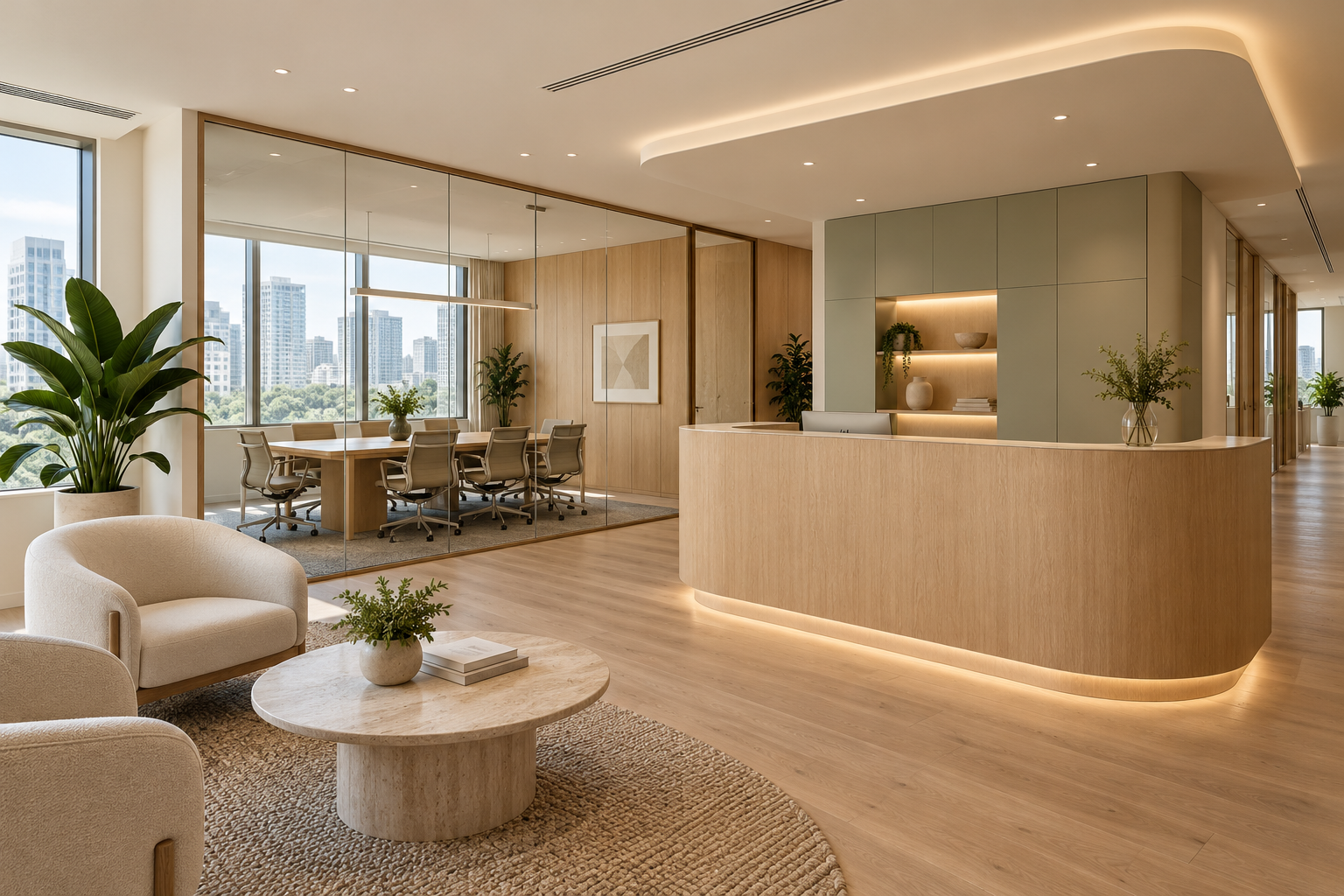
Searching for award-winning office interior design in Singapore can be a useful way to discover design teams. Before shortlisting a firm, find out what the award recognises and whether the project behind it is relevant to your workplace.
An office brief needs more than an attractive reception. It should describe how staff work, how visitors arrive and which decisions will help the space operate comfortably. This guide connects award research with the practical information needed for a useful design consultation.
What does an interior design award recognise?
Read the organiser’s description of the award, category and judging criteria. Recognition may relate to a completed project, a concept, an individual designer or a business. These are different pieces of evidence.
Record the award name, year, category, result, recognised project and credited company or designer. Where available, check the organiser’s listing rather than relying only on an advertising badge. A shortlist, commendation and category win should be described accurately.
- What was the exact category?
- Was the recognised work an office, home or another space type?
- Was the entry a completed installation or a design concept?
- Which team and project were credited?
- Which qualities did the judging criteria assess?
Use the answers to understand the recognition. Accreditation, customer ratings and design awards also provide different information; a logo collection should not blur them together.
Turn the recognised project into questions for your office
If an award entry highlights flexible planning, ask how that flexibility works in daily use. If it highlights material detailing, review completed photographs and discuss the specified products. If it highlights environmental performance, request the relevant evidence and scope.
A recognised project may have a different budget, headcount or building context from yours. Ask the designer to explain which principles transfer and which would need to change. This is more useful than requesting a replica of the photographed office.
Reception and visitor experience
Describe how visitors check in, wait and reach meeting rooms. Review the proposed reception against visitor numbers, staff responsibilities and storage needs. A curved counter can express a welcoming design language, but its size and fittings should follow the actual workflow.
Focused work and collaboration
List the activities that need quiet, privacy or discussion. Identify when people use meeting rooms and where informal conversations occur. Ask how the plan handles competing activities rather than judging it by desk count alone.
Storage and support areas
Account for documents, equipment, deliveries and pantry use. Review how these needs affect circulation and cabinetry. Hidden storage is useful only when the contents fit and remain accessible.
Our office interior design guide provides a broader workplace planning framework.
Review evidence beyond the hero photograph
Look at several views of the completed space and, where appropriate, request a walkthrough or explanation of the layout. Ask which images show actual work and which are renderings. An award submission’s concept visuals do not establish the quality of every finished installation.
Discuss the details relevant to your project: joinery, material junctions, lighting integration and equipment access. Ask how selected finishes are cleaned and maintained, and what documentation accompanies them.
For Crown Interior Design’s completed commercial references, browse the commercial portfolio. Treat the projects as evidence of the scope shown; this guide does not identify them as award recipients.
Prepare a workplace brief that can be priced
Bring the floor plan, existing photographs, headcount, room requirements and intended timing. Explain the working pattern and whether the office must allow for growth. Include landlord or building-management renovation information if available.
- Current and planned headcount, with seating requirements.
- Meeting, private-call and collaboration needs.
- Visitor arrangements and brand preferences.
- Equipment, power, data and storage requirements for assessment.
- Retained furniture and finishes.
- Budget expectations, access and occupancy constraints.
If staff will remain on site, discuss feasibility and phasing before committing. Obtain a programme based on the actual work and required coordination rather than assuming an impressive portfolio guarantees a particular completion date.
Compare the proposed deliverables
Ask what the design appointment includes: consultation, space planning, drawings, visualisation, material selection and coordination. Confirm who manages each stage and which specialist input or approvals may be required.
Awards can help you investigate a team, but your contract defines the project you are buying. Compare scope, quantities and specifications across proposals. Identify furniture, equipment and other owner-supplied items separately.
Confirm exclusions, GST where applicable, payment milestones and the process for written changes. Our quotation comparison guide explains how to examine a proposal beyond its total.
Use your design budget deliberately
Rank the problems the office needs to solve. Improving meeting-room usability or storage may deserve attention before a decorative feature. Ask the designer to identify essentials and optional details so choices remain visible.
The warm palette shown in the featured concept can be discussed through wood tones, cream surfaces and selected curves. Review samples, suitability and maintenance for the actual products. A design style does not determine a project’s cost or performance.
For the physical works and programme, see our office renovation guide. For a wider firm-selection checklist, use the commercial interior design company guide.
Frequently asked questions
Does an award guarantee that an office design will suit my business?
No. Review the recognised work and assess the proposed solution against your activities, building conditions, budget and scope. Ask how the design team will respond to those requirements.
Should I compare residential awards with office awards?
They may demonstrate different design capabilities. Identify the category and recognised work, then request relevant workplace evidence for your appointment.
How do I verify an award claim?
Ask for the exact organiser, year, category, result and credited recipient or project. Check the organiser’s listing or supporting certificate where available and distinguish a concept entry from completed work.
What if the award details are not available?
Request clarification and evaluate the completed portfolio, proposed scope and project team independently. Do not treat an unspecified badge as proof of a particular result.
Discuss your workplace with Crown Interior Design
Crown Interior Design provides commercial interior design and renovation services for offices and other business spaces. Share your floor plan, working requirements and budget to discuss a proposal for your workplace.
Request an office design quotation from Crown Interior Design. Include your priorities and any design references so the consultation connects the visual direction with practical needs.