
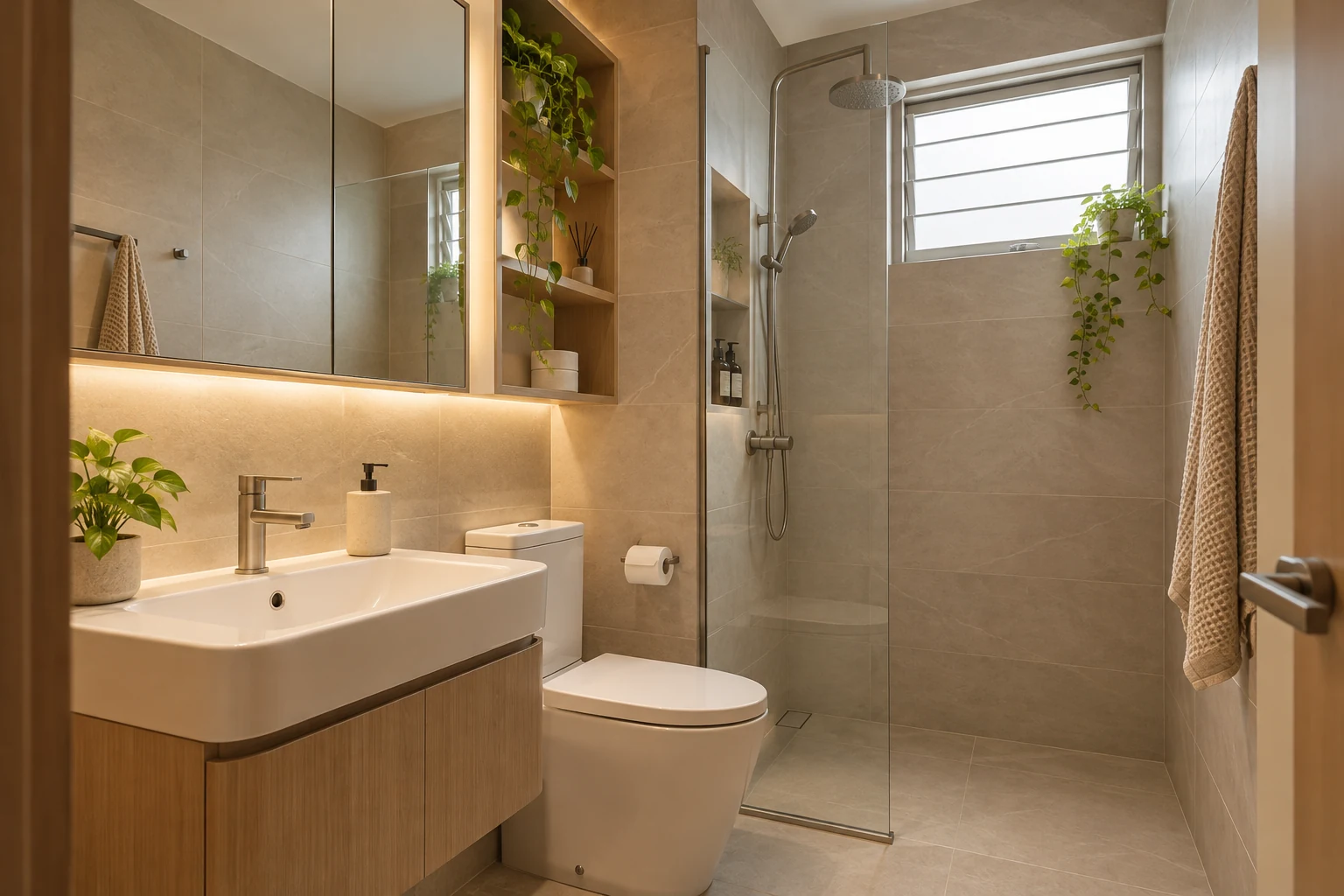
A bathroom mirror cabinet combines two functions that can conflict: a clear reflection at the basin and accessible storage above it. A deeper cabinet may hold more, yet project awkwardly over the basin or place the mirror too far forward.
For a Singapore HDB or condominium bathroom, review the cabinet, basin, tap and lighting together. This guide focuses on mirrored wall storage; the separate vanity guide covers the lower cabinet and basin arrangement.
1. Decide what belongs behind the mirror
List daily toiletries and medicine or personal items that need appropriate storage, then check their product instructions. A bathroom is not automatically the right location for every item. Measure tall bottles and consider whether smaller objects need trays or dividers. Keep the cabinet’s role realistic rather than filling every wall gap with storage that is difficult to reach or maintain.
2. Check the mirror with the actual users
Review the seated or standing positions of the people using the basin. A cabinet placed for one person may provide an awkward reflection for another. Check the view under the intended lighting and the relationship with the tap and basin edge. If the cabinet has several mirrored leaves, look at the divisions in the normal viewing position rather than assessing the closed elevation alone.
3. Test projection and door movement
Show the doors open and consider the head and hand movements around the basin. Check clashes with an adjacent wall, shower screen, lighting or another cabinet. Ask for the usable internal depth after the door assembly is allowed for. A shallow cabinet can suit daily items without the same projection as a deep unit, but the actual contents and room determine the right compromise.
4. Specify materials for the actual exposure
Explain where water splashes, steam and cleaning are likely. Ask for the selected cabinet and mirror product information, edge treatment and fixing details. Moisture-resistant wording does not mean an assembly can ignore persistent leaks or unsuitable use. Investigate existing dampness before enclosing the wall and follow the product’s care instructions. Do not assume every mirrored cabinet tolerates the same conditions.
5. Coordinate lighting and electrical interfaces
Review how the face is lit and whether cabinet edges cast shadows. If lighting, demisting or other powered features are proposed, identify the actual product and maintenance access. Electrical work belongs within the appropriate licensed scope and must suit the bathroom conditions. Do not improvise sockets or concealed wiring based on a furniture image. Ask the relevant professional to confirm the arrangement before fabrication.
6. Plan installation and later maintenance
Confirm wall suitability and the proposed support through the installer. Ask how hinges, shelves, lighting components and the mirror can be serviced or replaced. Keep access to any relevant existing services. At installation review, operate the doors, check alignment and compare shelves with the approved internal arrangement. A mirror that looks straight in a photograph is not the whole acceptance check.
Compare the practical options
| Option | Useful when | Resolve before approval |
|---|---|---|
| Plain mirror with separate storage | The basin area needs minimal projection | Where daily items will go |
| Shallow mirror cabinet | A modest amount of accessible storage is useful | Bottle sizes and door movement |
| Larger integrated unit | The room and actual contents justify it | Projection, fixing and servicing |
A planning example
A household chooses a deep mirrored cabinet to hold large bottles. Reviewing it over the actual basin shows uncomfortable projection. Moving bulky supplies elsewhere may allow a shallower cabinet for daily items and a more comfortable mirror position. The right answer follows the whole bathroom, not storage volume alone. This is a planning example, not an installed Crown Interior Design bathroom or a technical installation specification.
Frequently asked questions
Can a mirror cabinet replace all bathroom storage?
It may suit daily items, but bulky supplies and products with specific storage instructions may belong elsewhere.
Are mirrored doors maintenance free?
No. Follow the selected product’s cleaning and care instructions, including edges, hardware and powered components where present.
Can it be added to an existing bathroom?
An installer needs to assess the wall, services, clearance and suitable fixing. Do not assume every wall or existing finish can accept the same unit.
Related planning: 7 Bathroom Vanity Checks for Singapore HDB Homes · HDB Toilet Renovation Singapore: Cost & Planning Guide.
References
Explore the related decision in Renovation Material Selection: 6 Sample Approval Checks.
Discuss your project with Crown Interior Design
Send your floor plan, current photographs, intended use, timing and spending priorities. Explore Crown Interior Design’s services and residential projects, then request a tailored quotation. Confirm the proposed scope and any specialist involvement for your actual premises.