
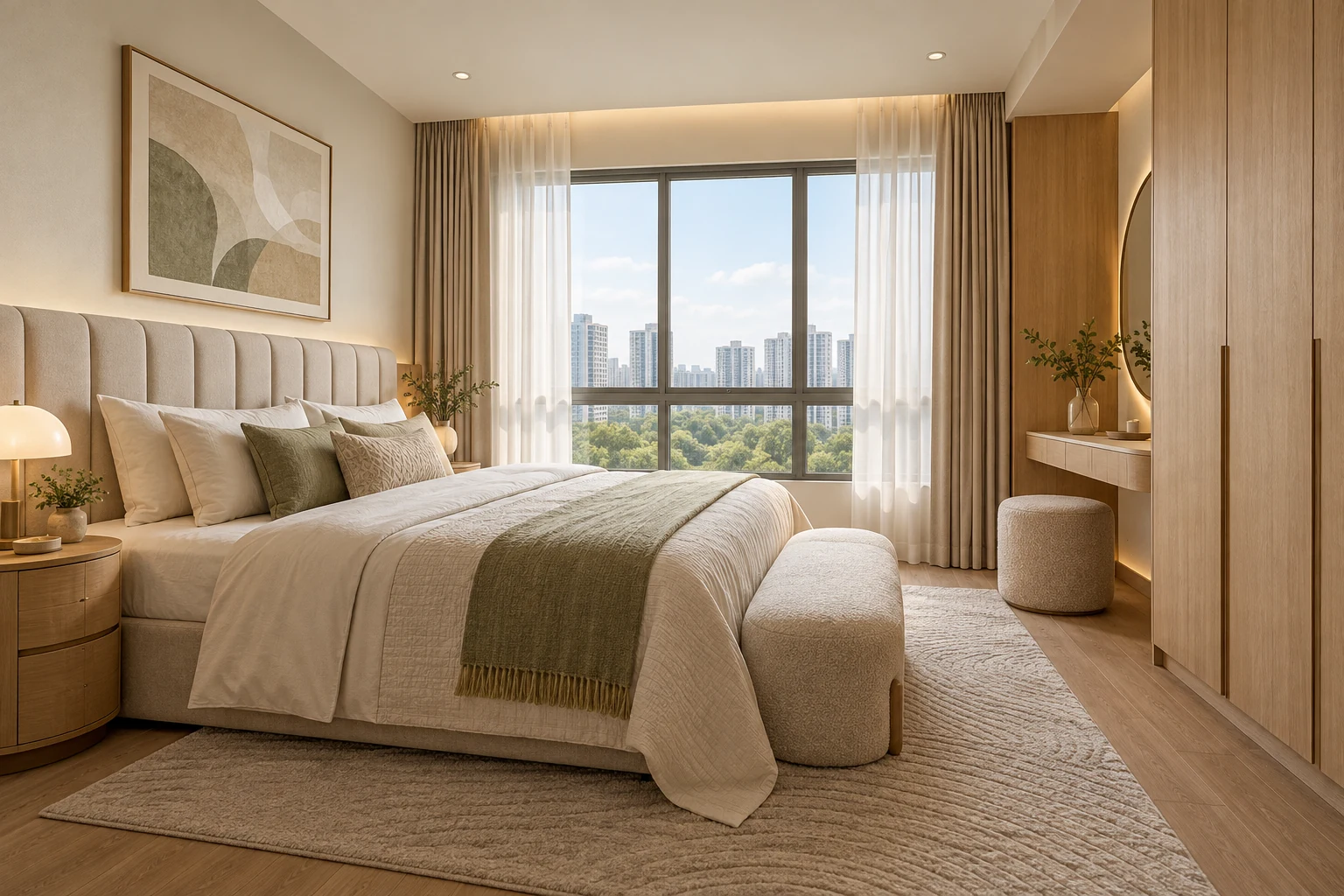
A quieter bedroom starts with identifying where unwanted sound comes from. Traffic through a window, voices through an opening and vibration from equipment are different problems. Decorative acoustic-looking panels do not provide a universal solution.
For a Singapore renovation, separate sound absorption inside the room from reducing sound transmission into it. Have demanding performance needs assessed by an appropriate specialist before committing to construction or expensive finishes.
1. Document the actual disturbance
Record the source, time and room conditions when the problem occurs. Note whether windows and doors are open or closed and whether equipment is operating. This information gives the appointed team a more useful brief than a general request for soundproofing. Avoid ordering materials before the likely paths have been considered.
2. Separate absorption from isolation
Soft finishes can affect the way sound behaves inside a room, but that is different from stopping transmission through an assembly. Ask what a proposed treatment is intended to do. An acoustic label alone does not establish that it addresses the actual problem or produces a particular result in the installed bedroom.
3. Review openings and junctions
Have the appropriate parties assess doors, windows and relevant construction interfaces. Sound may bypass a treatment through another path. Do not alter required ventilation or building elements simply to close a visible gap. Applicable requirements and the complete assembly must guide any proposal for changing an opening.
4. Coordinate the bedroom layout
Consider the bed position relative to identified disturbances and equipment. Test whether a different furniture arrangement helps the routine without excessive fixed work. A storage wall should not be presented as a certified acoustic barrier unless the actual performance is established. Keep the interior planning role distinct from specialist acoustic design.
5. Choose soft finishes for defined reasons
Compare curtains, rugs and upholstery for their intended room function, care and contribution to comfort. Avoid assigning invented noise-reduction figures to decorative choices. Where a measured performance target matters, ask for suitable evidence and specialist advice. A more layered room may feel different without resolving external transmission.
6. Assess equipment and installation
Tell the appointed team about mechanical noise or vibration. Have the relevant equipment professional assess installation, maintenance or defects before concealing the area. A decorative enclosure can create access and operating problems if designed without the equipment requirements. Do not substitute more finishes for appropriate diagnosis.
7. Specify expectations and verification
State the actual goal in the brief and identify which results require specialist design or testing. Compare the complete assemblies and responsibilities in quotations. Retain specifications and access information. For demanding needs, agree how the outcome will be assessed rather than accepting a broad soundproof guarantee without defined conditions.
Compare the options
| Option | Useful when | Resolve first |
|---|---|---|
| Furniture and soft finishes | Internal comfort and layout are the goal | No assumed isolation rating |
| Opening or assembly work | An assessed transmission path is addressed | Complete specification and requirements |
| Specialist acoustic design | A demanding performance target exists | Defined testing and responsibilities |
A practical planning example
An illustrative household adds decorative panels to address road noise. Reviewing the source and openings first may identify a different assessment path. The panels might serve an interior purpose without solving that disturbance. This is a planning example, not a completed Crown Interior Design project or a guaranteed acoustic result.
Frequently asked questions
Are acoustic-looking panels soundproof?
Their appearance does not establish isolation performance for the actual problem.
Will thick curtains stop all outside noise?
Do not assume that; assess the source, openings and complete room.
When is specialist input useful?
When the source is unclear or a defined performance outcome is important.
Related planning: HDB Master Bedroom Design: Layout & Renovation Guide · Office Acoustic Design: 7 Singapore Fit-Out Decisions.
References
Explore the related decision in Bedroom Doors: 7 Singapore Renovation Buying Checks.
Plan your project with Crown Interior Design
Send your floor plan, photographs, intended use and budget priorities. Explore Crown Interior Design’s services and residential projects, then request a tailored quotation. Confirm the scope and any specialist involvement for your actual premises.