
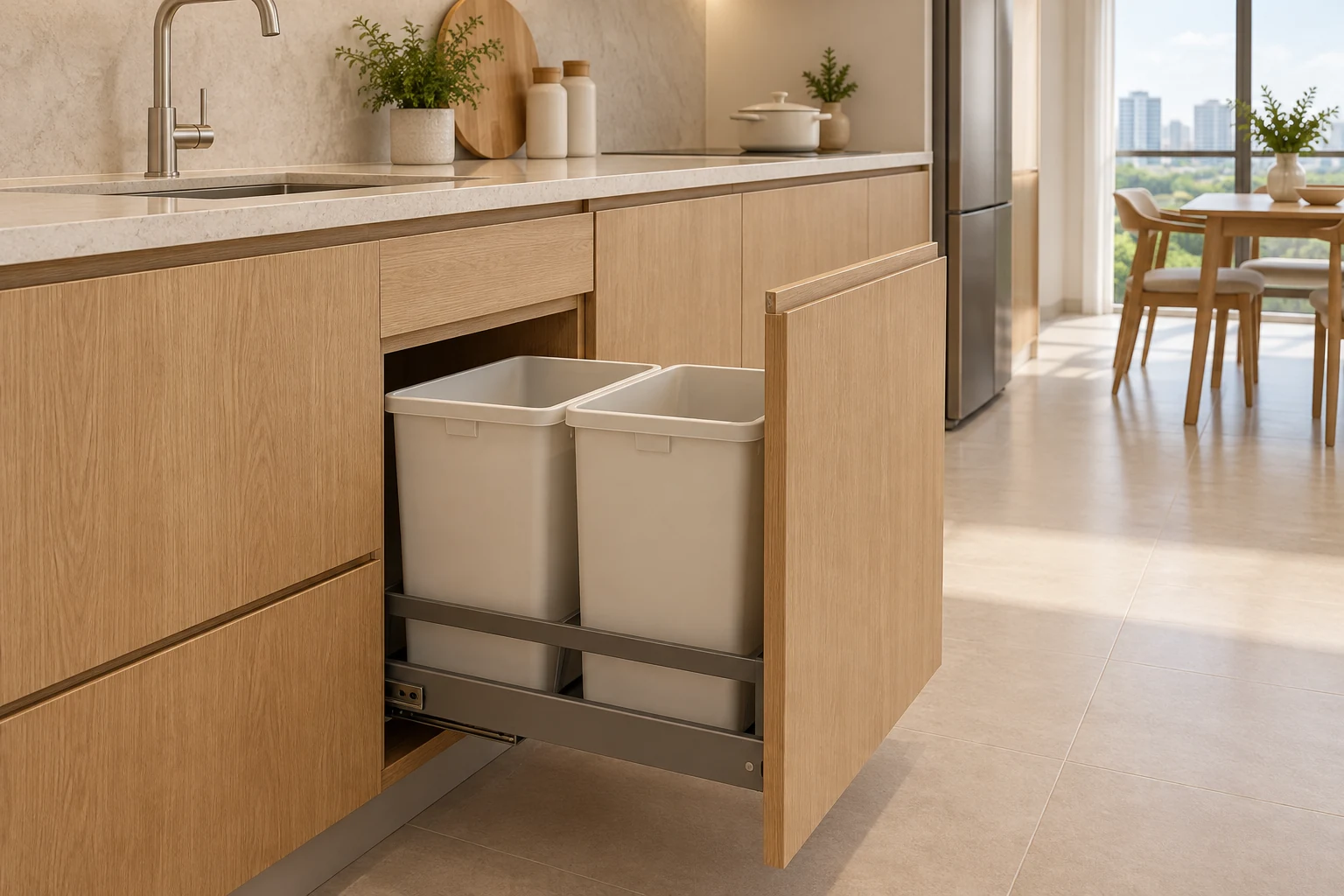
Pull-out kitchen bins can keep waste storage organised, but the cabinet needs to suit both the bins and the person using them. A hidden system is inconvenient if it blocks preparation or requires an awkward reach every time.
Plan it with the sink, preparation counter and actual waste routine. Compare useful capacity, removable containers and complete hardware rather than choosing from an external cabinet width.
1. Separate the waste streams
List the household’s actual disposal and recycling routine. Decide how frequently containers are emptied and what must remain separate. Avoid adding compartments simply because a system offers them. Compare usable volume with the space available, and consider how full containers will be lifted out rather than their empty appearance.
2. Place the bin near the task
Review where food is prepared and dishes are cleared. Check whether opening the bin interferes with the sink user or a main route. A convenient position is one that works during the busiest routine. Test the cabinet open on the plan alongside drawers and appliances used at the same time.
3. Check the available cabinet interior
Use the actual hardware requirements after allowing for hinges, rails and any services. A nominal cabinet width is not the same as a clear installation opening. If the bin sits under a sink, coordinate the bowl and connections explicitly. Have the fabricator confirm the complete arrangement before ordering the mechanism.
4. Test opening effort and control
Try the proposed system where possible, including its opening and closing action. Consider who will use it and how the front is gripped. Hands-free features have their own equipment and operating requirements. Do not assume a powered or assisted option is automatically better than a straightforward accessible pull-out.
5. Make removal and cleaning possible
Ask how each container lifts out and how the surrounding cabinet is cleaned. Check lids, liners and reachable corners. Spills can occur even in a well-designed arrangement. Follow product care guidance and choose surfaces appropriately; hiding the bins should not make routine cleaning more difficult than a visible alternative.
6. Plan replacement parts
Record the mechanism and container models, not just the description premium bin system. Ask which components are replaceable and whether the cabinet permits removal for servicing. A specialised container can become inconvenient if a replacement cannot be sourced. Retain dimensions and supplier information with the cabinet documentation.
7. Compare the whole storage trade-off
Evaluate the bin cabinet against the drawers or shelves it replaces. Price the mechanism, containers, front and installation together. A freestanding bin may be a sensible option if the fitted version sacrifices more useful storage. Approve the choice against the working kitchen layout rather than treating concealment as the sole objective.
Compare the options
| Option | Useful when | Resolve first |
|---|---|---|
| Freestanding bin | Flexibility and easy replacement matter | Position and cleaning route |
| Cabinet pull-out | A measured compartment suits the routine | Usable volume and removal |
| Multiple containers | Separation is actively used | Emptying and cleaning each container |
A practical planning example
An illustrative family proposes a multi-bin drawer beneath the sink. Reviewing the real plumbing leaves too little useful space for the selected system. A separate adjacent cabinet or an accessible freestanding option may serve the routine better. This is an example of coordination, not a completed Crown Interior Design project.
Frequently asked questions
Can bins go under every sink?
Only if the actual bowl, services and hardware leave sufficient usable space.
Are more compartments better?
Choose them to match an actual separation and emptying routine.
What should the quotation name?
The hardware, containers, cabinet front, installation and relevant limitations.
Related planning: Kitchen Cabinet Design Singapore: Layout & Storage Guide · Under-Sink Cabinets: 6 Singapore Kitchen Design Checks · Kitchen Drawers vs Cupboards: 6 Storage Decisions.
Explore the related decision in Kitchen Sink Layouts: 7 Singapore Renovation Decisions.
Plan your project with Crown Interior Design
Send your floor plan, photographs, intended use and budget priorities. Explore Crown Interior Design’s services and residential projects, then request a tailored quotation. Confirm the scope and any specialist involvement for your actual premises.