
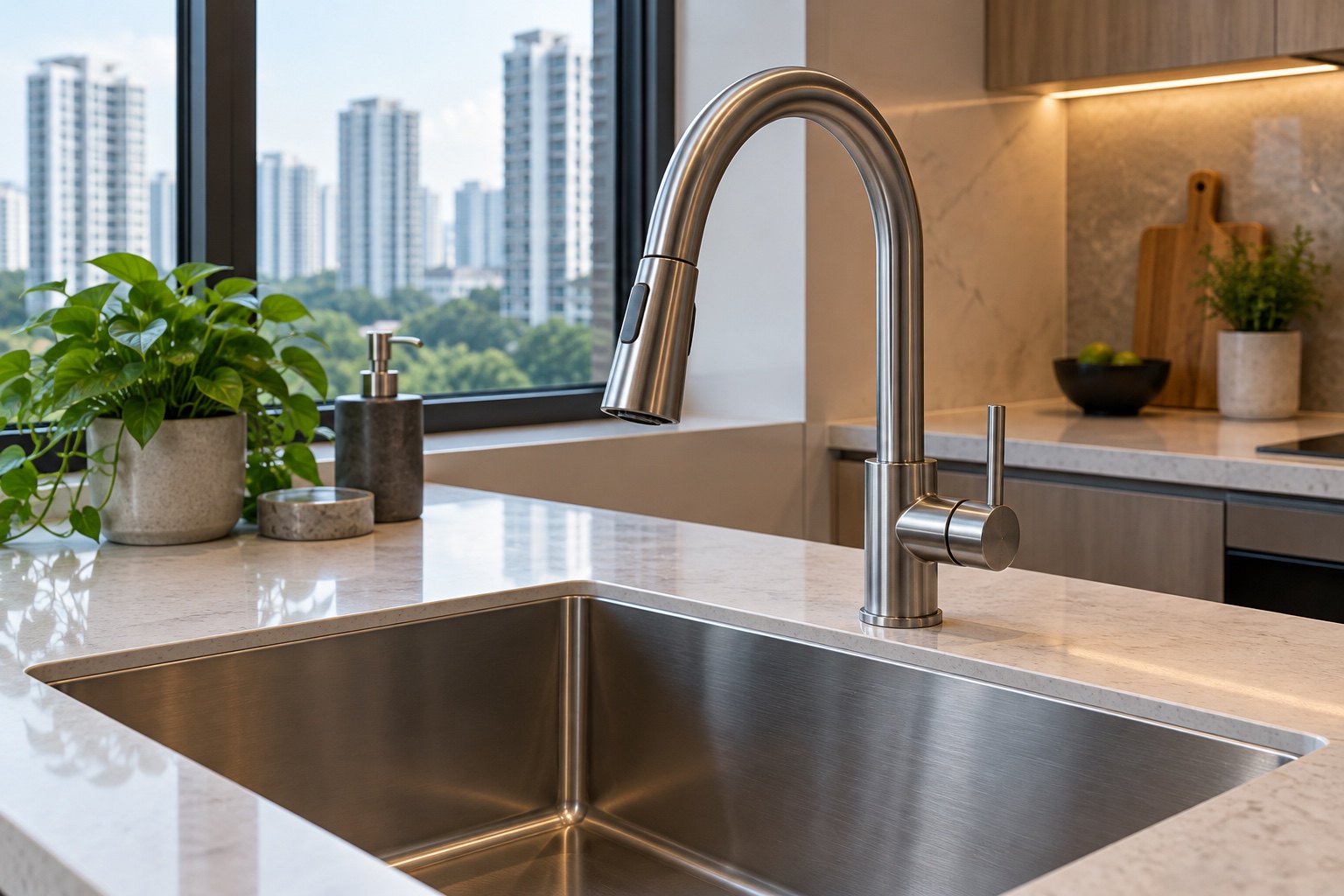
A pull-out kitchen tap is useful when its extra reach helps with real washing tasks and the hose can move freely below the sink. The tap should be chosen with the bowl, worktop and cabinet interior. Focus on fit and everyday operation before deciding on a finish; a large display tap can behave differently in a compact HDB kitchen.
Featured image: AI-generated design concept; not a completed Crown project or an approved technical drawing.
1. Decide what the extra reach will do
List the tasks that a fixed spout makes awkward: rinsing the bowl corners, filling a large pot or washing bulky cookware. Try a relevant display model with those movements in mind. If the hose adds little to your routine, a simpler tap may meet the brief.
The useful comparison is between tasks completed comfortably, not the number of spray modes advertised.
2. Check the mounting surface and hole
Confirm the chosen tap's installation requirements, including the mounting hole, surface thickness and reinforcement where specified. A thin sink deck and a solid worktop are different mounting situations. Ask the supplier and installer to confirm the combination.
Do not enlarge a hole or order an accessory plate before the retained surface and fixing detail have been assessed.
Check the relationship between tap reach and bowl position with Kitchen Sink Layouts: 7 Singapore Renovation Decisions.
3. Draw the hose movement below the sink
Show the bowl, trap, filters, valves, bin and shelf positions inside the cabinet. Ask the installer how the selected hose and retraction arrangement move in that space. Check for snagging through the full operating range.
A cabinet that looks empty on an elevation may contain enough services to obstruct the hose once everything is installed.
4. Test the spout and handle clearances
Operate the handle and swivel the spout alongside the actual backsplash, window and upper cabinetry. Include the open window position where relevant. A tall tap may clear a large pot yet collide with a window handle.
Record the required movement on the drawing so the fabricator does not position the hole solely by visual symmetry.
For the hose, weight and storage conflicts below the bowl, read Under-Sink Cabinets: 6 Singapore Kitchen Design Checks.
5. Match reach and spray to the basin
Check where the water lands in the selected bowl and how the spray behaves at ordinary use. A high outlet does not automatically create a better working arrangement. Ask the supplier about the product's intended pressure and installation conditions.
Avoid buying a powerful-looking head to compensate for a supply or compatibility issue that has not been assessed.
6. Review Singapore product information
Check the exact model and its applicable WELS registration, rather than relying on a label for a similar tap. PUB advises consumers to look for WELS labels when purchasing covered fittings. Keep the model information with the quotation.
A finish name or generic import description is insufficient when you need replacement components later.
Include access for the fixing and replacement parts in the cabinetry brief; see 10 Kitchen Cabinet Design Decisions Before Fabrication.
7. Check maintenance and spare-part access
Ask how the hose, spray head and cartridge can be serviced and which parts are available. Look at the care instructions for the exact finish. Keep isolation and fixing points accessible inside the cabinet.
A concealed installation should not require dismantling unrelated joinery for an ordinary component replacement.
8. Compare the complete replacement scope
Include the tap, required mounting components, removal, fitting and any associated work. PUB lists tap and mixer replacement among simple plumbing tasks, but additional regulated pipework is a different scope. Ask who handles each part.
At handover, test extension and retraction and have the installer demonstrate normal operation.
A practical planning example
The following is a hypothetical planning scenario. A household wants a pull-out tap and a pull-out rubbish bin in the same sink cabinet. Both products fit individually, but the bin's movement crosses the tap hose's operating space.
Before ordering either, place their actual dimensions and the existing trap on one cabinet drawing. The solution might be a different bin position, a supplier-approved hose arrangement or retaining a fixed tap. Choosing the cabinet accessory and tap together avoids solving one daily inconvenience by introducing another.
Compare the scope before committing
| Option | When to consider it | What to confirm |
|---|---|---|
| Pull-out tap | Extra reach for specific tasks | Under-sink hose movement |
| Fixed spout | Simpler daily operation | Reach over the whole bowl |
| Pull-down head | Useful head movement | Retraction and overhead clearance |
References for your renovation brief
Check the current guidance and the exact product or premises requirements with the responsible professional. Product examples below do not establish compatibility for every brand or model.
Frequently asked questions
Can any pull-out tap fit my sink?
No. Confirm the mounting, bowl relationship and space for the specific hose arrangement.
Does a higher tap reduce splashing?
Not necessarily. Bowl shape, outlet position, flow and the way the tap is used all matter. Test a suitable combination.
For a real Crown residential interior reference, explore 178C Hougang Citrine. Its portfolio photographs are separate from the conceptual illustration in this guide; they do not demonstrate every product or installation discussed here.
Discuss your renovation scope with Crown
Send Crown your sink and cabinet photographs and the proposed tap model to discuss the renovation scope and request a quotation. Start with Crown’s interior design services, or contact the team with your brief. Confirm site conditions, specialist responsibilities and the agreed work before ordering.