
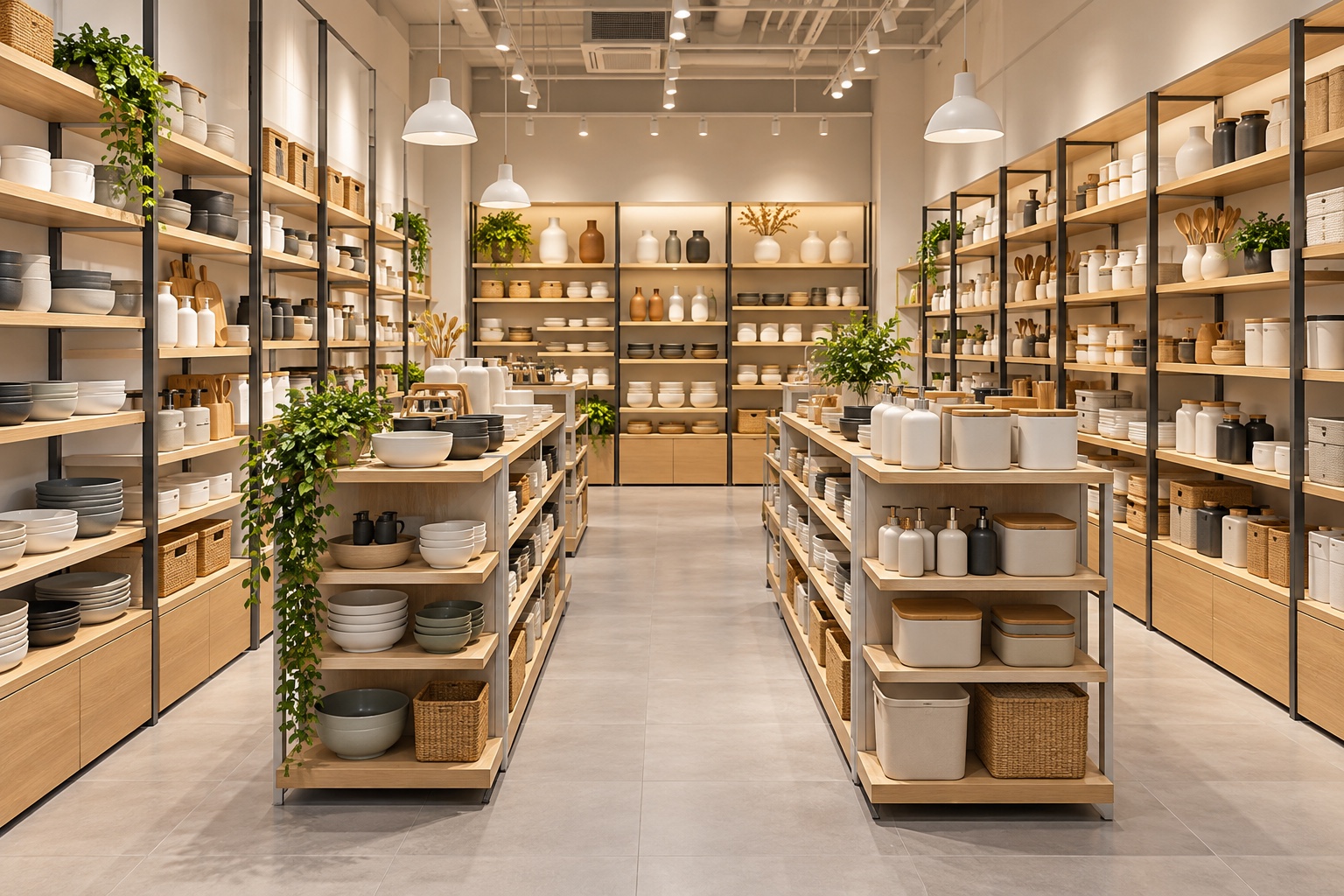
Retail shelving should be specified from the products and replenishment routine, not only the wall length. Gondolas, wall shelving and slatwall systems offer different ways to display merchandise. The useful choice balances capacity with visibility, stability, circulation and the work needed to change displays.
This guide concerns open fixtures rather than enclosed glass display cabinets.
Featured image: AI-generated design concept; not a completed Crown project or an approved technical drawing.
1. Prepare a real merchandise sample set
Bring representative products, including large packs, hanging items and awkward shapes. Record normal stock depth and the visual presentation required. Empty shelves reveal little about a working shop.
Test labels, dividers and product handling without assuming every item will fit a standard shelf arrangement.
2. Choose wall and freestanding roles
Use wall systems where the supporting construction and chosen fixing arrangement are suitable. Assess gondolas as freestanding fixtures with their own footprint and stability requirements. A low island can preserve sightlines differently from a tall wall run.
Decide each fixture's role in the shop rather than ordering one system everywhere.
Place fixtures within the overall shop plan using 10 Retail Shop Renovation Decisions Before Fit-Out.
3. Specify the exact shelf configuration
Confirm depth, width, spacing and accessories for the actual products. Include brackets, end panels, hooks and dividers where required. A modular system is useful only when its compatible components support the merchandising brief.
Ask what can be changed by store staff and what requires the supplier.
4. Check loading for the whole system
Give the supplier the intended product weights and loading pattern. Ask for the relevant limits and installation requirements for the selected shelves, uprights, fittings and supporting arrangement. Do not copy a load figure from a different product.
Product-specific published specifications illustrate why capacity cannot be inferred from a generic steel-shelving description.
For the relationship between display stock and replenishment, read Retail Stockrooms: 6 Singapore Fit-Out Decisions.
5. Assess stability and fixings
Have the supplier or appropriate installer confirm how the fixtures are assembled, stabilised and, where required, fixed to the actual premises. A wide-looking base is not evidence that every loading arrangement is suitable. Keep changes in shelf height or product type within the specified system requirements.
6. Test the shopping route with stock in place
Show customers browsing and staff replenishing at the same time. Check the view from the entrance and towards checkout. Have the relevant access and fire-safety requirements assessed in the complete layout.
More shelf metres do not necessarily create a better shop if products and people compete for the same narrow route.
If enclosed merchandise display is also required, compare Retail Display Cabinets: 8 Singapore Buying Checks.
7. Plan replenishment and back stock
Map deliveries from the stockroom to each fixture. Decide whether restocking happens during trading and where cartons wait. Include access to the lowest and highest shelves and a suitable staff procedure.
A display that requires moving neighbouring fixtures to refill one product is a poor fit for frequent replenishment.
8. Keep lighting and service access coordinated
Check shadows, glare and any integrated lighting against actual products. Resolve electrical needs with the responsible specialists before choosing shelf positions. Keep building services and access panels reachable.
A tall fixture should not be used to conceal an unresolved maintenance point or block an intended route.
9. Agree changes, spares and handover
Ask about replacement shelves, compatible accessories and future additions. Keep the exact system reference and loading information. At handover, review the installed configuration against the accepted plan and have the supplier explain permitted adjustments.
Record defects and incomplete parts before filling fixtures to normal trading stock.
A practical planning example
The following is a hypothetical planning scenario. A shop sells both lightweight accessories and heavier packaged goods. The same shelf layout may look coherent but need different product-specific loading and display arrangements.
The planning exercise should test representative stock and clarify capacities with the supplier before the system is ordered. It should also show replenishment from the stockroom while shoppers use the aisle. This illustrative scenario does not claim a sales uplift or a universal safe load.
Compare the scope before committing
| Option | When to consider it | What to confirm |
|---|---|---|
| Gondola | Freestanding or island displays | Footprint, loading and stability |
| Wall shelving | Perimeter presentation | Supporting construction and fixings |
| Slatwall system | Compatible hanging and shelf accessories | Exact panel, fitting and load specification |
References for your renovation brief
Check the current guidance and the exact product or premises requirements with the responsible professional. Product examples below do not establish compatibility for every brand or model.
Frequently asked questions
Are all gondola shelves interchangeable?
Do not assume that. Confirm compatibility within the exact supplier's system, including brackets and load limits.
Should I maximise shelf height?
Balance capacity with reach, visibility, replenishment and the assessed shop layout. Height alone does not establish useful display space.
Explore Crown’s commercial project portfolio to see published interior work. The featured image in this article is a separate design concept.
Discuss your renovation scope with Crown
Send Crown your shop plans, merchandise samples and the proposed fixture layout to discuss the renovation scope and request a quotation. Start with Crown’s interior design services, or contact the team with your brief. Confirm site conditions, specialist responsibilities and the agreed work before ordering.