
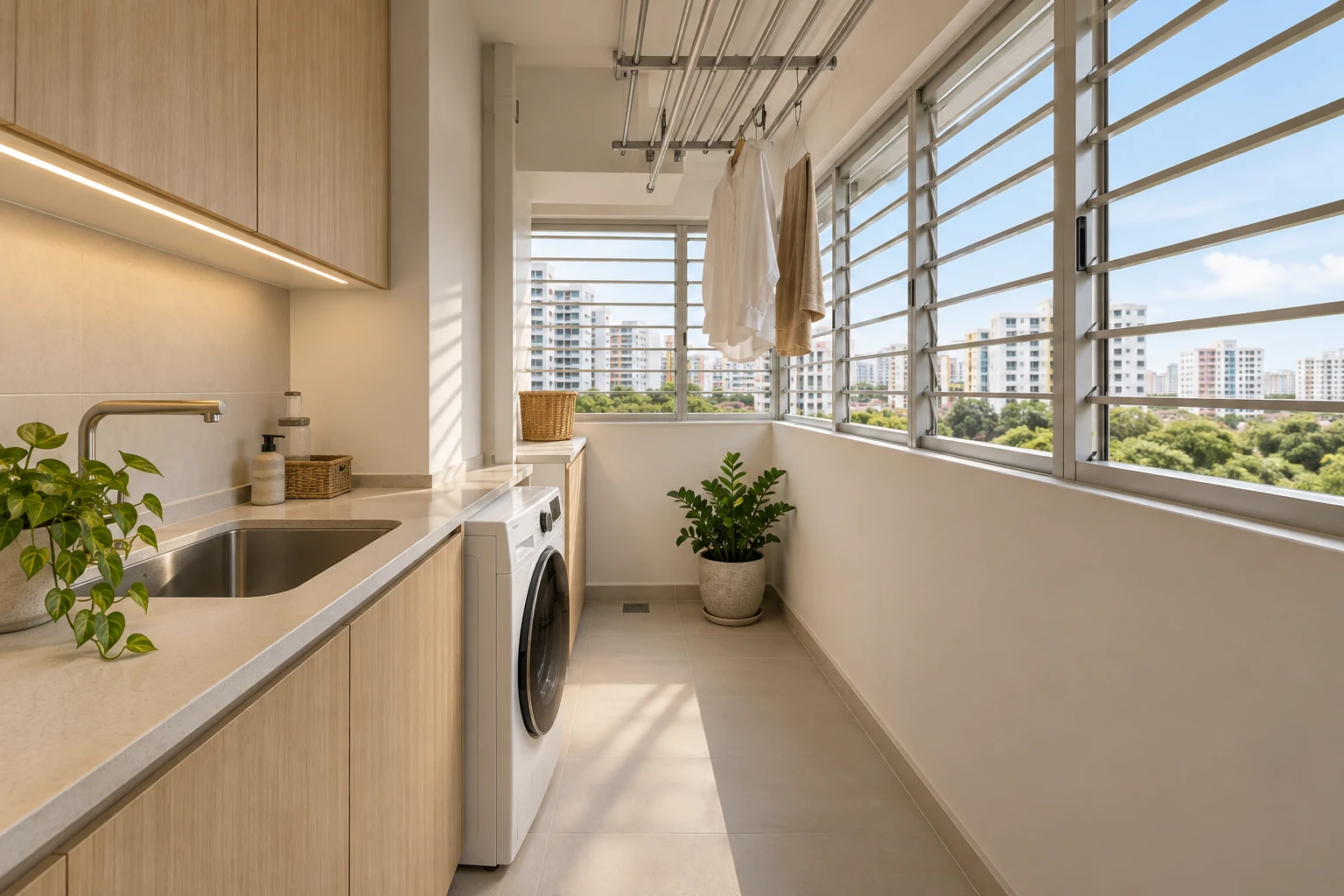
A laundry drying rack affects the entire service yard: hanging height, window operation, machine access and the route through wet laundry. Motorised and manual systems also have different installation and servicing arrangements.
For a Singapore flat, identify the actual supplied fittings and ceiling conditions before selecting a new rack. An attractive product image does not establish that the chosen position and fixing are suitable for the premises.
1. Measure the laundry in use
Consider sheets, longer garments and the household’s usual load rather than counting rails alone. Show items hanging at the intended operating position. Review how the user loads and unloads them. A large nominal capacity may be inconvenient if garments obstruct the washing machine or the path through the yard.
2. Check windows and machine access
Draw the actual window movement, washing-machine door and nearby cabinets together. Allow for loading laundry and reaching controls. A rack can be compact when raised but obstructive when lowered. Test both states before choosing the position, and preserve the appropriate access to existing building elements and services.
3. Assess the fixing location
Have the supplier and appointed team assess the actual ceiling or support arrangement and applicable requirements. Do not attach equipment to decorative finishes on the assumption that they provide structural support. Obtain a clear installation responsibility and method appropriate to the selected product and actual premises before committing to a purchase.
4. Compare manual and powered operation
Try the controls and movement where possible. Consider reach, user preference and what happens when equipment needs servicing. Added powered features also introduce electrical coordination. Compare the functions the household will use rather than assuming a more elaborate system always offers better value or suitability.
5. Coordinate electrical work early
For powered equipment, provide the selected specification to the appointed electrical professional. Confirm supply, connection and control access before ceiling work or cabinetry is finalised. Avoid leaving the installer to improvise around completed finishes. Record which party supplies, installs and tests each part of the arrangement.
6. Retain maintenance access
Ask how moving parts and powered components are reached and replaced. Review cleaning and the manufacturer’s operating instructions. Keep service access practical even if the equipment sits close to a cabinet or ceiling feature. At handover, retain the model details and demonstrate normal operation with the household.
7. Compare installation-inclusive scope
Separate the rack, removal of existing fittings, fixing works, electrical interfaces and any making good. Check building or HDB requirements for the actual proposal rather than assuming one general approval applies. Confirm the measured location and the complete installation scope before the rack and surrounding joinery are ordered.
Compare the options
| Option | Useful when | Resolve first |
|---|---|---|
| Existing supplied rack | It already serves the household | Condition and actual use |
| Manual replacement | Simple operation suits the users | Reach and fixing assessment |
| Powered system | Selected features justify the equipment | Supply and servicing arrangements |
A practical planning example
An illustrative owner chooses a rack before reviewing the service-yard window. When lowered, the planned load conflicts with the window and washer access. Testing the working positions earlier can change the size or location. This is a planning example, not a completed Crown Interior Design installation or an engineering approval.
Frequently asked questions
Can any ceiling support a rack?
The actual fixing and support conditions need assessment by the responsible parties.
Is motorised always better?
Compare user needs, installation, controls and maintenance rather than features alone.
Should cabinets be ordered first?
Coordinate them with the rack’s raised and lowered positions before fabrication.
Related planning: 7 Service Yard Renovation Tips for Singapore HDB Homes · Laundry Cabinets: 6 Singapore Space-Planning Checks.
References
Explore the related decision in Broom Cabinets: 7 Singapore Utility Storage Decisions.
Plan your project with Crown Interior Design
Send your floor plan, photographs, intended use and budget priorities. Explore Crown Interior Design’s services and residential projects, then request a tailored quotation. Confirm the scope and any specialist involvement for your actual premises.