
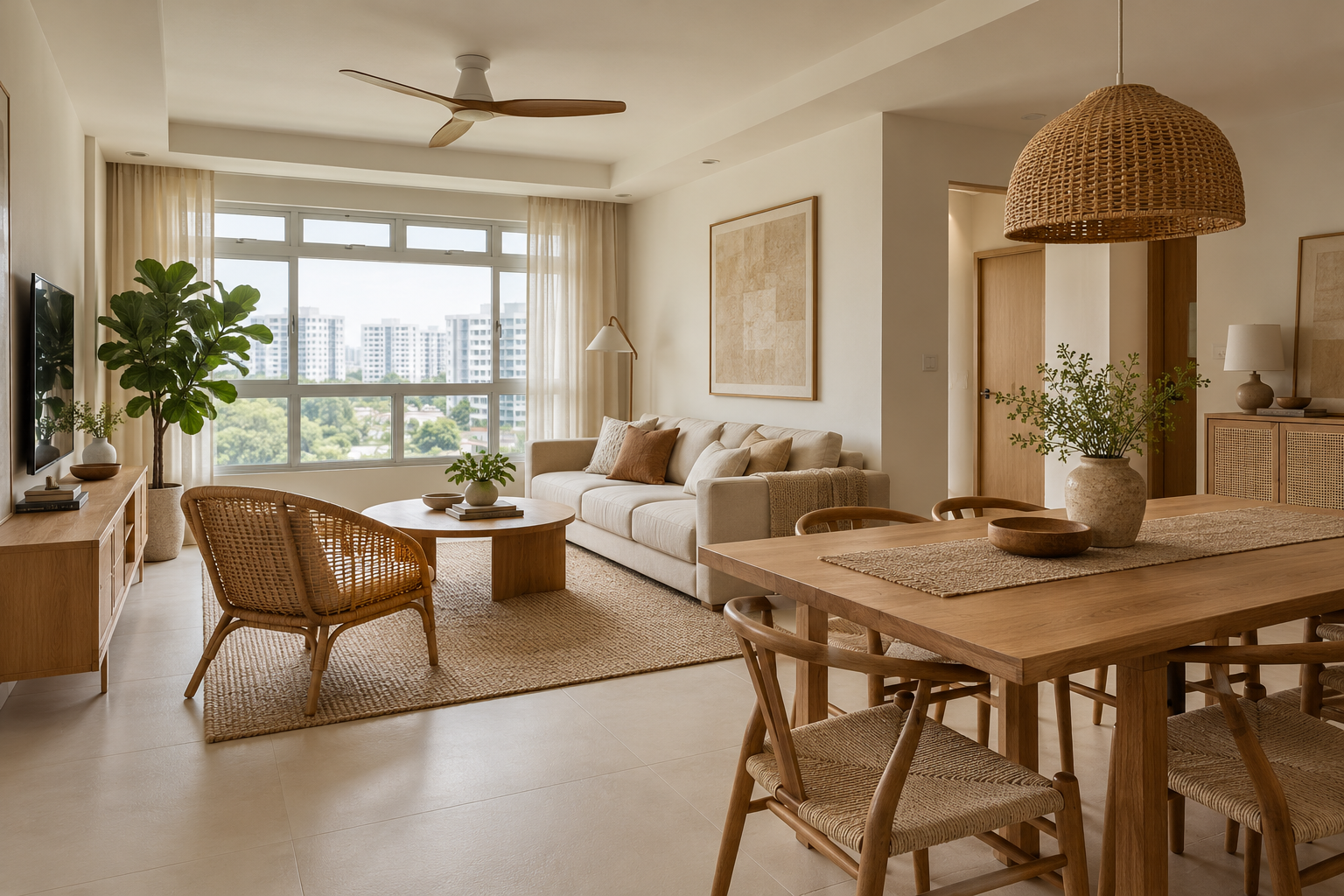
Bohemian interior design can make a Singapore home feel personal through texture, colour and collected objects. The challenge is keeping those layers comfortable in a compact flat rather than turning every wall and surface into a display. Begin with the furniture and belongings you actually want to live with.
This guide focuses on a restrained, practical bohemian brief for an HDB, BTO or condo. It is about choosing and coordinating layers, not buying a complete themed room. Keep fixed work useful and let the more expressive elements remain changeable where possible.
1. Choose a quiet base for the layers
Decide which large surfaces should remain calm before selecting patterned textiles or decorative objects. A cream wall and simple cabinet can give furniture and colour room to stand out. Review the existing floor rather than assuming it must be replaced. If several materials already have strong grain or pattern, adding another feature may create noise. A useful base supports the things you value without competing with them at every junction.
2. Start with the seating arrangement
Place actual sofas, chairs and tables on the plan and draw the main walking route. Soft-looking floor cushions and low tables may not suit every user. Discuss comfort and ease of getting up with the household. A photograph of relaxed seating does not show how the room functions during meals or visits. Choose the arrangement for daily use, then introduce texture through the specific pieces that fit it.
3. Layer materials with a cleaning plan
Rattan, textured fabric, rugs and open shelving bring different care needs. Ask suppliers about the actual products and exposure conditions. Avoid assuming a natural-looking item is automatically suitable beside a sunny window or a busy kitchen. Decide where a smooth, easily maintained surface would be more useful. The aim is a lived-in room that remains manageable, not a scheme that needs repeated rearranging and delicate cleaning to stay presentable.
4. Give collections defined space
Select the objects you want to display and measure them before designing shelves. Keep everyday storage enclosed where that makes sense. An open niche should have a deliberate purpose and enough clearance for cleaning. Do not fill an entire wall with display simply because the style welcomes personal objects. A few well-chosen areas can tell the household’s story while leaving the room visually and physically easier to use.
5. Use colour in controllable amounts
Choose a dominant neutral and a small group of colours that relate to the retained furniture. View real samples in your home’s daylight and evening light. A strong cushion or upholstered chair may provide enough colour without committing to a large fixed cabinet. Review adjacent rooms together. A coordinated palette can still feel varied; it does not require every object to match or every surface to carry an accent.
6. Keep lighting useful as well as atmospheric
A woven pendant or shaded lamp can contribute character, but it should not be the only source for reading or food preparation. Plan light around actual activities and check the product’s installation needs. Coordinate electrical changes with the appropriately licensed worker. Consider cleaning and replacement access for decorative fittings. The finished room should remain useful after sunset without relying on an unusually bright photographic exposure to make it appear comfortable.
7. Buy gradually after the main plan is settled
Separate essential furniture and storage from optional styling purchases. Keep a record of dimensions and delivery constraints. Adding pieces in stages lets you judge the room without overcommitting to one reference image. Crown Interior Design can help coordinate the fixed renovation scope and retained items, leaving room for personal layers to develop. The strongest bohemian home reflects the people using it rather than a checklist of rattan, plants and patterned cushions.
Compare the options before committing
| Option or decision | Useful when | Check before approval |
|---|---|---|
| Quiet fixed cabinetry | Personal objects and textiles lead the room | Useful internal storage and calm proportions |
| Textured movable furniture | Character should remain adaptable | Comfort, care and actual footprint |
| Selected display shelves | A collection deserves attention | Object sizes and manageable cleaning |
A worked planning example
An illustrative BTO household owns a patterned rug and two timber chairs. Rather than adding a patterned floor and multiple decorative walls, the plan could retain a quiet floor, introduce comfortable neutral seating and allocate one display area. The furniture route is checked before more objects are bought. This example concerns balance and procurement, not a requirement to use any particular style product.
What to bring to the design discussion
- Retained furniture and meaningful objects
- Actual seating and table dimensions
- Preferred colours and care expectations
- Essential renovation work versus optional styling
Frequently asked questions
Does bohemian design mean a cluttered room?
No. Personal layers can sit within a clear furniture plan and useful enclosed storage.
Must I use rattan everywhere?
No. Choose materials for the location, care and balance of the whole room rather than a style checklist.
Can the look work with existing finishes?
Often the design can start from retained finishes. Compare samples and furniture before deciding what needs replacement.
Plan your project with Crown Interior Design
Send your floor plan, current photographs, intended use, timing and budget priorities. Explore Crown Interior Design’s design and renovation services and residential projects, then request a tailored quotation. The proposed scope and any specialist involvement should be confirmed for your actual premises.
Continue planning: Living Room Design Singapore: HDB & BTO Layout Guide · Custom Carpentry Singapore: Built-Ins & Quotation Guide · Renovation Cost Singapore: A Scope-Based Budget Guide.
For a separate practical checklist, see RenoLinkUp’s owner-supplied renovation items checklist.