
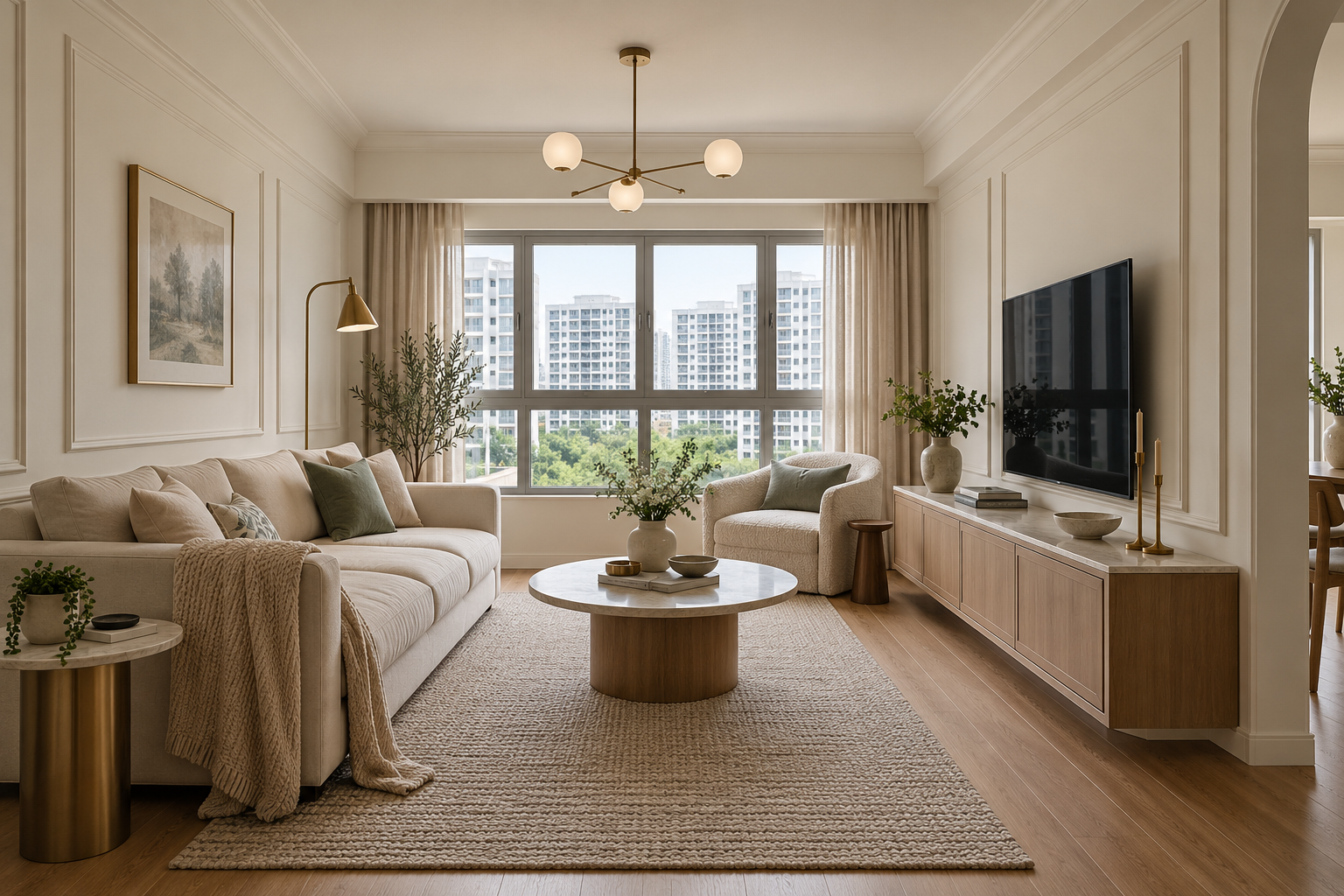
French-inspired interior design can be interpreted through proportion, restrained panel detail, selected furniture and a considered palette. In a Singapore apartment, the aim need not be a replica of a Parisian room with high ceilings and large windows.
Separate the qualities you admire from the architecture you do not have. The practical design question is how those qualities can fit your actual home without crowding it.
1. Identify the intended interpretation
Explain whether you prefer a quiet contemporary version, vintage furniture or more formal detailing. French-inspired is a broad description. A clear reference brief helps avoid combining incompatible ideas or promising one universal historical style.
2. Respect existing proportions
Measure walls, ceiling height and openings before adding panels or cornices. Review the complete elevation. A detail that looks delicate in a tall room may feel heavy when compressed into a lower or narrower space.
3. Plan furniture before mouldings
Place the sofa, table, storage and artwork you actually intend to use. Then align decorative detail with the real arrangement. Avoid a panel grid that forces furniture into awkward positions solely to preserve symmetry.
4. Keep material claims precise
Distinguish painted panels, timber, veneers, laminates and stone-look products in the schedule. A reference photograph cannot establish construction. Clear specifications make it easier to compare the intended visual effect at different budget levels.
5. Balance old and new pieces
Assess retained furniture dimensions, condition and daily use. A single meaningful piece may be enough to establish character. Do not fill every wall with display while leaving practical storage or circulation unresolved.
6. Review light and maintenance
Test wall colours and reflective details under realistic lighting. Consider cleaning access around profiles and fixtures. Ask for a mock-up where a junction is difficult to judge from drawings alone.
7. Evaluate relevance over labels
If an award-winning studio is shortlisted, request verified award details and work comparable to your property and scope. Crown Interior Design can discuss an interpretation grounded in the actual plan and priorities rather than using a style or award label as a substitute for evidence.
Compare the options before committing
| Option or decision | Useful when | Check before approval |
|---|---|---|
| Light decorative refresh | The existing layout works | Proportion and retained finishes |
| Furniture-led interior | Selected pieces carry the direction | Actual scale and storage |
| Coordinated fitted design | Several room interfaces need work | Material schedule and detailed elevations |
A worked planning example
Illustrative living room: symmetrical wall panels are drawn before the owners select a sofa. Once the sofa arrives, the panel layout looks misaligned and restricts storage. Agree the furniture arrangement first, then develop the decorative elevation around it.
What to bring to the design discussion
- Clear interpretation references
- Measured elevations and furniture
- Material samples
- Verified comparable project evidence
Frequently asked questions
Do I need high ceilings?
Adapt the detail to the actual room rather than copying a different building.
Must all furniture be antique?
No. Choose pieces for the intended interpretation and daily use.
Does an award prove the style will suit my flat?
Verify relevance through comparable work and a unit-specific proposal.
Plan your project with Crown Interior Design
Send your floor plan, current photographs, intended use, timing and budget priorities. Explore Crown Interior Design’s design and renovation services and residential projects, then request a tailored quotation. The proposed scope and any specialist involvement should be confirmed for your actual premises.
Continue planning: Contemporary Interior Design: 7 Singapore Planning Choices · Modern Luxury Interior Design Singapore: Planning Guide.
For a separate practical checklist, see RenoLinkUp’s interior design mock-up checklist.