
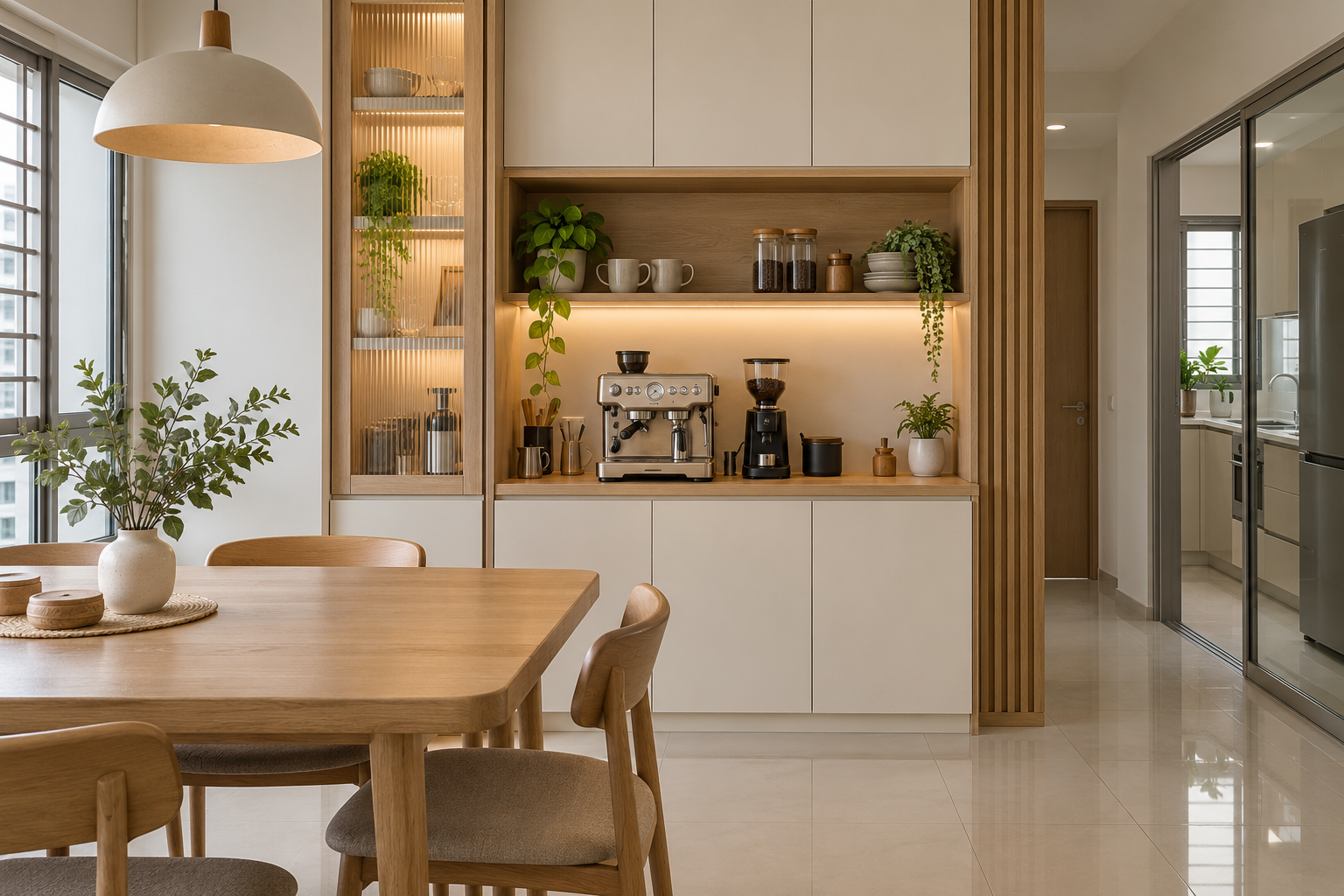
A home coffee station should support making and cleaning up after coffee, not simply display a machine on a beautiful cabinet. In a Singapore flat, the counter depth, water access and route through the dining area can determine whether the station is enjoyable to use.
Choose the equipment before commissioning a fitted niche. A sideboard or movable setup may be the better starting point when the routine is still changing.
1. List the actual equipment
Record the machine, grinder and accessories with their installation and operating information. Include access needed to refill water or beans. A nominal machine footprint can understate the space used during preparation and maintenance.
2. Map the whole routine
Trace grinding, brewing, milk preparation where relevant, serving and cleanup. Identify where cups and waste go. A station far from the practical cleaning route may need a different arrangement rather than more decorative shelving.
3. Provide a usable work surface
Keep room for handling cups and accessories beside the machine. Test actual reach and counter height. Avoid a fitted display so tight that the machine must be pulled out for every ordinary task.
4. Coordinate power and services
Have relevant electrical work assessed by a licensed worker using the actual equipment data. If water or drainage is proposed, involve the appropriate trades. Do not assume a nearby outlet or improvised connection suits the installation.
5. Choose storage by frequency
Place daily cups and tools within convenient reach and keep occasional items elsewhere. Review shelf clearances and cleaning. A crowded open display can make the station less usable even if every accessory is visible.
6. Protect maintenance access
Ask how the equipment is removed, serviced and cleaned. Follow manufacturer ventilation and operating requirements. A cabinet door should not enclose equipment in use unless the selected arrangement is appropriate to the actual product.
7. Compare fitted and movable options
Test a temporary setup before committing to bespoke work. Crown Interior Design can coordinate the station with the kitchen and dining area so equipment, circulation and finish choices work together rather than forming an isolated display.
Compare the options before committing
| Option or decision | Useful when | Check before approval |
|---|---|---|
| Movable cabinet | Equipment or routine may change | Stability, surface and services |
| Open fitted station | The layout and machines are settled | Access, cleaning and ventilation |
| Concealed niche | A closed appearance is preferred between uses | Operating conditions and door movement |
A worked planning example
Illustrative household: a machine fits into a niche but cannot be refilled without moving it. Increasing the useful access space or choosing an open setup may matter more than an additional shelf. Test the exact machine before fabrication.
What to bring to the design discussion
- Equipment model documents
- Preparation and cleanup routine
- Counter and storage mock-up
- Power and maintenance requirements
Frequently asked questions
Do I need a plumbed machine?
Choose equipment by the actual routine and confirm its installation requirements.
Can the station go in the dining room?
Assess preparation, cleaning, power and circulation there.
Should I build the cabinet first?
Select and document equipment before approving a fitted niche.
Plan your project with Crown Interior Design
Send your floor plan, current photographs, intended use, timing and budget priorities. Explore Crown Interior Design’s design and renovation services and residential projects, then request a tailored quotation. The proposed scope and any specialist involvement should be confirmed for your actual premises.
Continue planning: Home Bar Design Singapore: 7 Cabinet Planning Decisions · Dining Room Design Singapore: 8 Useful Layout Decisions.
For a separate practical checklist, see RenoLinkUp’s owner-supplied renovation items checklist.