
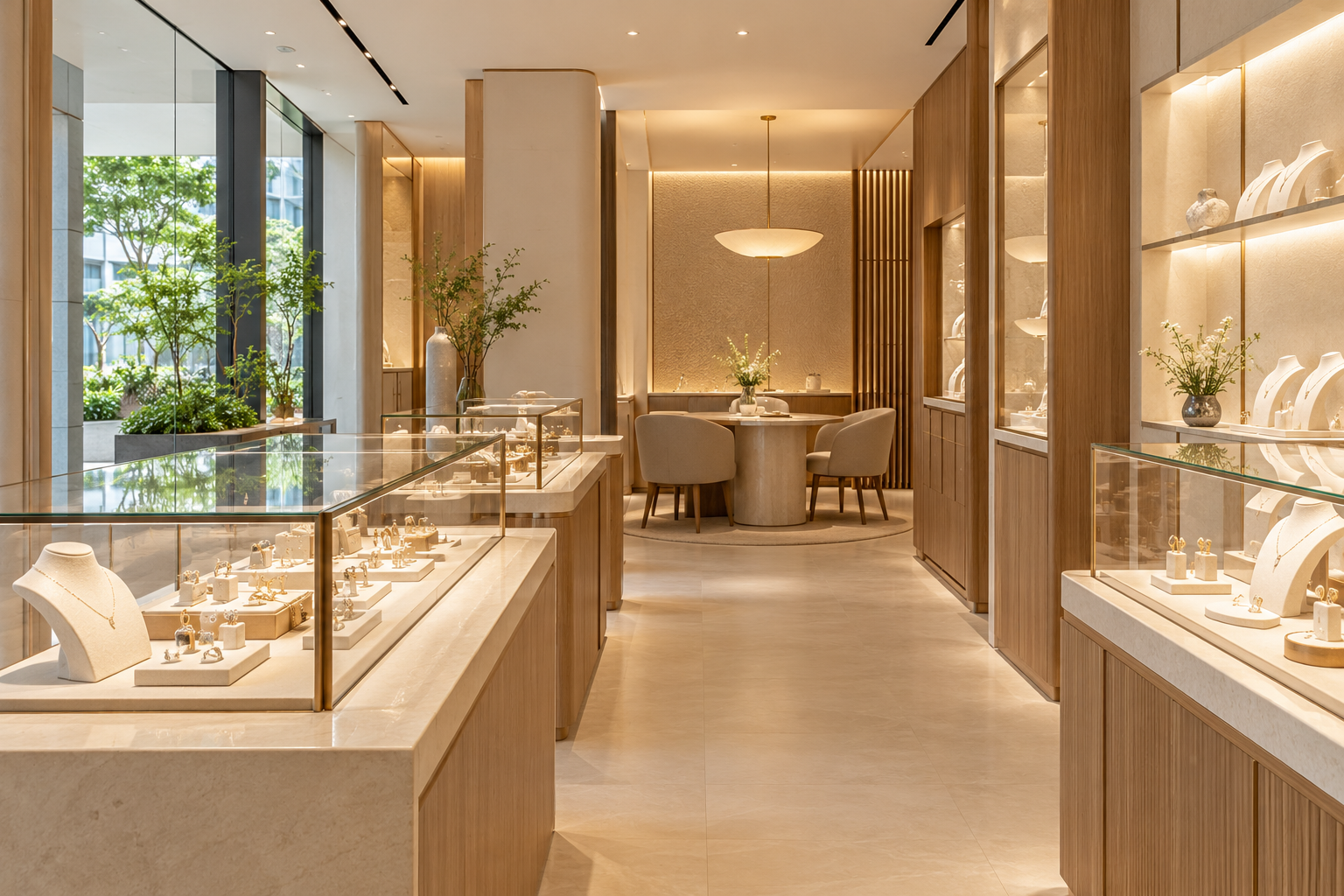
Jewellery shop interior design should make close viewing and personal consultation comfortable while supporting the operator’s stock-handling and security procedures. A luxurious finish does not by itself create a practical selling environment. Case dimensions, lighting, seating and staff reach deserve attention before decorative features.
For a Singapore boutique, define the retail model first: browsing-led fashion jewellery, appointment-led fine jewellery and repair or collection services can need different arrangements. This is an interior planning guide, not a security-system specification.
1. Describe the sales journey
Map browsing, product presentation, trying on, consultation, payment and collection. Identify which activities occur seated and which happen at a counter. The operator should explain stock movement and staff roles. A design that assumes every transaction is a quick standing purchase may not suit the intended customer experience.
2. Design cases around actual products
Review the size and display method of the merchandise with the operator. Test tray dimensions, reach and the customer’s viewing position. Avoid deep cases that make presentation awkward. A beautiful glass volume should be evaluated as a working fixture, including access, storage and the procedure for returning items after viewing.
3. Evaluate lighting with real samples
Ask the lighting team to test the actual jewellery and case materials. Review reflections, glare and the customer’s view rather than choosing fittings only by appearance. Different products can respond differently to light. Avoid promising increased sales or a universal lighting recipe from a single showroom photograph.
4. Coordinate security separately
Have the operator and appropriate security specialists define requirements for cases, access, monitoring and stock storage. Integrate the agreed systems with the interior without publishing sensitive operational details. Do not assume a lockable glass case or clear sightline is a complete security strategy.
5. Provide a comfortable consultation setting
Choose furniture that supports the actual presentation and trying-on routine. Review privacy, mirrors and movement around seated customers. Keep the route from entry to consultation understandable. A larger lounge may be less useful than one well-scaled table with appropriate staff access and a clear relationship to the displays.
6. Plan services and maintenance access
Coordinate display lighting, power and any integrated equipment with the relevant trades. Keep replacement and cleaning access to glass, fittings and case interiors. A seamless finish should not permanently trap components. Ask the supplier to demonstrate how routine maintenance works before approving bespoke case construction.
7. Compare relevant project evidence
Request examples of comparable retail work and ask about the firm’s actual role. If awards are part of the shortlist, verify the recognised project and its relevance. Crown Interior Design can discuss the interior brief, with specialist security, display and lighting responsibilities confirmed for the actual boutique.
Compare the options before committing
| Option or decision | Useful when | Check before approval |
|---|---|---|
| Browsing-led boutique | Customers compare many displayed items | Case layout and comfortable viewing |
| Appointment-led studio | Consultation is central | Privacy, seating and product presentation |
| Retail with repair or collection | Service transactions share the space | Clear customer and stock-handling process |
A worked planning example
Illustrative boutique: a dramatic centre case attracts attention but blocks staff access to the consultation table. A smaller case or different orientation may improve product presentation and movement. Review the complete interaction with sample trays and real chairs before approving the fixture as the room’s centrepiece.
What to bring to the design discussion
- Retail and consultation process
- Product trays and display inventory
- Specialist security brief
- Case, lighting and maintenance requirements
Frequently asked questions
Should I use the brightest possible display light?
Test the actual products, reflections and customer comfort with the lighting team.
Can the interior designer specify all security needs?
Confirm the role of appropriate security specialists and the operator’s requirements.
Does luxury mean more finishes?
No. A restrained palette can support the merchandise when details and functionality are resolved.
Plan your project with Crown Interior Design
Send your floor plan, current photographs, intended use, timing and budget priorities. Explore Crown Interior Design’s design and renovation services and commercial projects, then request a tailored quotation. The proposed scope and any specialist involvement should be confirmed for your actual premises.
Continue planning: Retail Shop Renovation Singapore: Cost & Fit-Out Guide · Custom Display Cabinets: 7 Singapore Design Decisions.
For a separate practical checklist, see RenoLinkUp’s office reception planning checklist.