
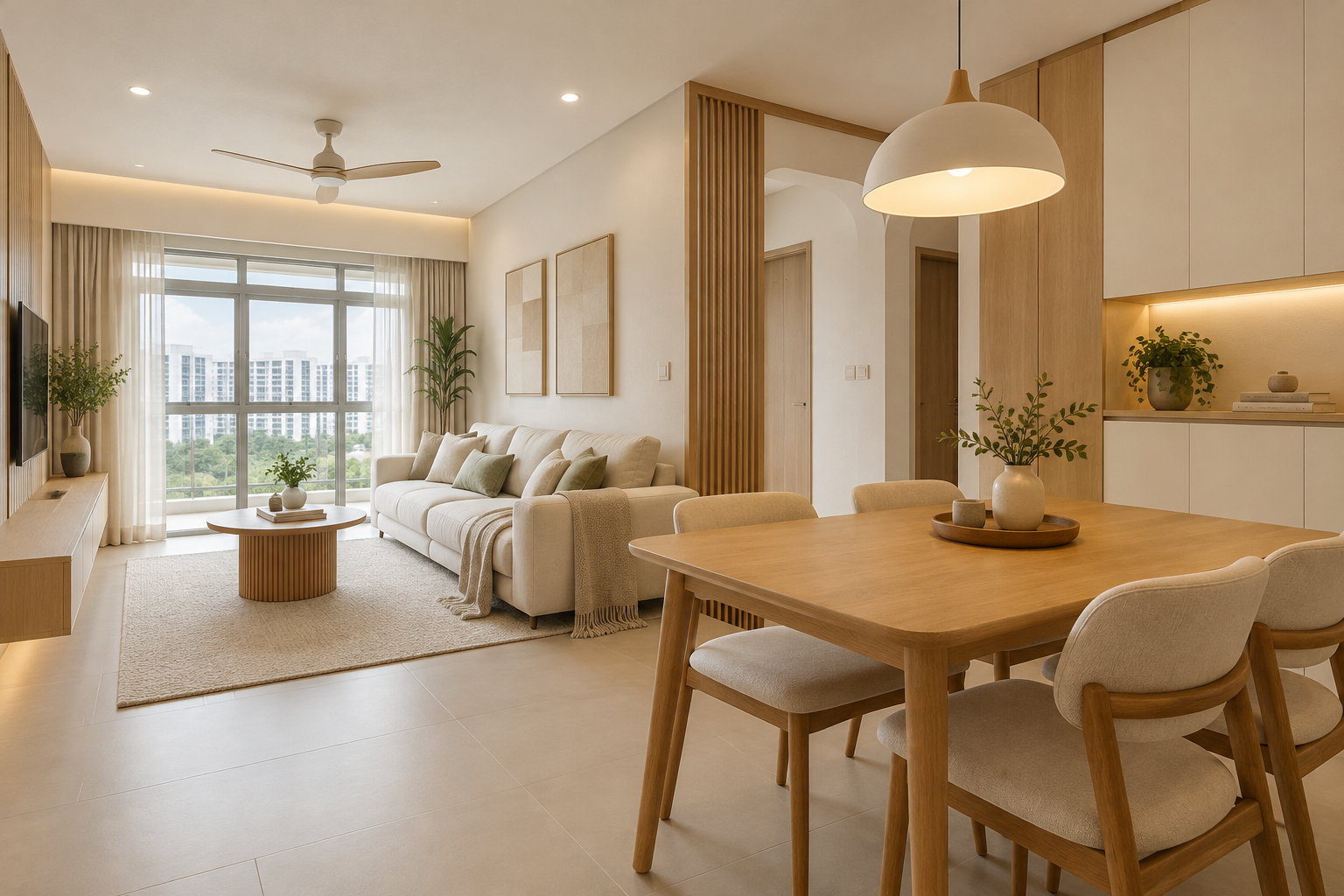
Smart home renovation should make ordinary tasks easier without making the home difficult to operate. In a Singapore BTO or resale renovation, the opportunity is to coordinate switches, lighting, curtains, networking and cabinetry before finishes are closed up. Buying a collection of devices first can create incompatible systems and awkward installation details.
Start with a small set of useful routines and define what should happen when a device, internet connection or app is unavailable. This guide is an interior coordination brief. The system designer and appropriately licensed trades must confirm the technical installation for the actual home.
1. Define scenes in plain language
Write the intended result rather than a shopping list. For example, arriving home might mean turning on the entrance and living-room lights, while bedtime might mean switching off selected circuits. Identify who uses each scene and whether a physical control is still needed. Avoid automating an activity simply because a product supports it. A short list of reliable routines is easier to test and maintain than a complicated demonstration that nobody else understands.
2. Separate device compatibility from appearance
Confirm the exact models, ecosystem, control method and any required hubs with the system supplier. Similar packaging or a shared wireless label does not prove that every function will work together. Ask which functions depend on cloud services, accounts or a subscription. Keep a written device schedule. A visually consistent switch face is useful, but compatibility and a clear operating plan should be resolved before its colour is selected.
3. Coordinate electrical requirements early
Have the responsible licensed electrical worker assess the proposed work, existing wiring and device requirements. EMA advises that electrical work should be carried out or supervised by a Licensed Electrical Worker. Do not assume a smart switch can replace every existing switch without further assessment. Show the intended controls and lights on the plan. Resolve wiring and installation responsibilities before painting and cabinetry, rather than relying on an installer to improvise at the final stage.
4. Keep network equipment serviceable
Discuss coverage and equipment locations with the appropriate system or network specialist. Avoid hiding every device inside tightly packed cabinetry for the sake of a clean photograph. Provide the access, ventilation and power required by the chosen equipment. Decide how replacement will work. A fixed decorative panel should not make ordinary troubleshooting a carpentry project. Mark the planned locations on the same drawing as shelves and owner-supplied appliances.
5. Retain understandable manual operation
Ask what happens when the internet, hub or individual device is unavailable. Test the physical controls and explain the fallback to every household member. Visiting relatives should be able to use essential lighting without your phone. Different products have different offline behaviour, so request a demonstration rather than accepting a blanket assurance. The home should remain intelligible during a failure, a phone change or a temporary loss of an account.
6. Plan privacy and ownership
Decide who controls the accounts and how installer access is removed or handed over. Follow the manufacturer’s current security and update guidance. Record where cameras or microphones are proposed and whether they are necessary. Use official consumer cybersecurity resources when comparing devices; a security label does not replace appropriate setup and ongoing care. Keep credentials private and establish a process for changing ownership if the home or device is transferred.
7. Make commissioning part of the quotation
Include configuration, scene testing, user training, documentation and support responsibilities. Ask which party resolves a problem involving both a light fitting and a controller. At handover, test the agreed routines, fallback behaviour and each user’s access. Keep the device schedule and relevant instructions. Crown Interior Design can coordinate the interior interfaces, while the actual technical scope and specialist appointments should be clearly agreed before work starts.
Compare the options before committing
| Option or decision | Useful when | Check before approval |
|---|---|---|
| A few smart lighting scenes | Simple routines provide clear value | Manual control and tested compatibility |
| Curtain automation | Daily operation benefits from it | Track, motor access and electrical coordination |
| Whole-home system | There is a defined integrated brief | Support, accounts, commissioning and fallback |
A worked planning example
An illustrative BTO owner wants arrival lighting and automated curtains, but not voice control. The brief can stay focused on those functions. The supplier confirms compatible models; the electrical worker assesses installation; the cabinet plan leaves equipment accessible. During handover, the owner tests both app control and manual operation. This is a coordination example, not a wiring design or a claim that every device works offline.
What to bring to the design discussion
- A short list of useful routines
- Exact device and appliance schedule
- Physical-control and offline expectations
- Account ownership and support requirements
Frequently asked questions
Should I buy devices before meeting the designer?
Shortlist them, but confirm compatibility and installation requirements before purchase or fabrication.
Will everything work without internet?
That depends on the exact system. Ask for a demonstration of the proposed offline behaviour.
Can the renovation team do all the wiring?
Electrical work must involve the appropriately licensed electrical worker. Confirm the named responsibilities and technical scope.
Plan your project with Crown Interior Design
Send your floor plan, current photographs, intended use, timing and budget priorities. Explore Crown Interior Design’s design and renovation services and residential projects, then request a tailored quotation. The proposed scope and any specialist involvement should be confirmed for your actual premises.
Continue planning: 8 HDB Lighting Design Decisions Before Renovation · 8 HDB Renovation Timeline Milestones to Plan in Singapore · Renovation Cost Singapore: A Scope-Based Budget Guide.
For a separate practical checklist, see RenoLinkUp’s owner-supplied renovation items checklist.