
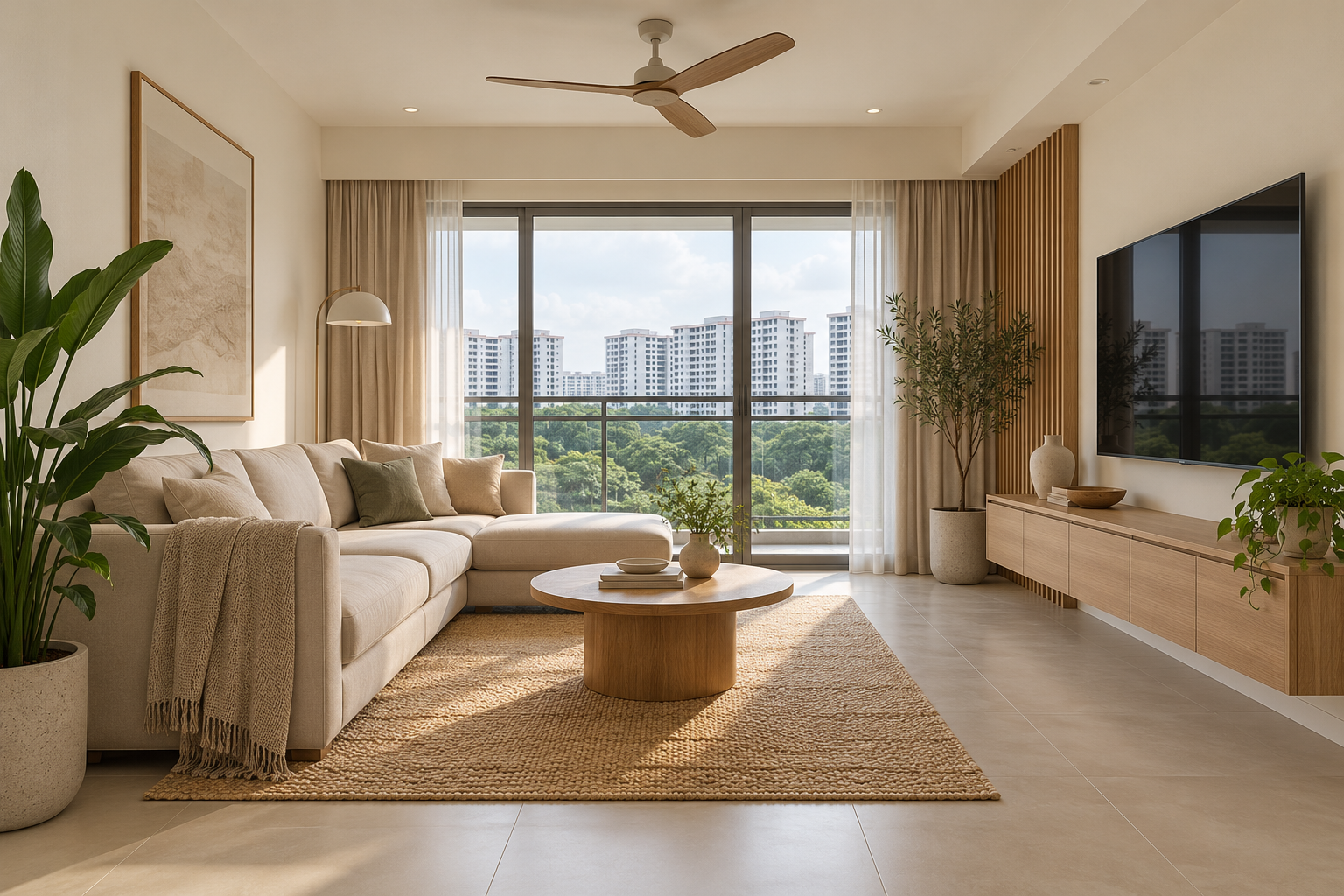
Tropical interior design can feel relaxed through timber, light colours, texture and a considered relationship with greenery. In a Singapore apartment, that should be translated into a comfortable interior rather than a room crowded with plants or an attempt to copy a resort villa. Start with the actual light, furniture and maintenance routine.
This guide focuses on an interior style and its practical trade-offs. It does not claim that a material palette cools a home, that indoor plants purify the air or that an open-looking rendering proves ventilation performance. Technical comfort questions need the appropriate property and system assessment.
1. Observe the actual daylight
Note where sunlight reaches during the day and how the household uses those areas. A bright reference photograph may represent only one time or orientation. Review finishes and furniture at your own windows before choosing the palette. If shading is needed, discuss a suitable system and any building requirements with the relevant supplier. Avoid promising a cooler room from a light colour alone; the complete conditions and systems matter.
2. Choose timber for visual cohesion
Select a main timber direction and compare it with the existing floor and doors. Decide where a wood-look finish is useful and where a plain surface gives the room balance. Ask for the actual product, edge and care information. Natural appearance does not identify material performance. A modest amount of coordinated timber can establish warmth without turning every wall, cabinet and ceiling into a competing grain pattern.
3. Allocate greenery deliberately
Choose locations that suit the intended plants and remain accessible for watering and cleaning. Keep drainage, windows and walking routes clear. Discuss the actual plant care with an appropriate supplier rather than treating every corner as interchangeable. A few manageable plants can be more successful than a dense display that becomes difficult to maintain. Plan where pots and maintenance items go instead of hiding them outside the drawing.
4. Keep seating light in appearance but useful
Try the proposed furniture and check comfort for the actual users. A woven chair or low lounge piece may look relaxed but need different upkeep or support from a conventional sofa. Draw the occupied footprint and movement around it. Do not add a large daybed simply because it appears in a resort reference. Choose the pieces that support ordinary meals, visits and rest in the apartment you have.
5. Coordinate indoor and balcony relationships
If the home has a balcony, review the sliding doors, threshold and furniture on both sides together. Material continuity can create a calm relationship without using the same product indoors and outdoors. Confirm the exposure and care requirements of the actual items. Do not assume permission to enclose or alter the balcony. A strong visual connection should remain compatible with the property’s construction and applicable renovation requirements.
6. Make texture manageable
Linen-like upholstery, woven surfaces and textured wall treatments need a care discussion. Request samples and maintenance guidance, especially in busy dining or kitchen-adjacent areas. Consider which surfaces need frequent wiping and which can be more expressive. The room should remain attractive during ordinary use, including wet umbrellas, laundry or family meals. A tropical direction is more convincing when the materials fit the routine than when every surface imitates a holiday photograph.
7. Spend on the useful relationships first
Prioritise furniture, storage, shading and useful lighting before decorative additions. Compare retained finishes with replacement options. Request clear specifications and responsibilities for owner purchases. Crown Interior Design can help coordinate the interior brief around your actual home and care expectations. Keep performance claims tied to evidence for the proposed product or system rather than assuming the style itself delivers environmental benefits.
Compare the options before committing
| Option or decision | Useful when | Check before approval |
|---|---|---|
| Selected greenery | The household can maintain it | Actual light, watering and cleaning access |
| Timber and plain surfaces | The room needs warmth without visual noise | Samples, edges and care |
| Indoor-outdoor continuity | A balcony forms part of daily living | Exposure, thresholds and building requirements |
A worked planning example
An illustrative BTO owner likes a resort reference with extensive timber and planting. The measured plan may support a quieter cabinet background, one comfortable woven chair and a small planting area at a suitable window. The household then reviews practical shading and lighting separately. This preserves the desired atmosphere without making unsupported claims about cooling, air quality or the performance of a decorative material.
What to bring to the design discussion
- Photographs showing real daylight and windows
- Furniture comfort and size requirements
- Plant and finish maintenance expectations
- Any balcony or shading requirements
Frequently asked questions
Does a tropical style make a flat cooler?
Do not assume a decorative style delivers that result. Discuss the actual conditions and technical options with the appropriate specialists.
Do I need many plants?
No. Choose an amount and location the household can maintain.
Can indoor timber products continue outdoors?
Only if the actual product is suitable for the proposed exposure and application. Confirm specifications rather than matching appearance alone.
Plan your project with Crown Interior Design
Send your floor plan, current photographs, intended use, timing and budget priorities. Explore Crown Interior Design’s design and renovation services and residential projects, then request a tailored quotation. The proposed scope and any specialist involvement should be confirmed for your actual premises.
Continue planning: Balcony Design Singapore: 7 Checks Before Renovation · Living Room Design Singapore: HDB & BTO Layout Guide · Muji-Inspired Interior Design: 7 Singapore Home Decisions.
For a separate practical checklist, see RenoLinkUp’s owner-supplied renovation items checklist.