
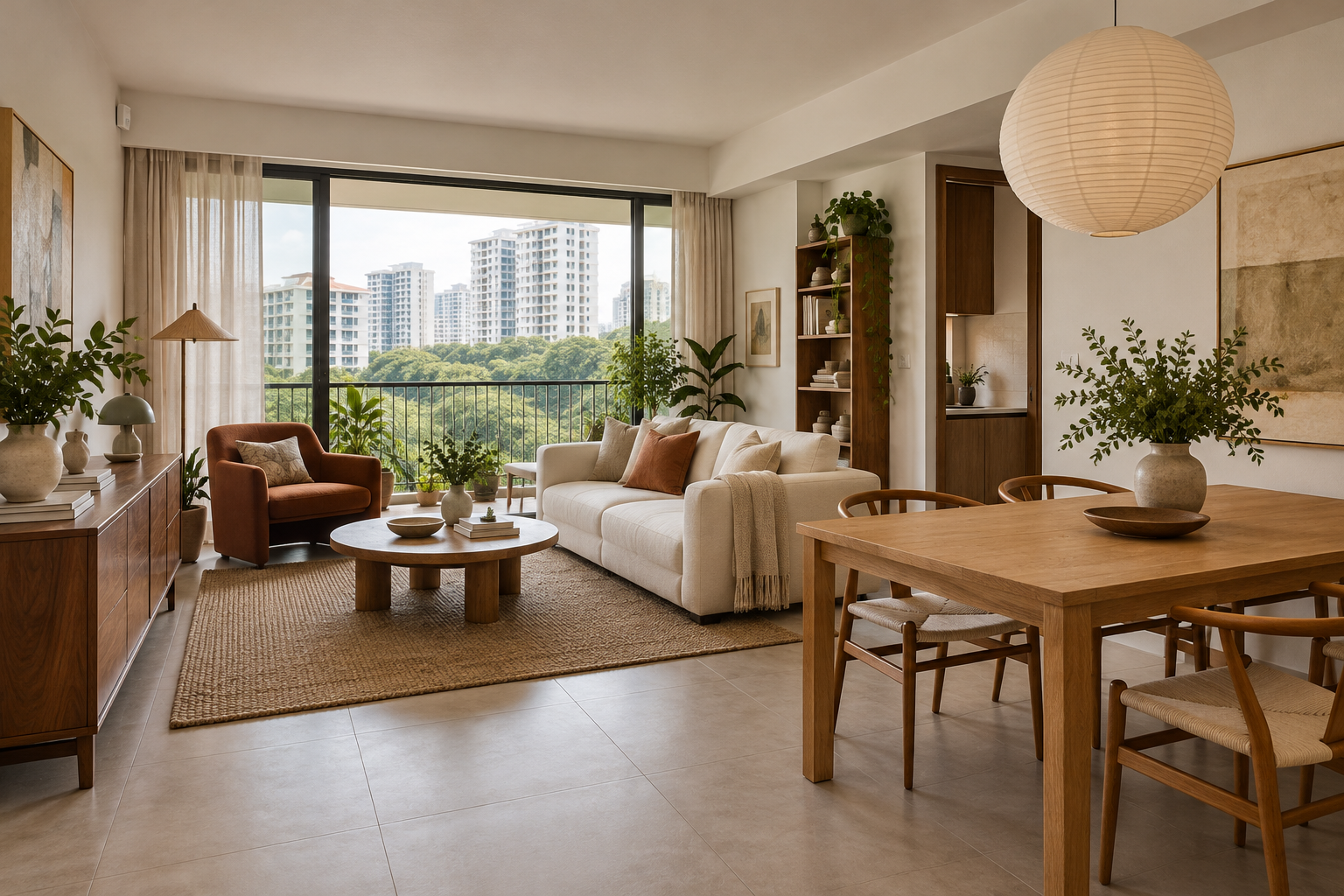
Eclectic interior design is useful when the household wants to keep furniture, art or objects from different periods rather than start with a matching set. The design challenge is giving those pieces a coherent relationship while making the room comfortable to use. A varied collection does not need a varied finish on every fixed surface.
This guide focuses on editing and coordinating a mixed collection in a Singapore home. Unlike a material-led bohemian scheme, the starting point here is the actual retained pieces and their proportions. Decide what deserves attention before buying more items or specifying new built-ins.
1. Inventory the pieces that matter
Photograph and measure retained furniture, artwork and collections. Record condition, repair needs and whether each piece has a definite role. Distinguish sentimental value from a requirement to display everything at once. The designer needs to know what is genuinely staying before creating a scheme. Otherwise, an apparently flexible proposal may leave no suitable space for the most important objects or encourage unnecessary replacement of useful furniture.
2. Choose a connecting relationship
Select a repeated colour, timber tone, shape or proportion that can relate different pieces. The connection need not make them identical. Review the objects together rather than approving finishes one at a time. A quiet background can make a mixed collection easier to understand. If every item is equally emphatic, decide which should lead and which should recede. Coherence comes from deliberate choices, not a claim that any combination will work.
3. Test the layout before the display
Place sofas, tables and chairs at actual size with occupied positions. Check the normal routes and sightlines. An inherited sideboard may be visually important but too deep for a particular passage. Consider another position before designing cabinetry around it. Leave room to use the furniture and reach stored items. The home should remain practical when the collection is present, not only when smaller objects have been removed for a photograph.
4. Use fitted work to resolve gaps
A mixed furniture scheme may still need reliable everyday storage. Design that storage around actual contents and keep its visual role clear. A plain fitted cupboard can support the room without competing with a distinctive loose piece. Ask to see internal arrangements and the relationship to retained furniture. Avoid extending a decorative motif across every cabinet simply to make the collection appear coordinated; useful restraint can do the connecting work.
5. Plan art and objects at real scale
Measure frames, sculptures and display items before setting shelves or lights. Consider viewing distance, glare and cleaning access. A narrow niche may not accommodate a piece you value, while an oversized display can dominate the room. If an object needs specialist conservation or support, obtain appropriate advice. An interior designer should not assume that a generic shelf or spotlight is suitable for every valuable or delicate collection.
6. Resolve condition and procurement early
If a retained piece needs restoration, confirm feasibility and timing with the relevant specialist. Record delivery and access constraints for new items. Keep a practical alternative if a one-off purchase is unavailable. A scheme dependent on a single unspecified vintage item can be difficult to execute. The programme should reflect actual decisions and supplier information rather than assuming every reference object can be sourced at the right size and condition.
7. Review the scheme as a whole
Ask for a room view and measured plan that include retained pieces honestly. Compare optional additions against the current collection before spending. If award-winning projects influence your shortlist, discuss how the firm edits competing elements and which evidence is relevant to your scale. Crown Interior Design can help develop a coherent brief without claiming another designer’s collection or case study as its own work. The final aim is a personal home that functions comfortably.
Compare the options before committing
| Option or decision | Useful when | Check before approval |
|---|---|---|
| Retained statement piece | It has a clear practical or personal role | Condition, size and suitable position |
| Quiet new built-ins | The collection needs functional support | Storage contents and visual hierarchy |
| Selective new accessories | A defined gap remains after planning | Scale, availability and avoidable duplication |
A worked planning example
An illustrative household keeps a walnut sideboard, a contemporary sofa and colourful artwork. A cream storage wall and a restrained rug may connect them more effectively than another statement cabinet. The plan shows how the sideboard doors and dining chairs operate before new shelves are ordered. This example explains editing a collection; it does not present a completed project or claim specialist conservation expertise.
What to bring to the design discussion
- Measured retained pieces and photographs
- Items needing specialist repair or support
- A ranked list of what deserves display
- Actual procurement and delivery information
Frequently asked questions
Does eclectic mean anything can be mixed?
A varied scheme still needs deliberate proportion, movement and visual hierarchy.
Must I replace old furniture to make the room coherent?
No. Begin with the pieces you value and use new work to support them where useful.
Should every object be displayed?
Not necessarily. Rotate or store some items if that creates a more comfortable room and a manageable display.
Plan your project with Crown Interior Design
Send your floor plan, current photographs, intended use, timing and budget priorities. Explore Crown Interior Design’s design and renovation services and residential projects, then request a tailored quotation. The proposed scope and any specialist involvement should be confirmed for your actual premises.
Continue planning: Mid-Century Modern Interiors: 7 Singapore Home Choices · Custom Carpentry Singapore: Built-Ins & Quotation Guide · Dining Room Design Singapore: 8 Useful Layout Decisions.
For a separate practical checklist, see RenoLinkUp’s furniture delivery and renovation checklist.