
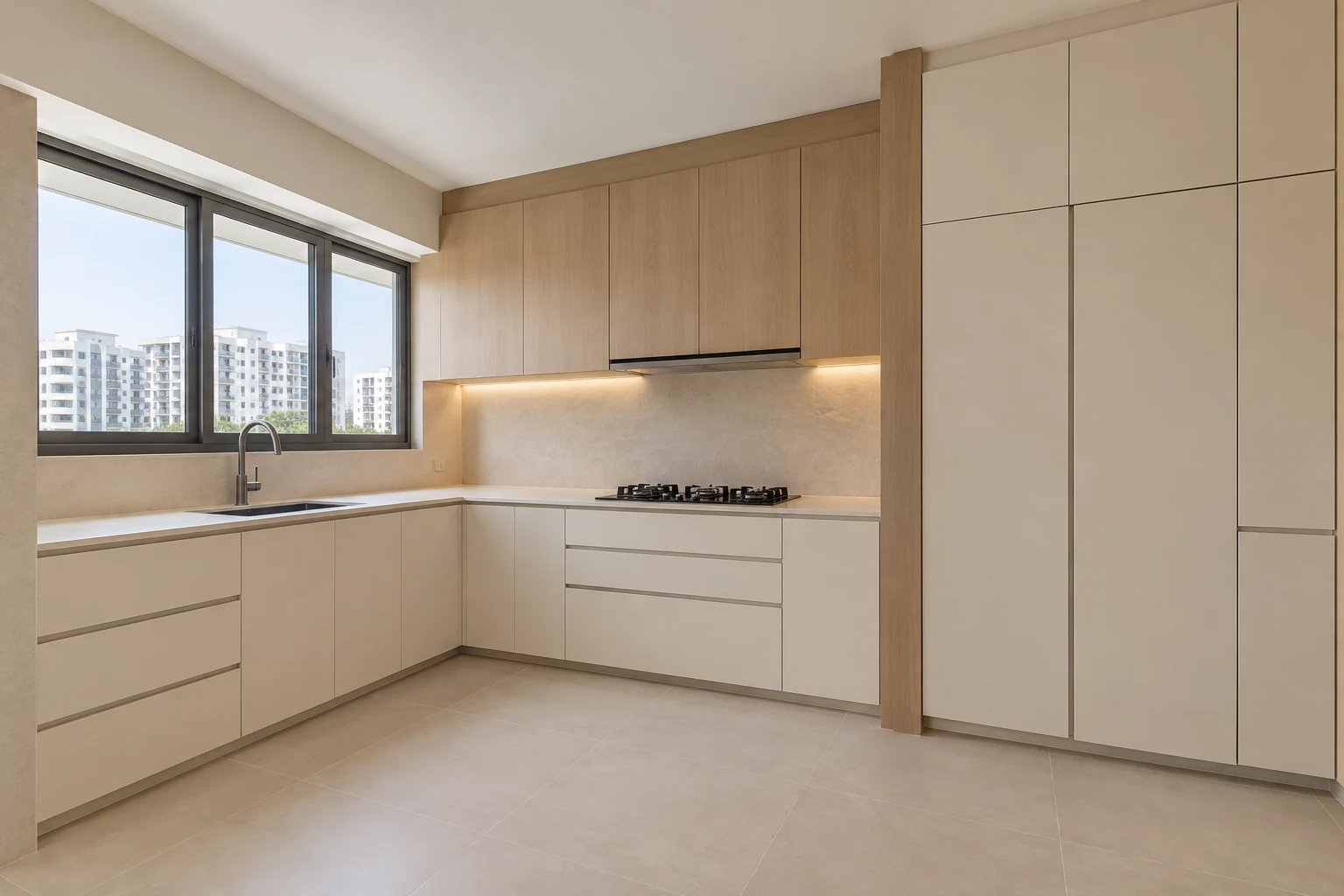
Acrylic kitchen cabinets usually need a more precise discussion than the name suggests. The visible acrylic-based surface, supporting board, edges and hardware form an assembly. Confirm what the supplier is actually proposing before comparing its appearance or price.
These eight checks help you evaluate a product-specific offer in Singapore. They do not transfer one manufacturer’s performance claims to every cabinet sold under an acrylic label.
1. Identify what the acrylic description covers
Ask whether the term refers to a surface, a completed panel or another specified component. Request the actual manufacturer and product range where available. Keep the supporting cabinet construction separately identifiable.
Do not assume the entire cabinet is made from the same material as its face. A clear description prevents a finish preference from becoming an unsupported expectation about the whole kitchen.
2. Compare the selected surface options
Review the actual range offered, including the relevant gloss or matt finish. An acrylic-based offer can differ in finish and supporting construction. Ask the supplier to identify the actual range and relevant documentation rather than treating every offer as the same product.
Ask which product is included in the quotation and which alternatives change the scope. Retain the selected reference rather than approving only a generic colour description.
3. Inspect an assembled sample
Look at an edge, corner and the relationship between front and backing, not only a loose swatch. Ask the fabricator how the proposed assembly will look on exposed ends and when doors are open.
Review the sample beside the worktop and flooring. The visible result depends on the completed door and surrounding palette as much as on the central face colour.
4. Test reflections against the room
Consider daylight and task lighting across the full cabinet area. A reflective surface can make nearby objects and light sources more noticeable. Compare it in conditions relevant to the home rather than only under showroom lights.
If the household prefers a quieter appearance, ask to see an appropriate alternative. Do not assume that a finish looking subtle on a small panel will behave identically across a tall cabinet bank.
5. Coordinate handles and opening systems
Discuss how users will open doors without unnecessary contact or awkward reach. Compare handles, integrated grips or other proposed mechanisms using the actual cabinet layout.
Have hardware suitability assessed for the selected door assembly. A handleless appearance is not a complete operating specification, and a selected surface should not be approved independently of the fittings needed to support it.
6. Read product-specific care instructions
Obtain the actual manufacturer’s care and usage information. Ask about appropriate cleaning products and realistic expectations for normal marks. Avoid descriptions such as scratch-proof or maintenance-free unless a precise, relevant basis is supplied.
Different products can have different guidance. Do not copy care advice for an unrelated acrylic panel and assume it applies to the installed fronts.
7. Compare complete fabrication and installation
Check body construction, internal finish, edges, fittings, panels and installation. If a proposed acrylic front changes the fabrication detail, make that effect visible in the quotation.
Compare the same cabinet plan across alternatives. A finish upgrade figure does not establish the full kitchen price, especially when internals, worktops or removal work differ between proposals.
8. Keep the approved product record
Before fabrication, confirm the material schedule and final door arrangement. Review any later substitution before it is ordered. At handover, collect product details and applicable warranty terms.
Record outstanding finishing or adjustment items with the team. The useful outcome is an identifiable installed product and an understandable care arrangement, not simply a kitchen described as acrylic.
Compare the options
| Option | Useful when | Resolve first |
|---|---|---|
| Acrylic-based front | The actual finish suits the design | Product and backing specification |
| Alternative front finish | Another surface suits use or appearance | Compare an equivalent cabinet scope |
| Unspecified acrylic offer | Important product information is missing | Clarify before ordering |
A practical planning example
Illustrative example: a homeowner likes a high-gloss reference but finds the large assembled sample too reflective beside the planned lighting. The team compares another selected finish while keeping the cabinet layout and internals unchanged. The decision concerns the actual products, not a claim that one broad finish category is best for everyone.
Frequently asked questions
Are all acrylic cabinet fronts identical?
No. Confirm the product, supporting construction, edge treatment and care guidance.
Can I compare finishes from photographs?
Use photographs for direction, then inspect relevant physical samples and product information.
Does this guide recommend a particular brand?
No. Manufacturer information illustrates why the actual product must be identified and assessed.
Related planning: Kitchen Cabinet Design Singapore: Layout & Storage Guide · Matte vs Gloss Cabinets: 7 Singapore Finish Checks · Handleless Kitchen Cabinets: 7 Singapore Checks · Renovation Material Selection: 6 Sample Approval Checks.
References
Explore the related decision in Kitchen Cabinet Materials: 8 Singapore Spec Checks.
Plan your project with Crown Interior Design
Send your floor plan, photographs, intended use and budget priorities. Explore Crown Interior Design’s services and residential projects, then request a tailored quotation. Confirm the scope and any specialist involvement for your actual premises.
For wider planning, explore interior design in Singapore with Crown Interior Design.