
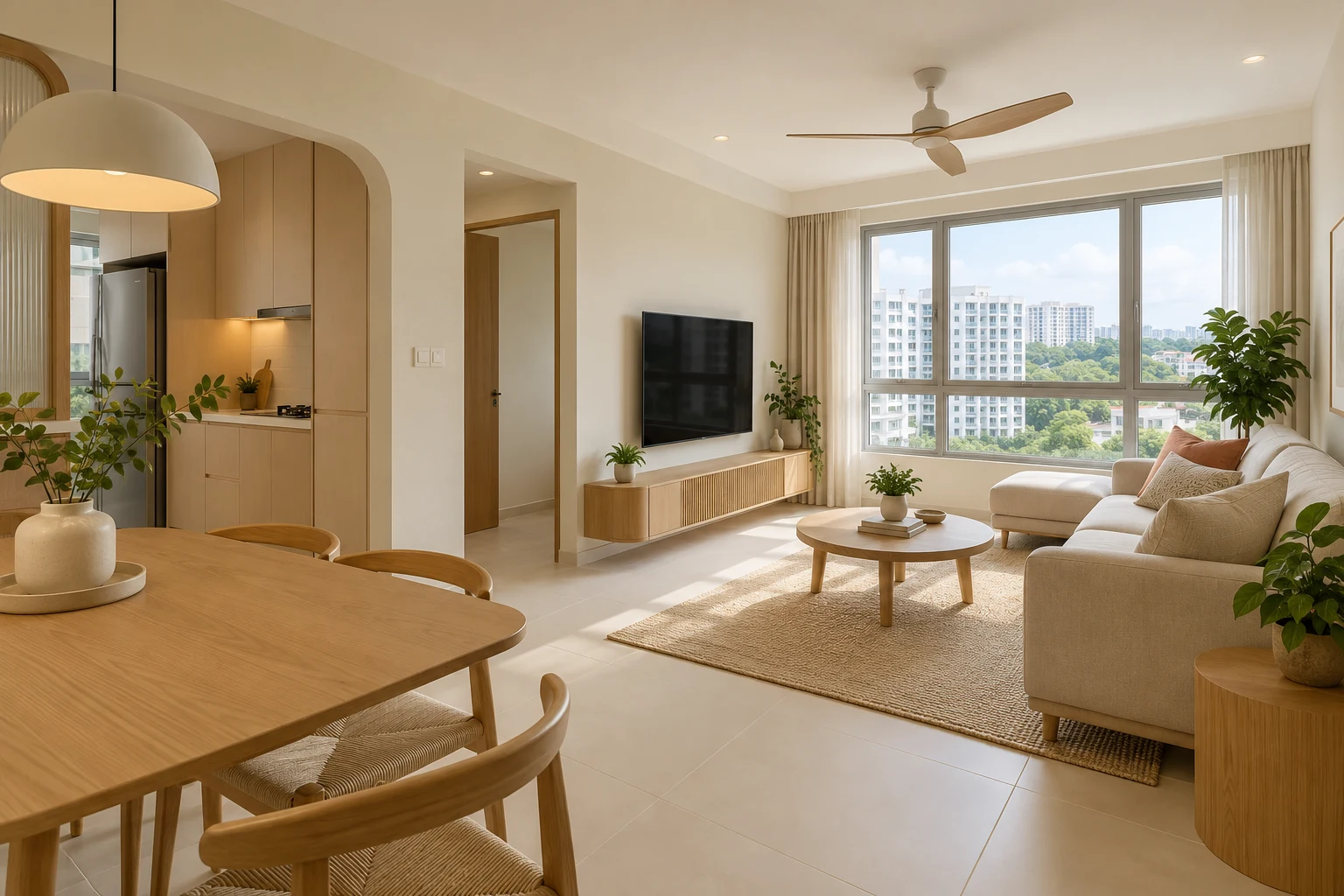
A rental-home renovation should support a safe, usable home and an understandable maintenance arrangement. The brief differs from designing around one owner’s highly specific lifestyle. Condition, straightforward use and appropriate flexibility can matter more than decorative complexity.
These eight decisions help an owner plan a long-term residential rental refresh. They do not establish eligibility to rent out a property, predict rental income or replace the applicable property and tenancy requirements.
1. Confirm the permitted use separately
Before commissioning a rental-focused design, check the applicable requirements for the actual property and intended arrangement. HDB owners should use current official renting-out information rather than assuming renovation creates eligibility.
Keep this decision separate from the visual brief. A contractor’s quotation or a completed room does not constitute approval to rent out the flat, a bedroom or the property in a particular way.
2. Assess condition before cosmetic work
Identify concerns that need appropriate investigation or repair before selecting new finishes. Record what will remain and what will be replaced. A repaint or cabinet panel should not conceal an unresolved condition.
Request a condition-led scope so necessary work is distinguishable from optional styling. This helps the owner compare proposals without assuming a more attractive photograph establishes the quality of the underlying home.
3. Choose a usable neutral layout
Plan normal furniture positions, storage and everyday movement without designing around an unusually narrow use. Keep rooms adaptable where the intended rental arrangement allows it. Avoid filling spare floor area with fixed features simply because it is available.
Check doors, access and the actual furniture sizes. A flexible arrangement should still feel complete and practical, rather than leave every tenant to solve basic storage or circulation problems.
4. Specify materials with care information
Review actual product specifications and maintenance guidance. Consider how selected surfaces will be cleaned and how affected components could be repaired or replaced. Do not assume a generic durable label means maintenance-free.
Use a coherent palette with fewer unnecessary decorative junctions. The aim is a manageable home, not a guarantee that any finish will remain undamaged under every pattern of use.
5. Compare fitted and movable items
Use fixed storage where measured dimensions and a defined need justify it. Consider movable furniture where flexibility matters. Compare the complete installed or delivered options rather than assuming either route is always cheaper.
Follow relevant product installation and safety instructions. A freestanding appearance does not remove fixing requirements where they apply. Keep the intended inventory and responsibilities clear in the handover information.
6. Preserve service and maintenance access
Review access to relevant controls, equipment and service points with the appropriate parties. Avoid decorative enclosures that make ordinary maintenance unnecessarily difficult. Have any service changes assessed and carried out by the appropriate professionals.
Keep product model details and useful maintenance contacts. A straightforward arrangement can reduce confusion later, but it should not be presented as a promise of lower lifetime cost without actual supporting information.
7. Coordinate works with occupancy and access
If someone occupies the property, agree access and work arrangements with the relevant parties under the applicable agreement. Do not assume the renovation appointment settles tenancy questions. Seek appropriate advice where responsibilities are unclear.
Plan disruption, deliveries, protection and the sequence of unavailable facilities. A limited refresh can still affect daily use, so the scope needs more than an attractive finish selection and an indicative duration.
8. Document the completed home
Collect the final work scope, product information, care guidance and applicable warranty records. Record outstanding items and follow-up responsibilities with the renovation team. Keep an appropriate condition and inventory record for the rental arrangement separately.
Make the handover information understandable to the people who will use the home. Clear instructions and accessible maintenance information support practical operation without promising a particular tenancy outcome or return on investment.
Compare the options
| Option | Useful when | Resolve first |
|---|---|---|
| Condition-led refresh | The existing layout remains useful | Assessment and necessary repairs |
| Selective fixed storage | A specific fit problem needs solving | Access, inventory and installation |
| Flexible furnishing | Future users may have different needs | Actual sizes and safety requirements |
A practical planning example
Illustrative example: an owner considers extensive display joinery before renting out a home. After reviewing condition and normal furniture layouts, the brief shifts to useful storage, selected repairs and simpler movable pieces. The proposal identifies the complete scope and maintenance information. No rental increase, occupancy result or investment return is assumed, and property eligibility remains a separate matter.
Frequently asked questions
Will renovating guarantee higher rent?
No. This guide does not predict rental income or tenancy outcomes. Define a suitable property-specific scope.
Can I renovate an occupied rental home?
Resolve access, disruption and the relevant agreement with the appropriate parties before work. Do not assume permission.
Should everything be built in?
Only where fixed work solves a useful need. Compare flexibility, installation and normal room use.
Related planning: Resale HDB Renovation Singapore: Cost & Planning Guide · Partial Renovation Singapore: 7 Scope Decisions · Custom Carpentry vs Loose Furniture: 6 Buying Checks · Renovation Handover Checklist: 10 Singapore Home Checks.
References
Explore the related decision in Built-In vs Freestanding Wardrobes: 8 Buying Checks.
Plan your project with Crown Interior Design
Send your floor plan, photographs, intended use and budget priorities. Explore Crown Interior Design’s services and residential projects, then request a tailored quotation. Confirm the scope and any specialist involvement for your actual premises.
For wider planning, explore interior design in Singapore with Crown Interior Design.