
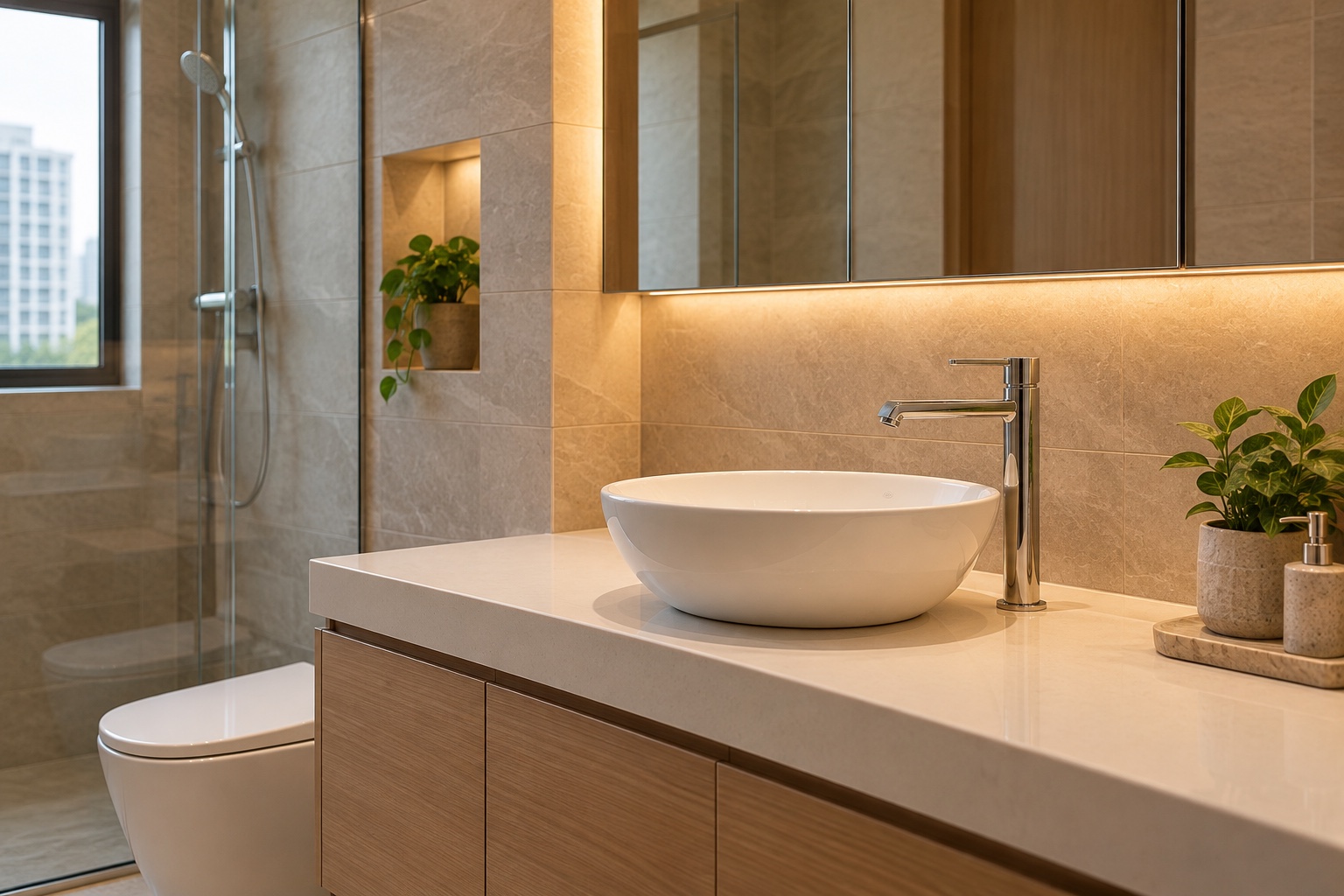
Choose the bathroom basin, tap and supporting surface together. A countertop bowl sits above the worktop; an undermount basin sits beneath the opening; other inset or wall-mounted arrangements introduce their own interfaces. The useful question is which complete assembly suits the people using it and the bathroom you intend to retain.
Featured image: AI-generated design concept; not a completed Crown project or an approved technical drawing.
1. Start with the users and daily tasks
List who uses the basin, whether children need assistance, and what normally sits beside it. Test hand washing, face washing and cleaning rather than assessing the bowl as a decorative object. A dramatic vessel may be attractive but should not force an uncomfortable reach.
Include the mirror and lighting in the same user test.
2. Compare the mounting arrangements
Ask the supplier to explain the installation detail for each actual product. A countertop bowl, inset basin and undermount basin do not use the same cut-out or support. If the surface is being retained, assess compatible replacements before choosing an appearance.
The outside bowl dimensions alone do not establish how it can be installed.
For the surrounding cabinet rather than just the basin, read 7 Bathroom Vanity Checks for Singapore HDB Homes.
3. Calculate the finished rim position
Review the combined cabinet, worktop and basin height as an assembly. A cabinet that suits an inset basin may place a vessel rim too high for a user. Mock up the approximate relationship before fabricating fixed furniture.
Do not copy a single cabinet dimension from a photograph and assume every bowl will sit comfortably on it.
4. Select the tap at the same time
Check the spout's height, reach and operating space against the bowl. Include the water's landing position and the room needed to use the handle. A tall mixer is not automatically compatible with every vessel.
Ask the supplier to confirm the pairing and check the exact tap's applicable WELS product information.
Compare support and storage arrangements in Wall-Hung vs Floor Vanities: 7 Singapore Buying Checks.
5. Protect useful setting-down space
Draw soap, a toothbrush cup and the few items you need at the basin. A large bowl may leave almost no usable ledge in a narrow bathroom. Compare a smaller basin or different mounting arrangement before extending the cabinet into circulation.
Keep splash-sensitive objects and electrical grooming equipment out of inappropriate wet positions.
6. Draw the waste and cabinet interior
Show the basin underside, trap and other connections inside the vanity. Check drawers and shelves in their open and closed positions. A concealed waste arrangement still needs suitable access.
If the basin has an overflow or requires a specific waste fitting, confirm that exact combination with the supplier instead of selecting components independently.
If the replacement becomes a larger wet-area project, review HDB Toilet Renovation Singapore: Cost & Planning Guide.
7. Review cleaning around every junction
Look at the rear of a vessel, the underside edge of an undermount opening and the joint against the wall. Ask how the exact materials and fittings should be cleaned and maintained. An elegant joint in a rendering can be awkward to wipe when the basin sits too close to the backsplash or tap.
8. Confirm removal, installation and making good
Ask who checks the retained surface, handles any new opening and connects the fitting. Distinguish a basin purchase from a complete installation scope. PUB separates simple plumbing work from regulated work; have the actual job classified appropriately.
For a wider HDB bathroom renovation, check the applicable finish and alteration rules before committing to surrounding changes.
A practical planning example
The following is a hypothetical planning scenario. A compact bathroom already has a vanity with drawers. The owner wants to replace an inset basin with a countertop bowl.
The new assembly must be tested for finished rim height, a suitable tap, the retained surface opening and the position of the waste inside the drawers. If those interfaces do not work, changing only the bowl may be less sensible than selecting a compatible inset replacement. The example illustrates why a basin photograph is an incomplete purchase specification.
Compare the scope before committing
| Option | When to consider it | What to confirm |
|---|---|---|
| Countertop bowl | A visible feature above the surface | Combined height and rear cleaning |
| Undermount basin | A clear worktop edge | Surface suitability and support |
| Inset basin | A rim over the opening | Template, ledge and retained cut-out |
References for your renovation brief
Check the current guidance and the exact product or premises requirements with the responsible professional. Product examples below do not establish compatibility for every brand or model.
Frequently asked questions
Does an undermount basin fit any vanity top?
No. Confirm the worktop, opening, support and selected product's instructions with the fabricator and installer.
Should I buy the tap after the basin arrives?
Resolve both together before ordering. Spout reach, mounting and overall height affect whether the assembly works.
For a real Crown residential interior reference, explore 178C Hougang Citrine. Its portfolio photographs are separate from the conceptual illustration in this guide; they do not demonstrate every product or installation discussed here.
Discuss your renovation scope with Crown
Send Crown your bathroom measurements and your basin and tap shortlist to discuss the renovation scope and request a quotation. Start with Crown’s interior design services, or contact the team with your brief. Confirm site conditions, specialist responsibilities and the agreed work before ordering.