
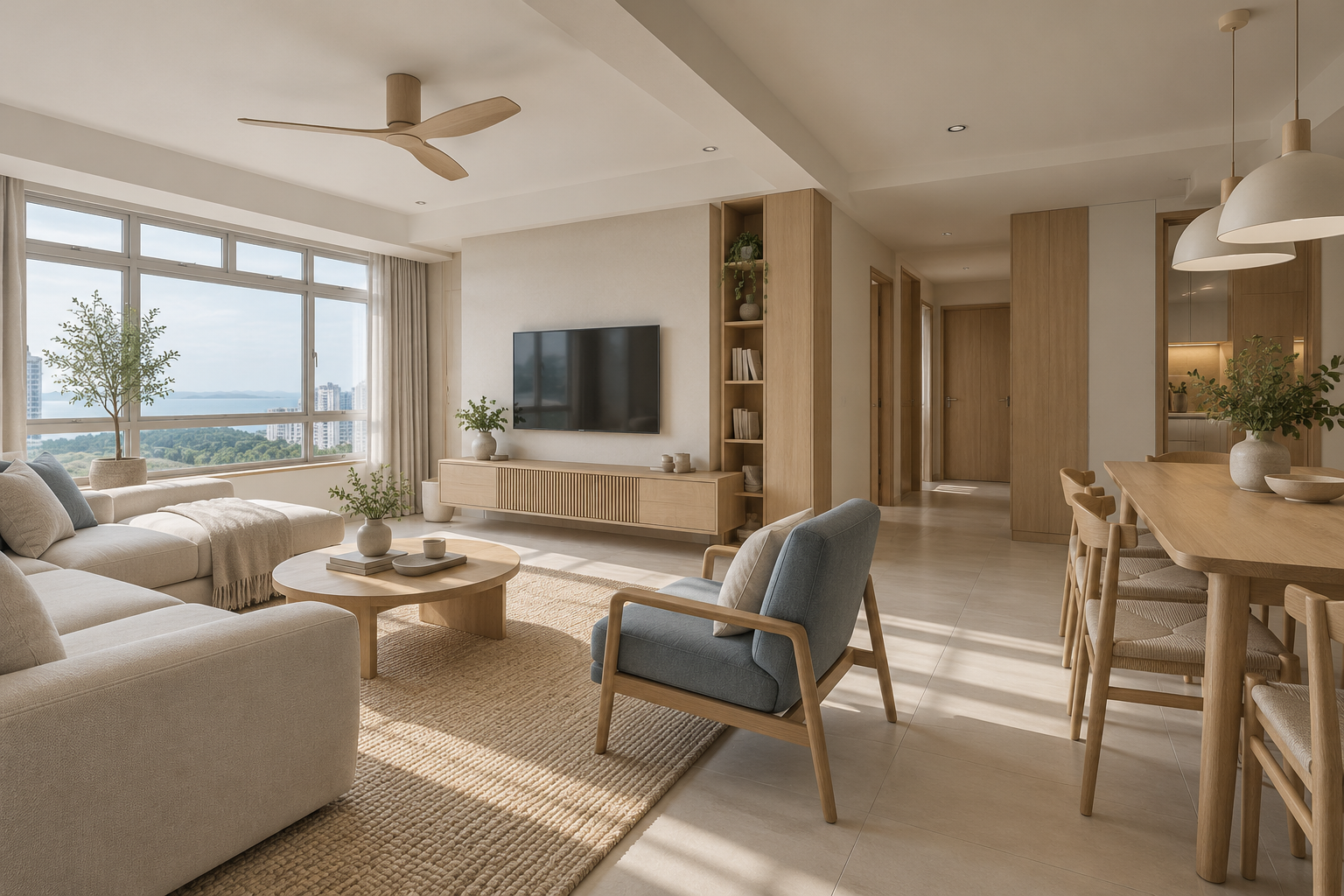
Coastal interior design can give a Singapore apartment a relaxed direction through light timber, off-white, soft colour and comfortable textiles. It does not require a sea view or nautical decorations. The useful brief is a light, coherent home that supports the household’s routine rather than a literal beach-themed set.
This guide focuses on palette, furniture and material coordination for an ordinary HDB, BTO or condo interior. It does not claim that pale finishes improve ventilation or that coastal styling makes a home maintenance-free. Review actual products and conditions before translating a reference into fixed work.
1. Choose the neutral palette in the real room
Compare off-white, cream and light grey samples beside the retained floor and doors. Daylight and artificial light can change how those colours relate. A white that looks crisp on a screen may appear cool against warm timber. Select the main relationship first, then introduce a restrained accent. Reviewing larger samples together is more useful than approving several nearly matching colours separately in different showrooms.
2. Keep blue as a choice rather than a requirement
A muted blue-grey or green can support the scheme, but it need not appear on every cabinet or wall. Try colour through upholstery, art or a movable chair if you want flexibility. Review it from adjoining rooms. A coastal direction can remain predominantly neutral. Avoid adding several seaside symbols simply to make the theme obvious; the room’s proportions and material balance should carry most of the effect.
3. Select comfortable furniture at apartment scale
Try the sofa and chairs and place their actual dimensions on the plan. A deep resort-style lounge may reduce useful circulation in a compact flat. Draw dining chairs occupied and check access to windows and doors. Choose pieces for everyday use before their photogenic appearance. A practical, comfortable arrangement can feel relaxed without filling the room with oversized seating or decorative stools that have no clear purpose.
4. Coordinate timber and woven details
Use a dominant timber tone and add texture where it has a useful role. Confirm the actual material and care requirements of woven or cane items. Natural-looking does not mean suitable for every exposure or activity. A simple cabinet may be better than a textured front near a busy cleaning area. Compare the finishes together so the room feels related without requiring every piece of furniture to be an exact match.
5. Keep storage quiet but fully specified
Light cabinet fronts can provide a calm background, but they still need practical internal arrangements. Count the household’s belongings and allocate everyday storage before creating display shelves. Check handles, edges and cleaning instructions. Avoid assuming that a pale colour makes poorly organised storage disappear. The room feels easier to use when everyday objects have an accessible home and the visible surfaces can remain available for their intended activities.
6. Review window treatments and lighting together
Choose window treatments for privacy, light control and the actual installation conditions. A sheer curtain in a reference may not provide the privacy your household expects. Coordinate it with useful lighting for meals, reading and work. Keep controls and equipment accessible. The light visual direction should not rely on glare, an overexposed rendering or a room that is comfortable only during a short period of daylight.
7. Retain what supports the brief
A suitable existing floor or cabinet can often be considered within the palette rather than replaced automatically. Compare the visual and practical benefit of each proposed change. Request a scope-based quotation separating necessary work from optional styling. Crown Interior Design can discuss a coastal-inspired interior using your actual home, retained items and priorities. The result should be a workable renovation brief rather than a purchase list assembled around a theme name.
Compare the options before committing
| Option or decision | Useful when | Check before approval |
|---|---|---|
| Neutral fixed finishes | The home needs a calm long-term base | Samples beside existing floors and doors |
| Movable colour accents | The household wants flexibility | Actual light and relationship to adjoining rooms |
| Selected texture | A few materials add character | Care, exposure and practical location |
A worked planning example
An illustrative resale-condo owner likes a light coastal palette but has a serviceable warm floor. The design can compare retaining that floor with cream cabinetry and a muted blue chair against replacing it purely to imitate a reference. Furniture sizes and useful storage are reviewed first. This example shows how a style can guide selection without assuming a complete replacement or a view of the sea.
What to bring to the design discussion
- Photographs of retained finishes in real light
- Furniture sizes and comfort preferences
- Privacy and light-control needs
- Essential work and optional decorative purchases
Frequently asked questions
Do I need a sea-facing apartment?
No. This is an interior direction based on selected colours, materials and furniture relationships.
Must the room use blue and white?
No. A predominantly neutral scheme with restrained accents can suit the brief.
Is a light-coloured home harder to maintain?
Care depends on the actual products, location and routine. Review specifications rather than judging maintenance by colour alone.
Plan your project with Crown Interior Design
Send your floor plan, current photographs, intended use, timing and budget priorities. Explore Crown Interior Design’s design and renovation services and residential projects, then request a tailored quotation. The proposed scope and any specialist involvement should be confirmed for your actual premises.
Continue planning: Contemporary Interior Design: 7 Singapore Planning Choices · Balcony Design Singapore: 7 Checks Before Renovation · Living Room Design Singapore: HDB & BTO Layout Guide.
For a separate practical checklist, see RenoLinkUp’s owner-supplied renovation items checklist.