
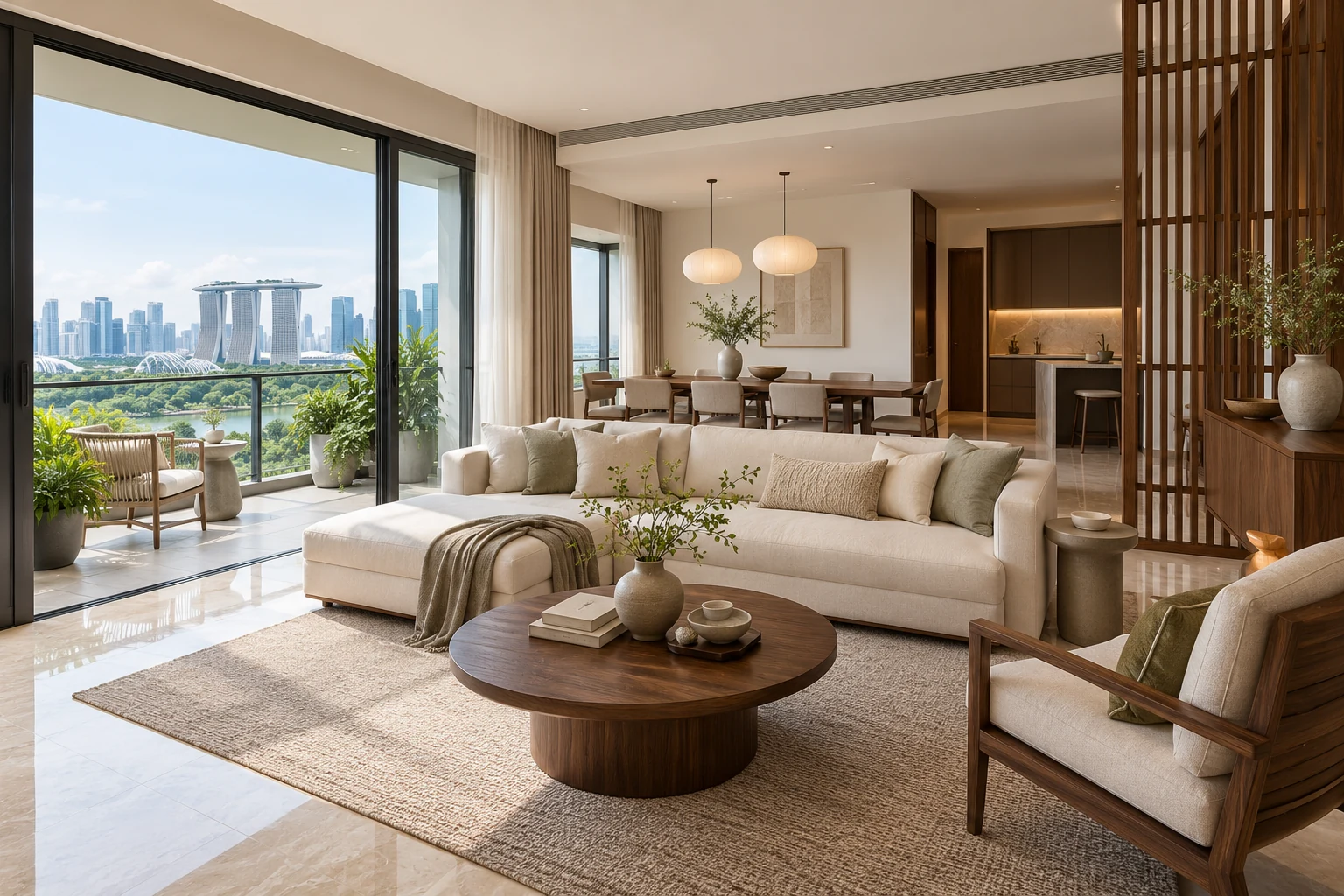
Modern Oriental interior design can combine contemporary living with selected references meaningful to the household. It should not reduce varied traditions to a compulsory colour scheme or a room filled with unrelated ornaments.
For a Singapore HDB, condo or landed interior, begin with the people, furniture and objects the home needs to accommodate. The strongest visual direction is one the household can explain and use, rather than a catalogue of features labelled Oriental.
1. Choose specific personal references
Bring a few images or objects and explain what appeals to you: proportions, timber, a screen pattern or a particular furniture shape. Distinguish that preference from elements you do not want. Avoid treating every cultural reference as interchangeable. The brief can be contemporary and selective without claiming to represent an entire tradition or promising outcomes from a decorative motif.
2. Keep the room plan practical
Test actual seating, dining and storage in the measured room. A decorative screen should have a useful role and leave suitable circulation. Large feature furniture can overwhelm a compact apartment even when its style suits the concept. Resolve the layout first, then decide which details reinforce it rather than using a style label to justify unnecessary fixed work.
3. Use timber and pattern with proportion
Compare the amount of visible grain, lattice or repeated detail across the room. A restrained accent may provide enough character without treating every cabinet front as a feature. Review physical samples beside flooring and retained furniture. Several similar-but-different timber tones can become visually busy; a deliberate contrast may be more coherent than forced matching.
4. Select furniture for comfort as well as character
Check the actual seat, table and cabinet dimensions and use them in the plan. A sculptural chair can be a useful accent without being the household’s only comfortable daily seat. Consider the needs of different users. If keeping an inherited piece, give it a defined place and function rather than designing around a generic replacement that loses its personal significance.
5. Let objects and lighting support the composition
Choose a realistic number of display objects and provide suitable support and access. Avoid building niches for an imaginary collection. Review the lighting with the actual surfaces and how the room is used. Decorative emphasis should not leave reading, dining or working positions dependent on an attractive but impractical mood setting.
6. Define the custom work precisely
Record patterns, edges, openings and internal storage with samples and drawings. Detailed screens or joinery can affect fabrication, cleaning and price. Compare the complete specification and identify what can remain loose or flexible. If the household has religious requirements, obtain those from the household and its chosen adviser rather than inventing universal placement rules.
Compare the options
| Option | Useful when | Resolve first |
|---|---|---|
| Contemporary base with selected accents | A restrained interpretation suits everyday life | Personal references and proportions |
| Feature screen or joinery | A specific element has a functional role | Access, detail and cleaning |
| Retained meaningful furniture | Existing objects should shape the home | Actual dimensions and condition |
A practical planning example
An illustrative household keeps a walnut cabinet from an older home. Rather than copying its detail across every surface, the new plan can give it a considered position and use quieter contemporary furniture around it. This is a design exercise, not a completed Crown Interior Design project or a claim that one style suits every family.
Frequently asked questions
Must the scheme use red and gold?
No. Choose colours and materials that express the household’s actual preferences and work in the room.
Can it suit a compact BTO?
Assess the actual layout and use selected details rather than oversized features copied from another property.
Does every item need to match?
Coordination can include contrast. Review the whole composition and daily use.
Related planning: Contemporary Interior Design: 7 Singapore Planning Choices · Interior Design Fees Singapore: What Are You Paying For? · Built-In Sideboards: 6 Singapore Dining Storage Checks.
Explore the related decision in Altar Cabinet Design: 6 Singapore Home Planning Checks.
Plan your project with Crown Interior Design
Send your floor plan, photographs, intended use and budget priorities. Explore Crown Interior Design’s services and residential projects, then request a tailored quotation. Confirm the scope and any specialist involvement for your actual premises.