
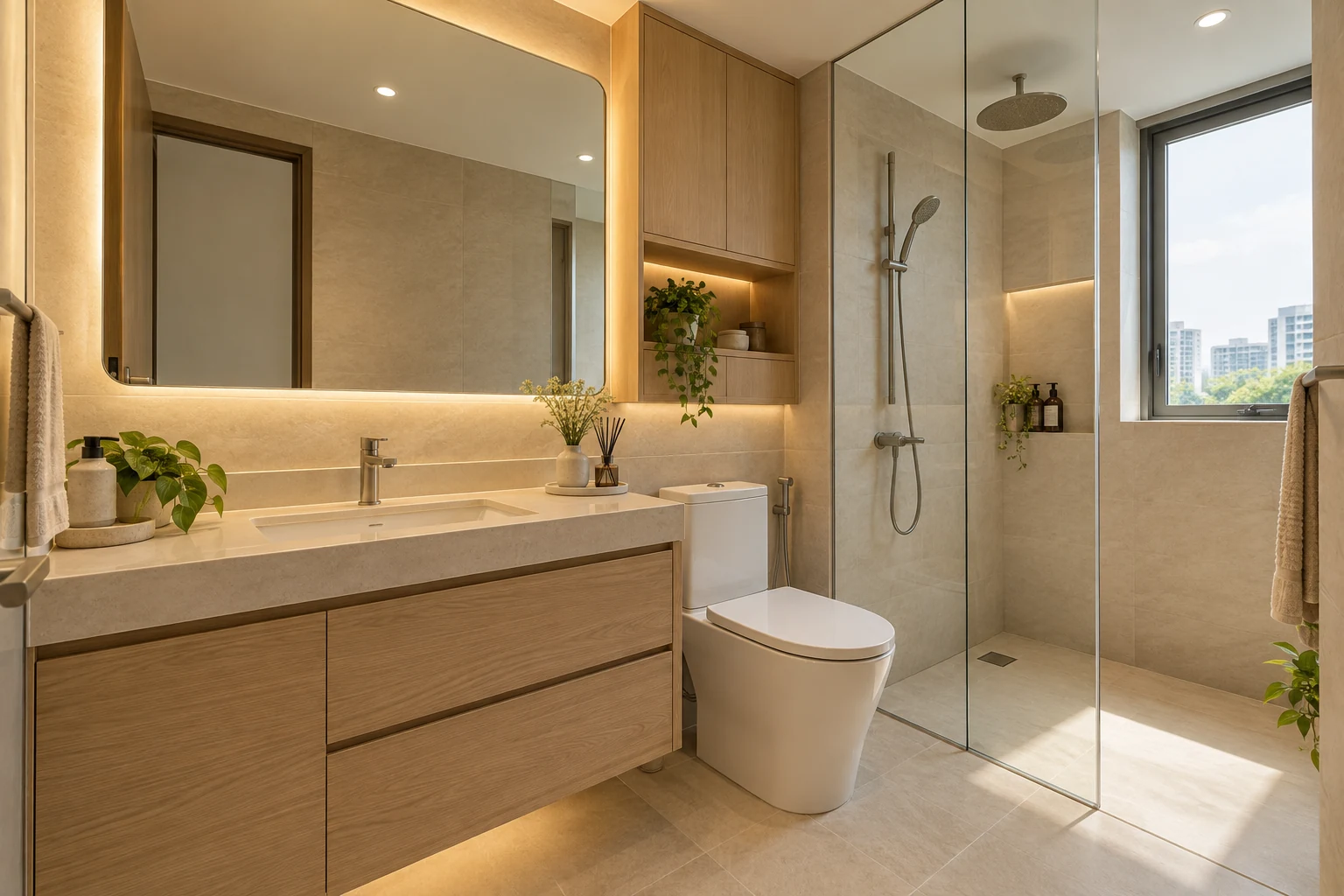
Bathroom lighting has several jobs: helping someone use the mirror, making the room easy to navigate and supporting cleaning. A decorative mirror glow is not a substitute for checking all three.
Plan fixtures and controls with the actual bathroom layout before electrical and ceiling works. Equipment suitability near water and the complete installation must be assessed by the responsible qualified parties, using the selected product specifications.
1. Separate the lighting tasks
Describe mirror use, showering, general movement and cleaning. Review who uses the room and when. A single dramatic source may leave some tasks shaded. Ask for a coordinated lighting arrangement that addresses these activities rather than increasing the number of fixtures without a clear purpose.
2. Check faces at the mirror
Review the proposed source positions with the actual mirror and standing location. Overhead light can create shadows that decorative backlighting does not necessarily correct. Test a sample or representative arrangement where practical. Judge useful facial visibility rather than assuming the brightest-looking mirror in a showroom is the best choice.
3. Assess wet-area equipment suitability
Give the appointed electrical professional the actual product documentation and proposed locations. Have the applicable requirements assessed for the room. Do not transfer a generic rating or location rule from another bathroom. Confirm the complete assembly and installation rather than choosing an attractive fitting and deciding its suitability afterwards.
4. Coordinate ceiling and cabinet details
Show lights, ventilation openings, shower screens and mirror cabinets together. Check that a new cabinet does not conceal equipment that requires access. Resolve wiring and power-supply positions before finishes are closed. Decorative continuity is useful, but it should not leave a component that cannot be reached for replacement.
5. Review glare and reflections
Consider the user’s view from the basin and shower, including reflections in glass and polished surfaces. More light is not always more comfortable. Discuss diffusion and positioning with the supplier. Review actual samples alongside the chosen tiles so the colour and brightness are assessed in context.
6. Choose understandable controls
Decide which lights should operate together and whether separate task or night-time settings are useful. Keep the operation simple for the household. Confirm compatibility if dimming is proposed. A control feature should be specified with the actual equipment rather than added as an assumption after the electrical work is complete.
7. Inspect operation and handover records
Compare the complete equipment, installation and control scope in quotations. Retain models, instructions and service-access information. At handover, test the intended scenes and mirror use with the installed finishes. Ask the responsible parties to resolve defects and confirm electrical testing rather than accepting appearance as the only completion check.
Compare the options
| Option | Useful when | Resolve first |
|---|---|---|
| General light | Movement and cleaning need coverage | Shadowed areas |
| Mirror task light | Facial visibility is the priority | Source position and glare |
| Decorative light | Atmosphere is an additional goal | Useful task lighting remains |
A practical planning example
An illustrative owner chooses a backlit mirror and removes all other proposed lighting. Testing the room’s tasks reveals shaded shower and cleaning areas. A coordinated arrangement can retain the mirror effect while addressing those activities. This is a planning example, not a completed Crown Interior Design project or a lighting compliance assessment.
Frequently asked questions
Is a backlit mirror enough?
Check mirror tasks and the rest of the room rather than relying on the decorative effect.
Can any LED strip be used?
The actual product and location need suitability assessment by the responsible parties.
Should dimmers be selected later?
Confirm control compatibility before purchasing equipment and completing wiring.
Related planning: HDB Toilet Renovation Singapore: Cost & Planning Guide · 8 HDB Lighting Design Decisions Before Renovation · Bathroom Mirror Cabinets: 6 Checks Before Ordering.
References
Explore the related decision in Wall-Hung vs Floor Vanities: 7 Singapore Buying Checks.
Plan your project with Crown Interior Design
Send your floor plan, photographs, intended use and budget priorities. Explore Crown Interior Design’s services and residential projects, then request a tailored quotation. Confirm the scope and any specialist involvement for your actual premises.