
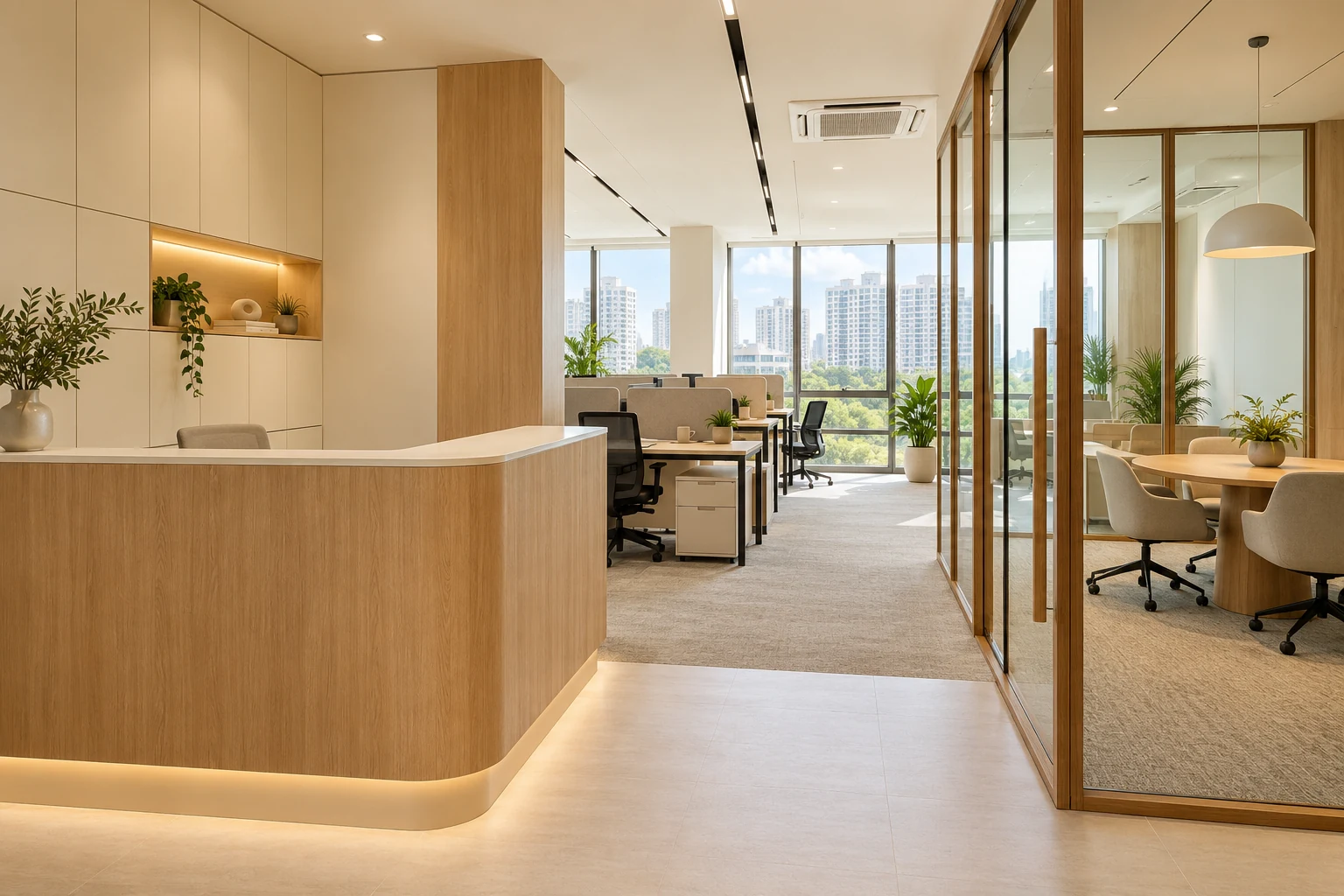
Choosing how to appoint an office fit-out team affects who develops the design, prices the work and coordinates delivery. Labels such as design-and-build or consultancy are not enough on their own: the appointment must explain the actual services and responsibilities.
These eight decisions help an organisation compare approaches before committing. They are a procurement discussion guide, not a statement that every provider offers the same services or that one route is always best.
1. Define how complete the brief already is
Explain the headcount, work patterns, meeting needs, equipment and business constraints. Identify which decisions remain unresolved. A team asked to develop a workplace concept is taking on a different task from one pricing a fully developed design.
Give prospective firms the same starting information. Otherwise, one may allow for substantial design development while another assumes the client has already settled the layout and specification.
2. Name the design deliverables
Ask what plans, elevations, specifications and coordination documents will be produced, and when they are approved. A set of visual images is not necessarily a complete package for comparing construction work.
For a separate design appointment, clarify what is issued for pricing and how later queries are handled. For design-and-build, ask how the approved design and final construction scope remain traceable within the combined appointment.
3. Identify who prices and compares construction
Ask whether the provider constructs the work, obtains prices from others or supplies design information for a separate tender. Confirm what comparison or recommendation is included. Do not infer an independent tender review from a general project-management label.
Where options are offered, compare the same scope and specification. A low initial estimate based on unresolved assumptions is not directly comparable with a developed proposal containing coordinated quantities and responsibilities.
4. Map technical and approval responsibilities
List the relevant specialist assessments, landlord procedures and potential authority submissions for the actual work. Ask who appoints the necessary professionals and who coordinates their information. A commercial designer’s concept does not itself establish technical approval.
Keep scope and fees for these roles explicit. Do not assume that a combined appointment eliminates specialist requirements or that a separate consultant automatically includes every submission-related service.
5. Clarify site coordination and decision authority
Identify who schedules trades, answers site queries, reviews changes and reports to the client. State which decisions require client approval and how they are recorded. Several parties can work successfully together when the interfaces are clear.
Ask for the named project contact and the communication process. A single point of contact is useful, but the contract should still identify the responsibilities behind that contact rather than relying only on a service slogan.
6. Compare design changes before and after appointment
Ask how revisions are handled at each stage and what happens when an approved specification changes. Design development, client-requested alterations and discoveries on site may have different cost and programme effects.
Record the current drawings and decisions before procurement. A route should be evaluated on its actual change process, not an assumption that one arrangement includes unlimited revisions or makes every later change simple.
7. Review commercial terms and information handover
Read fees, payment milestones, exclusions and the documents provided at each stage. Clarify how approved information can be used under the appointment rather than assuming drawings can automatically be issued to another party.
Consider what happens if scope or procurement changes. Seek appropriate advice on contract terms where needed. The aim is a clear appointment that reflects the organisation’s intended process and its responsibilities.
8. Evaluate relevant delivery evidence
Request examples that resemble the office’s size, work pattern and building context. Ask what the firm’s role actually was in each example. Attractive photographs alone do not establish who designed, built or coordinated the work.
If awards are mentioned, verify the credited recipient, project and relevance. Select the appointment on documented capability and a clear scope rather than assuming an award label answers the practical delivery questions.
Compare the options
| Option | Useful when | Resolve first |
|---|---|---|
| Combined design-and-build | A coordinated design and construction appointment suits the brief | Actual included services and specialist roles |
| Separate design appointment | The client wants a defined design stage | Pricing documents and later coordination |
| Develop brief before procurement | Important business decisions remain open | Shared requirements before comparing proposals |
A practical planning example
Illustrative example: an SME compares a combined appointment with a design consultancy proposal. The first includes construction pricing; the second offers a defined design package but requires separate confirmation of site coordination. The client maps those services before comparing fees. This scenario does not recommend a contract form for every business or describe a specific Crown Interior Design appointment.
Frequently asked questions
Is design-and-build always faster?
Do not assume so. The brief, decisions, required assessments and actual delivery process determine the programme.
Does design consultancy include construction?
Check the specific appointment. Design, tender support, site coordination and construction may be separate services.
How should we compare firms?
Use the same brief, named deliverables, responsibility matrix, commercial terms and relevant project evidence.
Related planning: Office Renovation Singapore: Costs, Design Ideas, Timeline & Complete Guide · Office Fit-Out Tenders: 8 Checks for Comparable Quotes · Interior Design Fees Singapore: What Are You Paying For? · Award-Winning Office Interior Design: Singapore Guide.
References
For firm selection, use the award-winning office interior design evaluation guide to check the recognised work, credited recipient and relevance to your own appointment.
Explore the related decision in Interior Design Proposals: 8 Scope Checks in Singapore.
Plan your project with Crown Interior Design
Send your floor plan, photographs, intended use and budget priorities. Explore Crown Interior Design’s services and commercial projects, then request a tailored quotation. Confirm the scope and any specialist involvement for your actual premises.
For wider planning, explore interior design in Singapore with Crown Interior Design.