
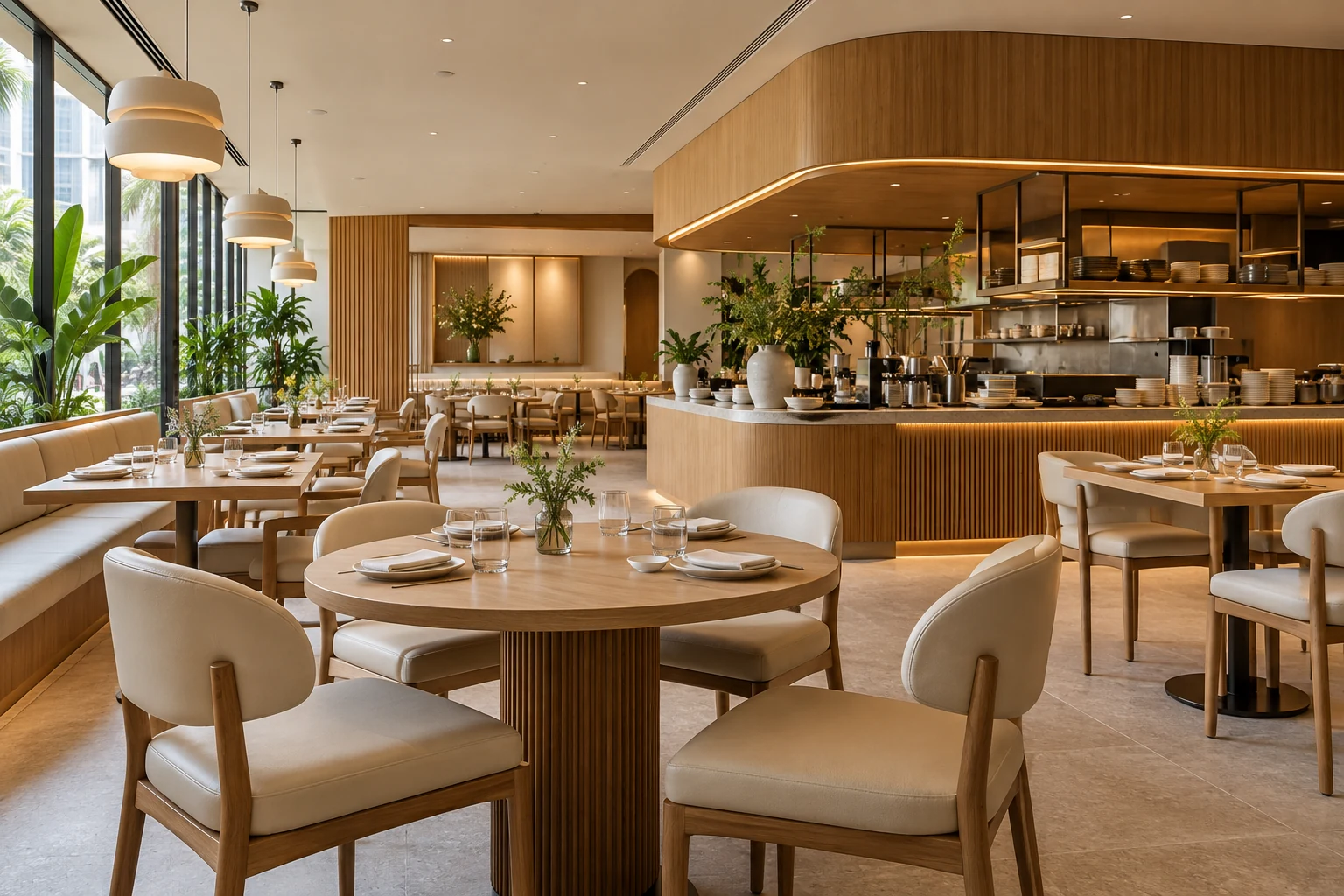
Restaurant fit-out quotations become more useful when every firm prices the same operation. A menu, kitchen equipment schedule and service model provide a stronger basis than a broad request for a restaurant renovation rate.
These eight checks support quotation comparison after the business brief is defined. They do not confirm premises suitability, approve a kitchen design or replace the operator’s licensing and technical responsibilities.
1. Issue the same menu and operating brief
Share preparation methods, service pattern, seating intentions and any takeaway activity. Identify owner-supplied equipment and what still needs selection. A light-preparation cafe and a restaurant with different cooking needs are not comparable scopes.
Ask each proposal to state the version of the brief it prices. Where assumptions differ, resolve them before judging the totals or an advertised per-area figure.
2. Use a model-specific equipment schedule
List selected or proposed equipment with supplier information and installation requirements. Record retained items separately and have their suitability assessed. Do not assume an old kitchen’s equipment can simply remain in the new operation.
Clarify which supplier provides each item and which party installs and commissions it. A cabinet opening or purchase allowance does not describe the full equipment interface.
3. Separate kitchen and dining scopes
Identify food-preparation work, counters, finishes, seating, service stations and relevant storage. Show the common layout being priced. A proposal concentrating on customer-facing finishes may leave significant operational work outside its total.
Discuss the working sequence with the actual operator. The design should support staff tasks and cleaning as well as appearance. Avoid comparing two attractive dining concepts while their kitchen assumptions remain unresolved.
4. Identify specialist service assessments
Have the appropriate professionals assess relevant electrical, gas, ventilation, water, drainage and other needs for the actual operation. Request confirmed findings and note remaining investigations.
Ask the quotation to show the technical work and responsibilities rather than hiding them under a general M&E allowance. Do not choose a proposal on the assumption that existing capacity is sufficient without the required assessment.
5. Map landlord and authority interfaces
Confirm who prepares relevant information, coordinates with management and appoints required professionals. The operator should check the current property-use and food-business requirements for the intended premises.
A previous restaurant operation does not establish approval for every new activity or alteration. Keep relevant submissions and licensing dependencies visible in the programme and appointment rather than treating them as guaranteed automatic steps.
6. Review retained items and making good
Document what remains, what is removed and what needs further investigation. Include protection, dismantling, disposal and exposed finish interfaces. Ask how unexpected findings will be reported and approved.
For takeover premises, compare the complete adaptation scope with replacement options where appropriate. Retention may be useful, but it should be based on assessed condition and compatibility rather than a general promise of cheaper work.
7. Reconcile allowances and selected alternatives
Identify provisional amounts, unresolved models and optional finishes. Request the same confirmed selections wherever possible. Compare exclusions alongside inclusions so a lower headline does not conceal work needed for the intended operation.
When choices are accepted, obtain a consolidated revised quotation and drawing set. Keep the price effect and relevant programme consequences together rather than approving changes through disconnected messages.
8. Define testing and opening-readiness boundaries
Ask what relevant commissioning, demonstrations and handover records are included. Record outstanding items and follow-up contacts. Separate fit-out completion from the operator’s own staffing, stocking and licensing steps.
Review payment milestones and the written change process before appointment. The useful quotation leaves both parties clear about what is being delivered and what still needs action before the business can operate.
Compare the options
| Option | Useful when | Resolve first |
|---|---|---|
| Light adaptation | Assessed retained elements suit the operation | Condition and service compatibility |
| Broader fit-out | The menu or layout needs coordinated change | Shared equipment and technical brief |
| Incomplete initial estimate | Important information remains unresolved | Identify assumptions before comparison |
A practical planning example
Illustrative example: two restaurant proposals show similar dining-room work, but one assumes existing kitchen services remain unchanged. The operator obtains the relevant specialist findings and issues the same equipment brief to both firms. Revised quotations then reflect the intended operation. This scenario does not certify capacity, predict licensing approval or provide a standard restaurant cost.
Frequently asked questions
Can restaurant quotes be compared by area alone?
Not reliably. Operation, condition, equipment and service work need to be defined alongside area.
Does a fit-out quote include food licensing?
Confirm the actual appointment and the operator’s responsibilities. Do not assume the label includes every required step.
What documents help most?
A current layout, menu and operating brief, equipment schedule, site information and relevant landlord requirements.
Related planning: Restaurant Renovation Singapore: Cost & Fit-Out Guide · Restaurant Takeover Fit-Out: 8 Singapore Checks · Restaurant Seating Layouts: 6 Singapore Planning Checks · Restaurant Service Stations: 6 Singapore Layout Checks.
For a separate reference, use RenoLinkUp’s commercial cleaning storage checklist.
References
For firm selection, use the award-winning office interior design evaluation guide to check the recognised work, credited recipient and relevance to your own appointment.
Explore the related decision in Cafe Fit-Out Budgets: 8 Equipment Scope Checks.
Plan your project with Crown Interior Design
Send your floor plan, photographs, intended use and budget priorities. Explore Crown Interior Design’s services and commercial projects, then request a tailored quotation. Confirm the scope and any specialist involvement for your actual premises.
For wider planning, explore interior design in Singapore with Crown Interior Design.