
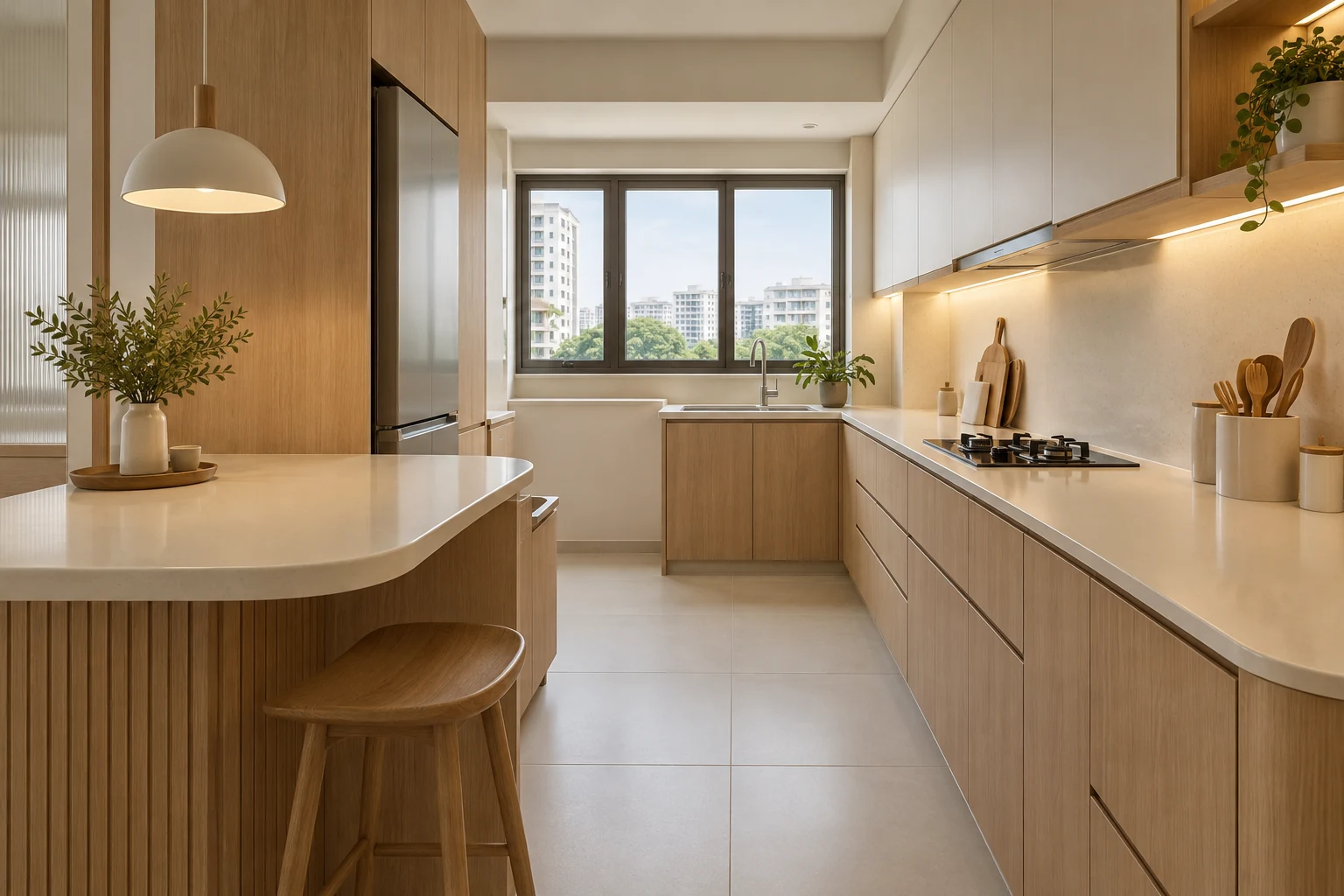
Solid surface is one option for a kitchen countertop, but the category name alone does not describe the selected product or installation. Colour, detailing, care and fabrication all matter when comparing it with other worktop choices.
These eight checks help you prepare a product-specific discussion. They do not claim that every solid surface has identical performance, that joints disappear in every design or that one material is best for every household.
1. Identify the exact proposed product
Ask for the manufacturer, product range, colour and relevant documentation. Do not treat a generic material label as the full specification. Keep the selected product identifiable in the quotation and drawings.
If a substitute is proposed later, review it as a new selection rather than assuming equivalence. The appearance, fabrication guidance, maintenance information and applicable warranty need to match what is actually supplied.
2. Review a realistic sample in context
Place the sample beside cabinet fronts, flooring and lighting references. Consider the size of the finished surface, not only a small swatch. Pale colours can look different beside warm oak, cream doors and the kitchen’s daylight.
Ask for relevant examples of the proposed finish and detail. Do not confuse an attractive photograph with evidence of the exact selected product or the likely joint arrangement in your own room.
3. Discuss joints with the fabricator
Ask where joints are proposed and what appearance is reasonably expected for the selected product and design. Long runs, corners and delivery constraints can affect fabrication. Avoid accepting a blanket promise that every joint will be invisible.
Show the actual room plan and access route. A layout that appears continuous in an image still needs a credible manufacturing and installation approach for the specific premises.
4. Confirm sink and edge details
Identify the selected sink, mounting approach, edge profile and any upstand or backsplash. Have the relevant fabricator and installer confirm suitability. Different details can change fabrication and future access.
Approve the actual fitting information before cut-outs are made. Keep product purchase, installation and connection responsibilities clear. A quoted length of countertop does not establish that every sink or edge detail is included.
5. Understand heat and everyday use
Read the selected manufacturer’s care guidance. For example, Corian’s guidance advises minimising direct heat exposure and protecting the surface from hot cookware. That product guidance should not be converted into a universal claim about every material.
Discuss your cooking routine with the designer and use appropriate protective practices for the actual product. A material described as heat resistant should not be assumed immune to damage.
6. Ask about marks and possible repair
Request a realistic explanation of how the selected finish may show wear and what professional repair options, if any, apply. Avoid promises that a surface cannot scratch or that every mark can be removed without consequence.
Ask who would assess a future problem and what the warranty or service arrangement actually covers. Distinguish a repair possibility from a guaranteed outcome for every type of damage.
7. Compare complete supply and installation
Check measurement, fabrication, support requirements, cut-outs, delivery and installation. If an existing top is removed, include the relevant dismantling and making-good scope. Confirm what remains outside the appointment.
Compare alternatives using the same plan and selected fittings. A supply-only figure and an installed worktop proposal should not be treated as directly comparable simply because both are expressed per unit of length.
8. Keep care and product records
At handover, collect the actual product details, care guidance and applicable warranty information. Review the agreed visible finishing and record any outstanding items with the team.
Keep these documents with the kitchen specification so future maintenance follows the selected product rather than generic internet advice. A useful material decision includes how the household will care for and use the surface after installation.
Compare the options
| Option | Useful when | Resolve first |
|---|---|---|
| Solid surface proposal | Its product and details suit the brief | Actual care and fabrication guidance |
| Alternative worktop | Another material better matches priorities | Compare the same installed scope |
| Countertop-only replacement | Cabinet retention is being assessed | Support, removal and fitting interfaces |
A practical planning example
Illustrative example: a household compares a pale solid surface with another worktop product for an oak kitchen. Instead of choosing from colour alone, they review joint locations, the selected sink, care guidance and complete installation scopes. The final choice follows their priorities and the product information. This is not a performance ranking, laboratory comparison or standard price recommendation.
Frequently asked questions
Is solid surface the same as quartz?
Treat them as different product categories and compare the actual proposed products and installation details.
Will every joint disappear?
Ask the fabricator about the selected colour, design and expected result. Avoid a universal assumption.
Can hot cookware go directly on it?
Follow the selected manufacturer’s guidance and use appropriate protection. Do not assume heat resistance means immunity.
Related planning: 8 Kitchen Countertop Checks Before You Order in Singapore · Sintered Stone vs Quartz: 7 Kitchen Buying Decisions · Laminate Kitchen Worktops: 8 Singapore Buying Checks · Kitchen Renovation Singapore: Cabinets, Costs & Planning.
References
Explore the related decision in Kitchen Countertop Replacement: 8 Singapore Checks.
Plan your project with Crown Interior Design
Send your floor plan, photographs, intended use and budget priorities. Explore Crown Interior Design’s services and residential projects, then request a tailored quotation. Confirm the scope and any specialist involvement for your actual premises.
For wider planning, explore interior design in Singapore with Crown Interior Design.