
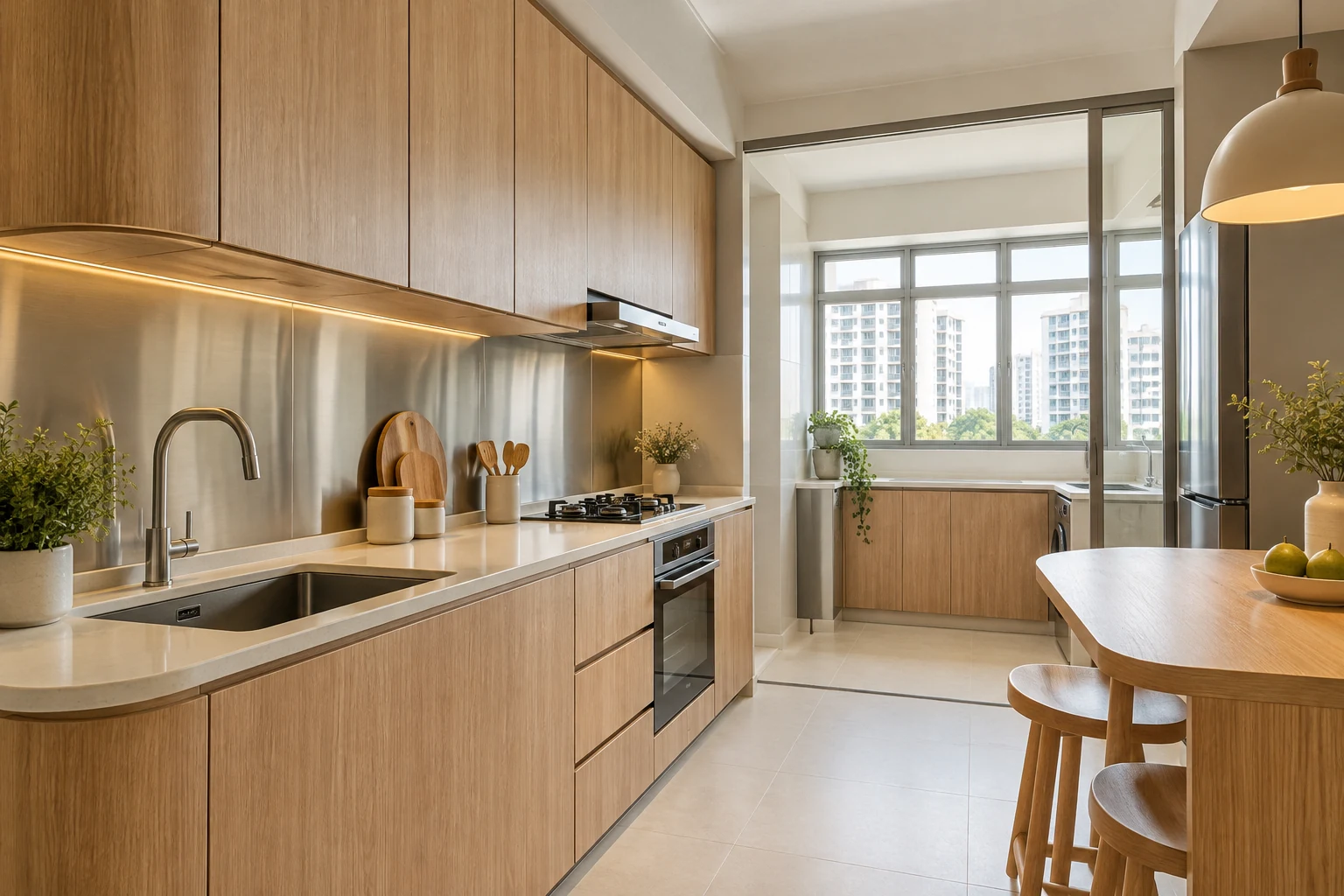
A stainless steel backsplash can suit a practical kitchen, but it needs more definition than a material name. The visible finish, sheet layout, edges and connections with sockets, cabinetry and worktops determine much of the result.
These eight checks help you discuss a product-specific proposal before ordering. They are not a fabrication method, appliance-clearance specification or promise that metal will remain free of marks in daily use.
1. Choose the actual finish and product
Ask for the proposed material specification and finish sample from the supplier or fabricator. Review it beside the cabinet and worktop materials. A brushed appearance and a more reflective finish can feel different in the same kitchen.
Confirm what will be supplied in writing. Do not assume every metal-look panel is the same product or that a photograph establishes the surface treatment and construction behind it.
2. Review reflections in the real lighting
Consider daylight, task lighting and views from adjoining rooms. A reflective backsplash can make lighting and objects more noticeable. Review a representative sample rather than judging only a close-up image.
Coordinate the lighting layout with the chosen surface. The aim is a useful working kitchen, not simply the brightest possible reflection. Discuss glare or visual distraction in the positions where the household normally stands.
3. Assess the supporting wall
Have the responsible installer assess the relevant wall condition and suitability for the proposed assembly. If an old backsplash is removed, identify what preparation and making good are included.
Do not use a new panel to conceal unresolved dampness or damage. Where the condition is uncertain, investigate it appropriately before finalising the installation scope. A finish choice cannot determine the cause of an existing defect.
4. Plan sheets, seams and edges
Ask where seams and visible edges are proposed, and how the fabricator expects them to look. Confirm corner and end treatments with the actual dimensions. A continuous-looking reference may not describe a practical one-piece installation in your kitchen.
Keep the delivery route in the discussion for larger components. Agree the intended appearance before fabrication rather than leaving every junction to be decided on site.
5. Coordinate sockets and appliance interfaces
Show the actual socket and equipment positions. Have relevant electrical and appliance requirements assessed by the appropriate professionals. Do not assume the backsplash material itself establishes a suitable arrangement around a hob or connection.
Resolve cut-outs before ordering wherever the design depends on them. If the service layout changes, update the panel information so the installer is not working from an outdated drawing.
6. Check the worktop and cabinet junctions
Review the connection to the worktop, upper cabinets and any window or side wall. Ask how the proposed assembly addresses those interfaces and what maintenance is expected.
If other finishes remain, record how their condition affects the work. A limited backsplash project can still require careful making good. Confirm responsibilities instead of assuming the new panel includes every adjoining repair.
7. Set realistic cleaning and wear expectations
Obtain care advice for the actual product and finish. Ask what cleaners and tools are suitable, and how normal marks may appear. Do not advertise a metal surface as scratch-proof or maintenance-free.
Different finishes can show fingerprints and everyday wear differently. Consider the household’s cleaning routine before selecting a highly reflective surface solely for its appearance in a styled image.
8. Compare the complete installed scope
Include measurement, fabrication, cut-outs, preparation, delivery, installation and relevant making good. Separate electrical or other specialist work where it is outside the installer’s appointment.
At handover, review the agreed finish and visible junctions, and retain product and care information. Compare alternatives on a common scope so the decision reflects the finished kitchen rather than the raw panel price alone.
Compare the options
| Option | Useful when | Resolve first |
|---|---|---|
| Brushed metal finish | A quieter metal appearance suits the palette | Actual sample and care advice |
| More reflective finish | Reflections support the intended design | Lighting and daily-use expectations |
| Another backsplash material | Its detailing better suits the room | Compare the complete installed alternative |
A practical planning example
Illustrative example: a homeowner likes a reflective metal backsplash but finds the sample too visually busy under the planned task lights. The designer compares a quieter finish and confirms the socket positions before panel fabrication. The choice follows the actual kitchen and cleaning expectations. This example does not establish a technical assembly, product grade or universal performance claim.
Frequently asked questions
Is stainless steel scratch-proof?
Do not assume so. Obtain realistic wear and care information for the selected finish.
Can it cover existing tiles?
Have the actual substrate and proposed assembly assessed. Suitability is not established by the material name alone.
What should the quote include?
Check the product, finish, dimensions, preparation, cut-outs, edges, delivery, installation and relevant interfaces.
Related planning: 7 Kitchen Backsplash Decisions for Singapore Renovations · Stainless Steel Cabinets: 7 Singapore Kitchen Checks · Renovation Material Selection: 6 Sample Approval Checks · 8 Kitchen Countertop Checks Before You Order in Singapore.
References
Explore the related decision in Kitchen Countertop Replacement: 8 Singapore Checks.
Plan your project with Crown Interior Design
Send your floor plan, photographs, intended use and budget priorities. Explore Crown Interior Design’s services and residential projects, then request a tailored quotation. Confirm the scope and any specialist involvement for your actual premises.
For wider planning, explore interior design in Singapore with Crown Interior Design.