
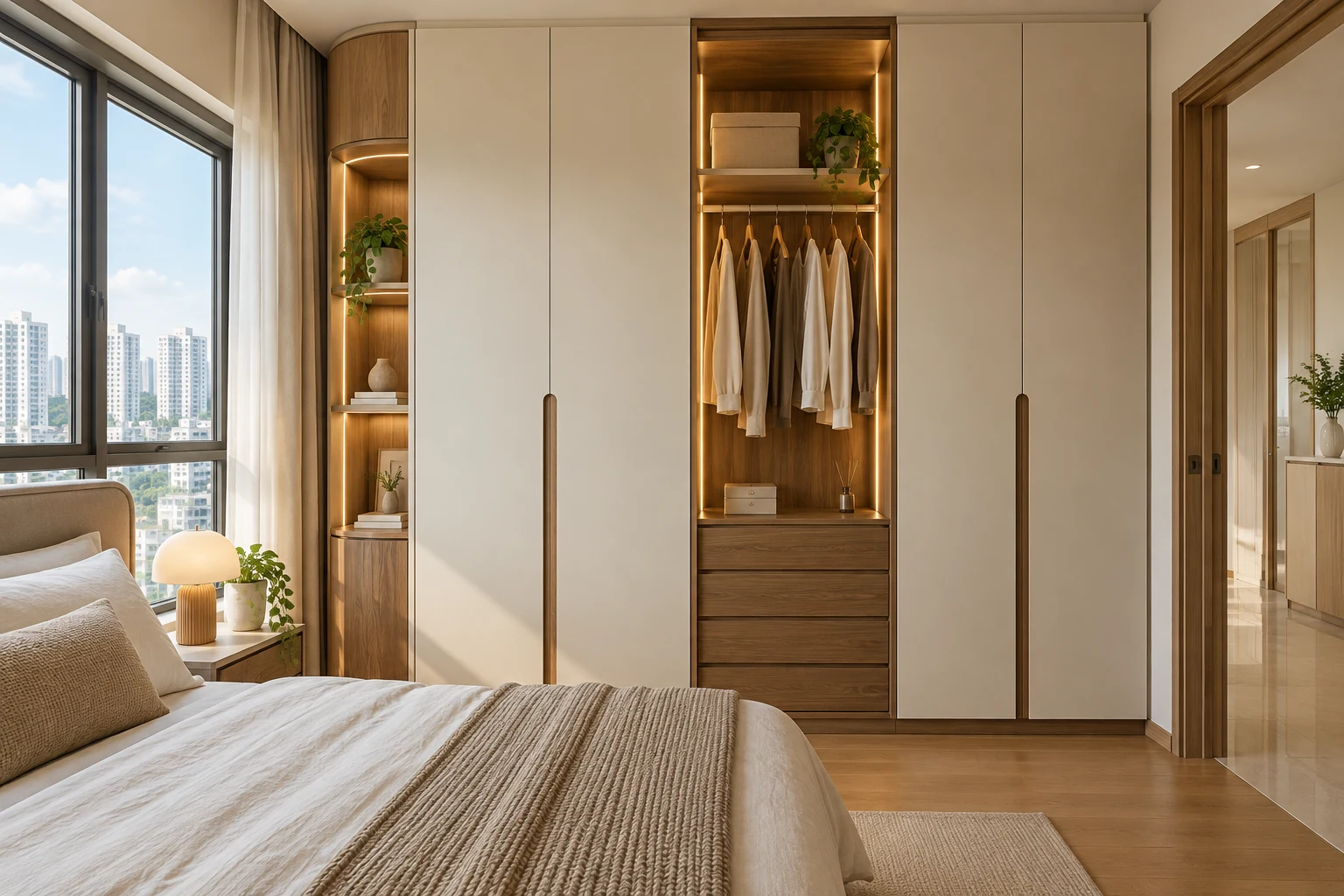
Wardrobe lighting should help someone identify and retrieve clothing without making the cabinet difficult to maintain. Decorative strips alone do not establish useful visibility. Their position, the contents, the door movement and the room’s general lighting affect the result.
Plan the lighting before the wardrobe is fabricated. The cabinet maker, lighting supplier and appointed electrical professional need a coordinated arrangement for equipment, wiring and accessible maintenance.
1. Define the visibility problem
Review where the room’s existing light is blocked when someone stands at the wardrobe. Check hanging and folded storage separately. A bright bedroom may still have shaded compartments, while an open display may need only restrained additional light. Describe the task before specifying a strip in every shelf.
2. Position light around the contents
Ask for a drawing that shows the proposed source relative to garments, rails and shelves. A light behind hanging clothes can be visually dramatic yet contribute little to finding them. Test a representative compartment where practical. Judge visibility with realistic contents rather than an empty display cabinet.
3. Check glare and reflections
Review the source from the standing position and from the bed. Mirrors and glossy finishes can expose a bright line that looks unobtrusive in a render. Discuss shielding, diffusion and positioning with the supplier. The objective is useful illumination without an uncomfortable direct view of the source.
4. Choose controls that match the doors
A door-operated sensor, dedicated switch and other controls create different behaviours. Test how the selected system responds when panels overlap or several doors are open. Confirm the intended off state and user access. Do not assume a sensor described as automatic will behave correctly in every wardrobe configuration.
5. Coordinate the electrical design
Give the appointed electrical professional the actual equipment specifications and proposed locations. Confirm responsibilities for supply, connections and testing. Do not hide a connection or power supply in an inaccessible sealed compartment merely to preserve a clean appearance. Follow the selected products’ instructions and applicable requirements for the installation.
6. Keep replacement access practical
Ask how light sources, controls and power supplies can be reached and replaced. Review whether removing a component requires dismantling substantial carpentry. Retain model details and access drawings at handover. Long-term usefulness depends on serviceable equipment as well as a well-finished cabinet on installation day.
7. Approve samples and scope together
Compare actual colour appearance with the wardrobe finish and the room lighting. Record the chosen equipment and controls in the quotation rather than accepting an unspecified lighting allowance. Review the completed operation before handover, including each door position and the user’s view. Resolve changes before finalising the cabinet drawings.
Compare the options
| Option | Useful when | Resolve first |
|---|---|---|
| Room lighting only | Compartments remain sufficiently visible | Shadows during actual use |
| Internal task light | Contents block the room light | Placement, glare and servicing |
| Display lighting | Selected objects are intentionally shown | Separate practical and decorative goals |
A practical planning example
An illustrative owner chooses a mirrored wardrobe with internal lighting. Testing reveals that the proposed strip is reflected towards the bed. Revising its position and shielding can preserve visibility without the unwanted bright reflection. This is a design exercise, not a completed Crown Interior Design project or a certified lighting result.
Frequently asked questions
Does every compartment need lighting?
No. Start with the visibility problem and test the proposed arrangement.
Can the driver be concealed?
It can be visually discreet while remaining accessible, subject to the product instructions and electrical design.
Can lighting be added later?
Have the existing cabinet, wiring route and service access assessed before assuming a simple retrofit.
Related planning: Built-In Wardrobe Singapore: Cost, Design & Quote Guide · 8 HDB Lighting Design Decisions Before Renovation.
References
Explore the related decision in Sliding vs Hinged Wardrobes: 7 Singapore Buying Checks.
Plan your project with Crown Interior Design
Send your floor plan, photographs, intended use and budget priorities. Explore Crown Interior Design’s services and residential projects, then request a tailored quotation. Confirm the scope and any specialist involvement for your actual premises.