
Interior / October 20, 2026
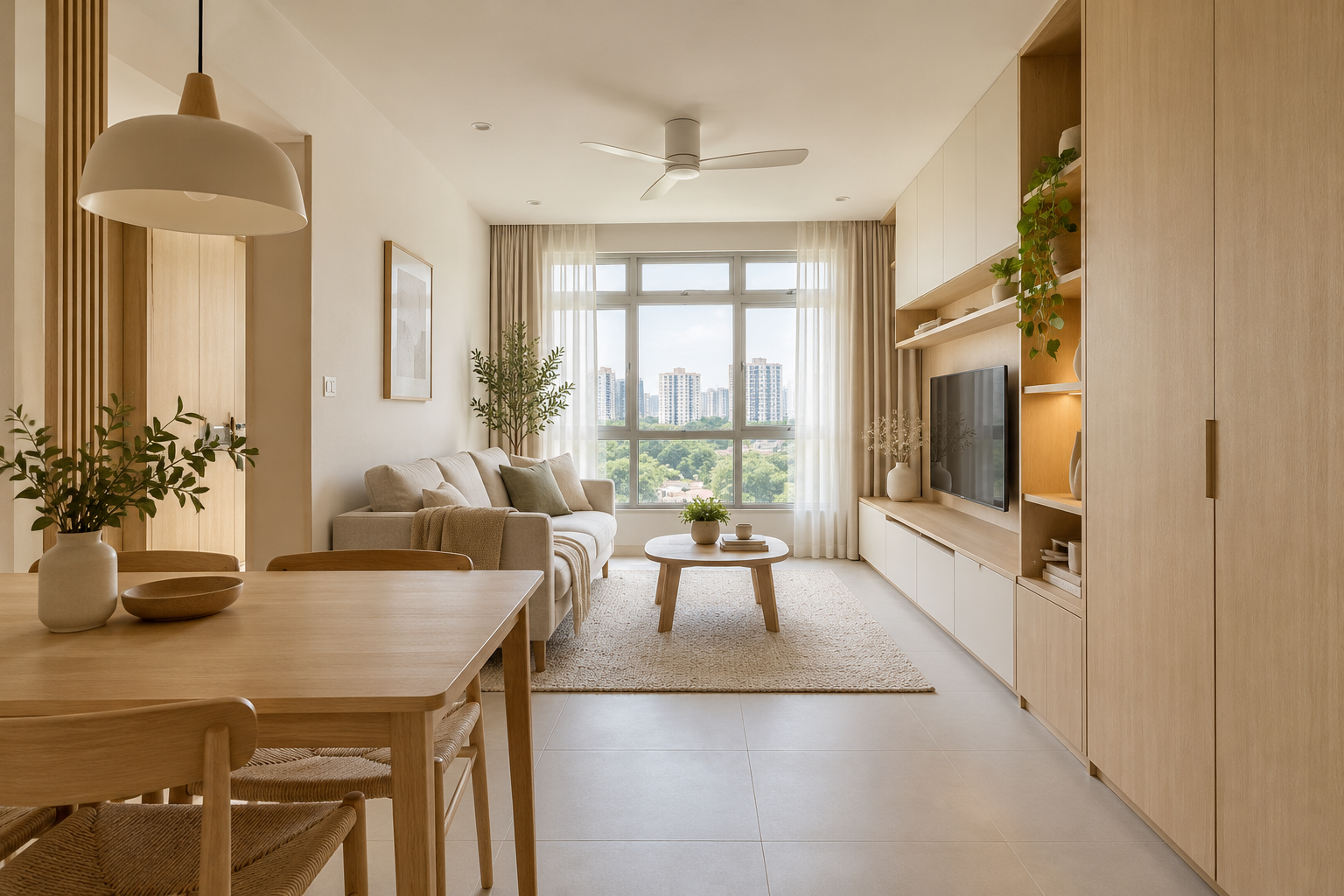
Muji-inspired interior design appeals to homeowners who want an uncomplicated home with pale wood, quiet colours and everyday objects stored sensibly. The useful starting point is the routine behind the look: where bags land, how laundry moves and what needs to stay within reach. A room does not become easier to live in simply because every surface is beige.
Interior / October 20, 2026
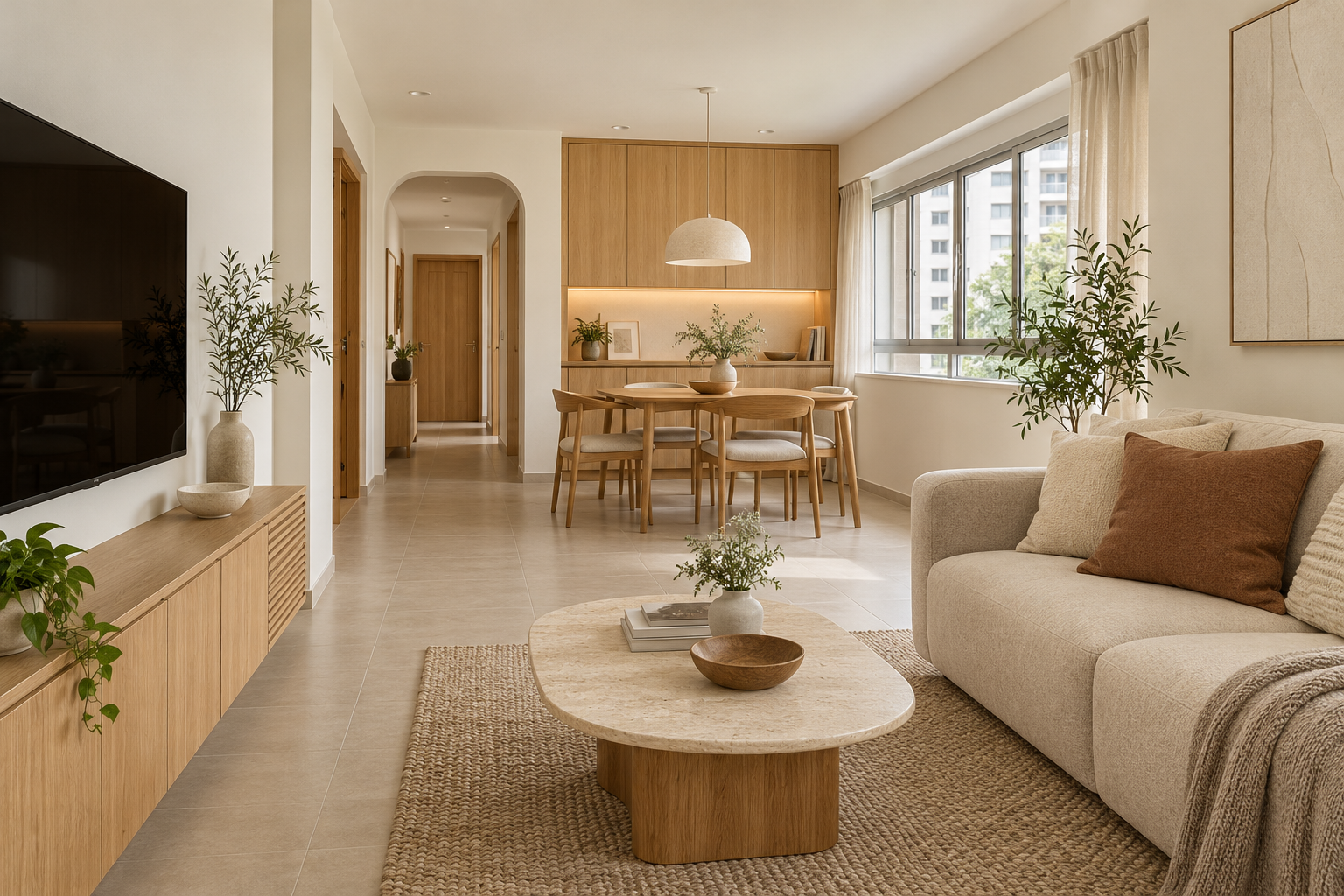
Contemporary interior design should respond to the way you live now, with a coherent relationship between space, furniture, materials and light. It is a useful direction for a Singapore home when you like clean forms but do not want a rigid theme. The challenge is turning an appealing collection of references into decisions that work together.
Interior / October 20, 2026
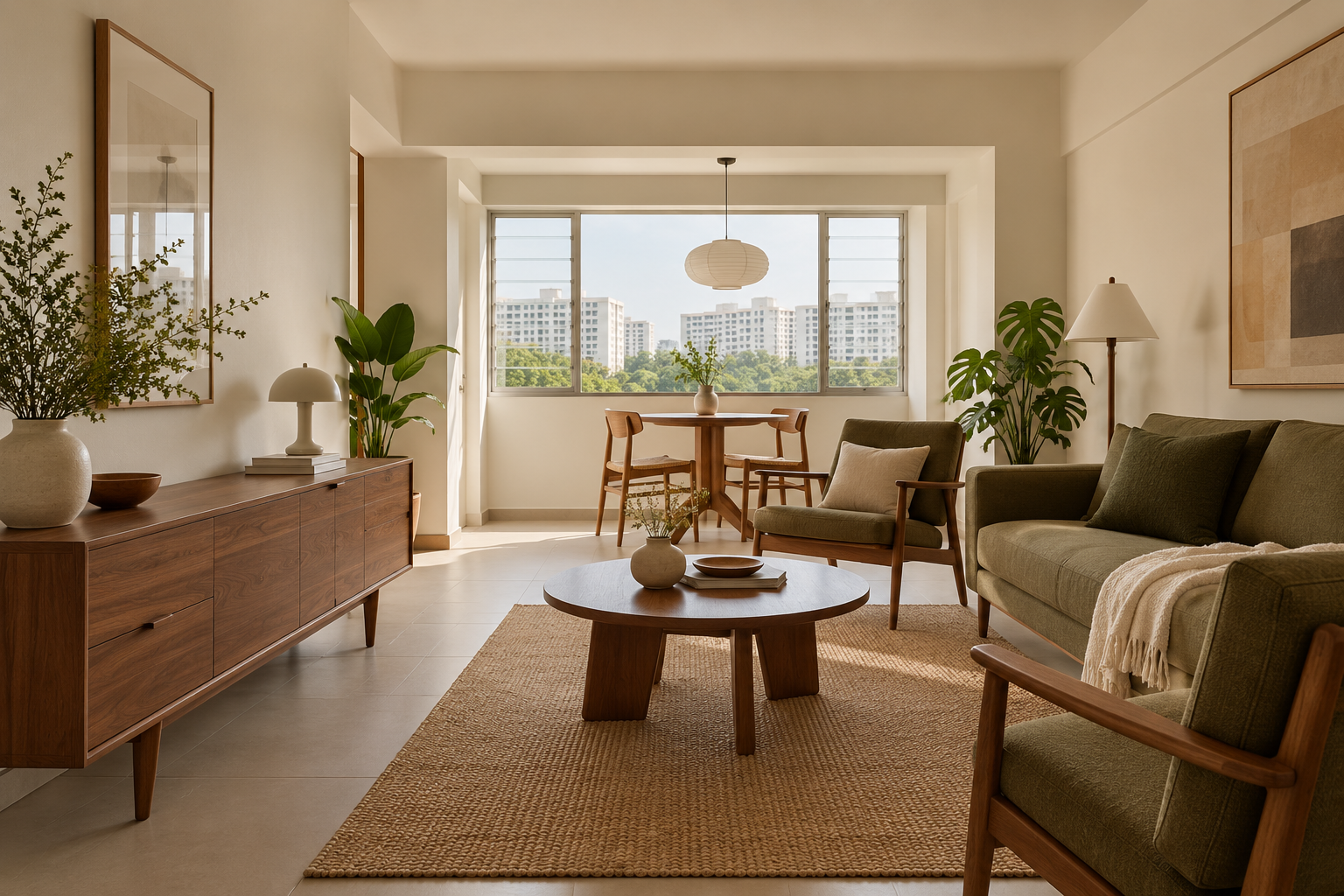
Mid-century modern interior design can bring character to a Singapore home through warm wood, expressive furniture and a restrained use of colour. The most useful interpretation is not a room filled with retro objects. It is a layout that gives a few distinctive pieces enough space to work while supporting everyday storage, meals and movement.

Interior / October 20, 2026
Balcony design in Singapore should begin with how the outdoor space is actually used. A small balcony might be a comfortable place for coffee, a planting area or a quieter extension of the living room. Trying to fit a dining set, storage and a garden into the same narrow strip can leave none of those functions working well.
Interior / October 20, 2026
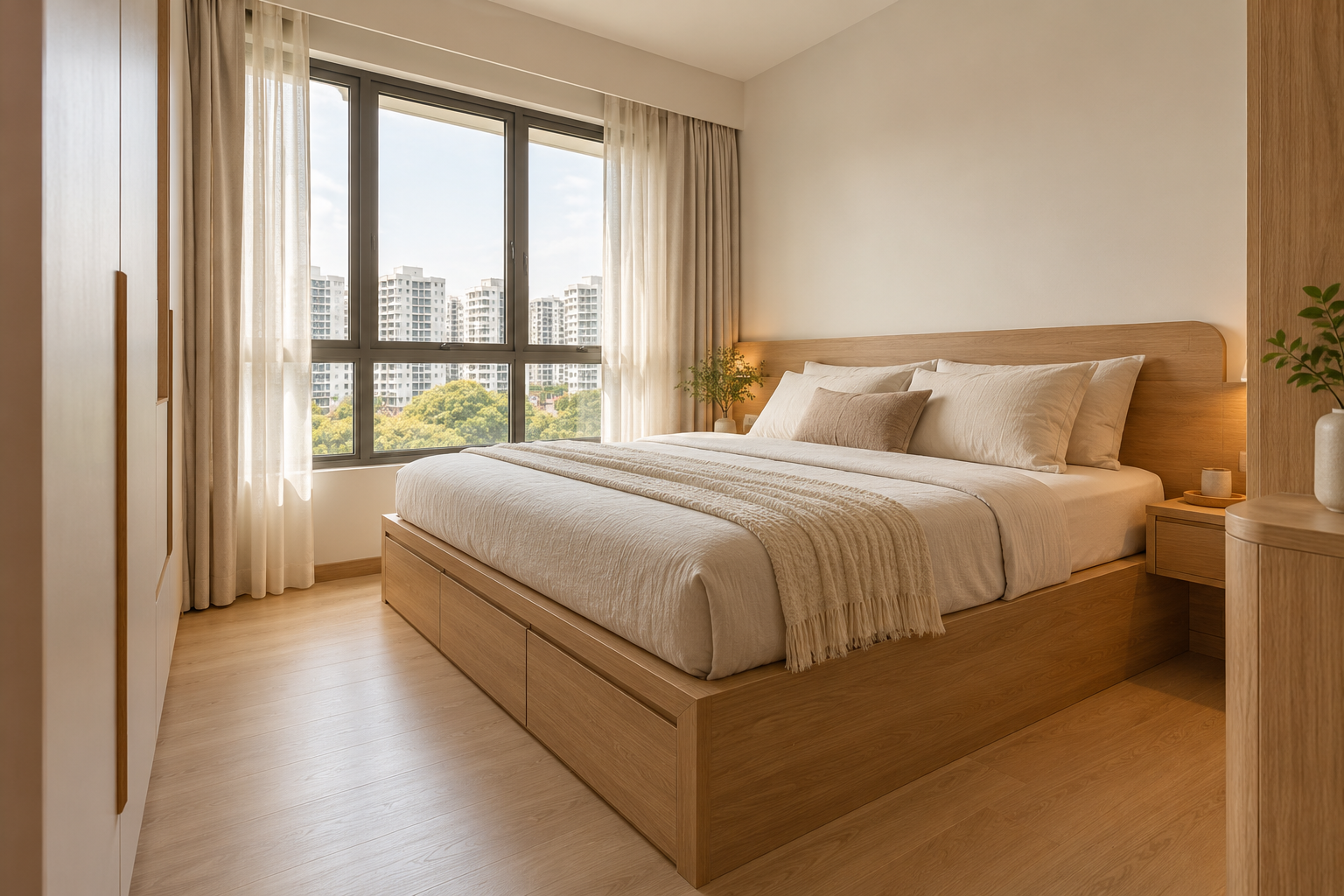
A custom platform bed can combine a sleeping area with storage, but it also fixes a large part of the bedroom in place. The decision deserves more attention than the appearance of a low timber frame. In a compact Singapore home, the platform, mattress, drawers and wardrobe all compete for the same usable floor area.
Interior / October 20, 2026
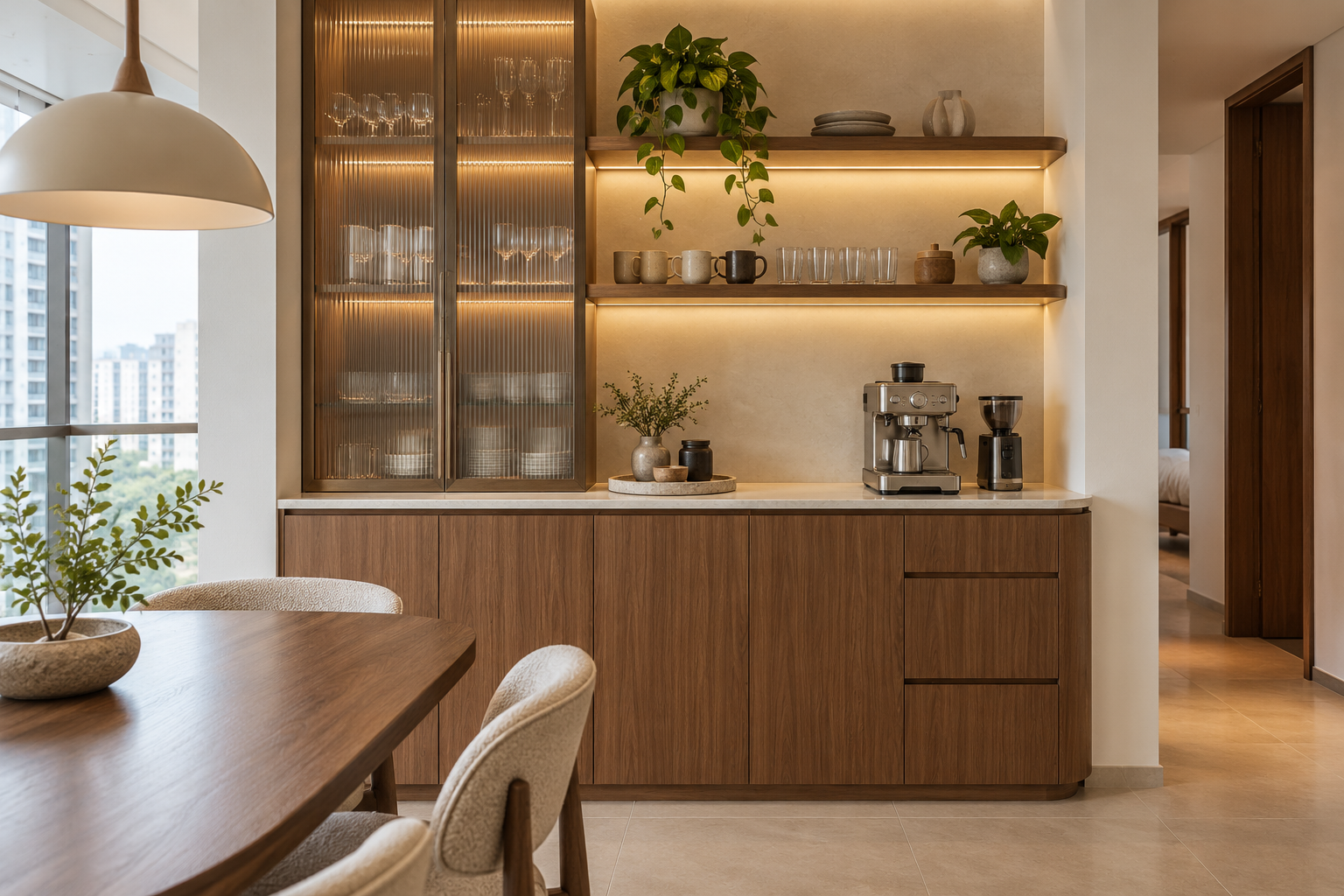
Home bar design in Singapore often works best as a compact beverage station rather than a miniature commercial bar. It might organise coffee equipment, glassware and drinks beside the dining area. The right design depends on what you prepare, how often you host and whether a new cabinet would genuinely free useful kitchen space.