
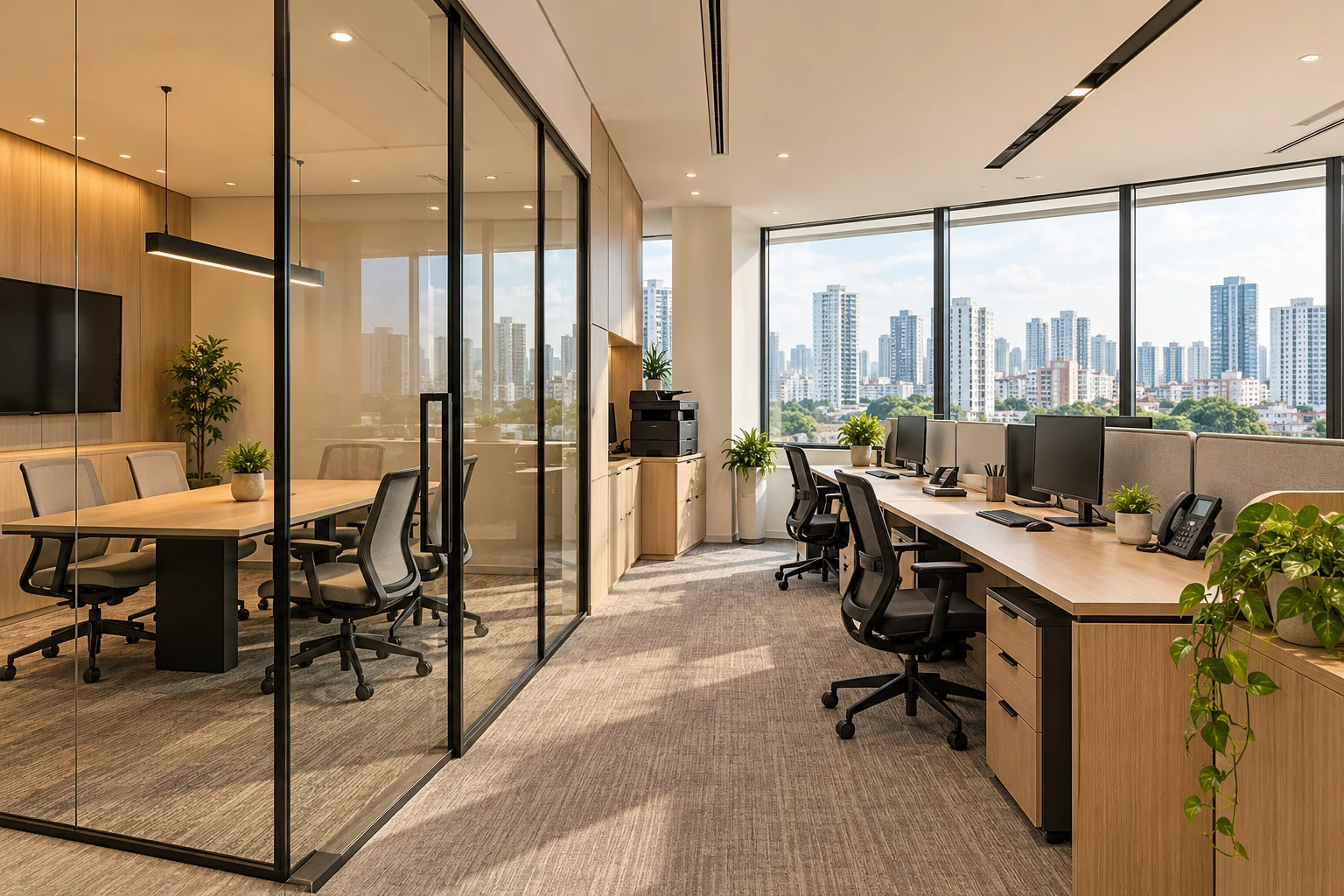
Office relocation fit-out involves two premises and several deadlines. The new office needs to be ready for the business, while the existing unit may have separate handback obligations. Treating these as one vague completion date can conceal important dependencies.
For a Singapore move, connect the renovation programme with the lease, furniture, equipment and operational setup. A finished-looking office is not automatically a workplace ready to receive the team.
1. Map both premises and decision dates
Record access to the new unit, relevant lease dates and the old unit’s agreed exit requirements. Have the appropriate parties clarify contractual obligations rather than relying on assumptions. Identify decisions that depend on surveys or landlord information. Keep the business’s target move date separate from a confirmed construction programme until the necessary scope and dependencies are established.
2. Audit what moves and what is replaced
List furniture, storage, IT equipment and other assets with actual dimensions and condition. Check what is suitable for the new layout before paying to move it. Identify items belonging to the landlord or subject to existing obligations. A retention decision should include installation and compatibility, not simply whether an item looks reusable in a photograph.
3. Define new-unit fit-out interfaces
Coordinate the layout with actual equipment and relevant specialist requirements. Clarify what the landlord provides and what the business must commission. Keep professional input, approvals, services and owner purchases visible in the scope. A relocation quote should not imply that every operational system is included merely because desks and a pantry appear in the design.
4. Assign move and commissioning responsibilities
Identify who handles packing, furniture installation, communications and testing of the actual systems. Confirm access, delivery and protection arrangements with the relevant premises parties. Build a readiness checklist for the functions the business needs on its first day. Do not treat equipment delivery as proof that it has been connected, tested and accepted by the responsible supplier.
5. Coordinate old-unit exit work
Review the actual handback requirements and have the premises assessed where reinstatement or other work is needed. Keep this scope distinct from the new office renovation. Sequence the exit after the business has a workable transition plan. Avoid assuming that matching a previous tenant’s removal scope will satisfy a different lease or landlord.
6. Keep contingencies and handovers explicit
Identify what happens if a critical dependency moves. A staged move or temporary arrangement may be useful, but should be planned rather than improvised. Record completion and outstanding items separately for the fit-out, systems and old-unit exit. Keep the responsible parties and next actions visible so a delay in one stream does not become an unexplained failure of the whole move.
Compare the options
| Option | Useful when | Resolve first |
|---|---|---|
| Single coordinated move | The premises and systems are ready together | Readiness evidence and access |
| Staged transition | Operations need a controlled overlap | Temporary costs and responsibilities |
| Retention-led fit-out | Existing assets suit the new office | Dimensions, condition and compatibility |
A practical planning example
An illustrative business receives furniture before its network supplier can complete the setup. The office may look ready while the team cannot perform essential work. A separate operational readiness check can expose that dependency before the move. This is a planning exercise, not a completed Crown Interior Design relocation or a guaranteed programme.
Frequently asked questions
Is fit-out completion the move-in date?
Not necessarily. Systems, equipment and relevant premises checks may have their own readiness milestones.
Can existing furniture always be reused?
Assess its dimensions, condition and suitability for the new plan before deciding.
Should old-unit exit be a separate quote?
Keep its scope and obligations identifiable, whether managed together or through a separate appointment.
Related planning: Office Renovation Singapore: Costs, Design Ideas, Timeline & Complete Guide · Office Reinstatement: 7 Singapore Scope Checks · Small Office Renovation: 6 Singapore SME Layout Checks.
For a separate reference, use RenoLinkUp’s furniture delivery and renovation checklist.
References
For actual workplace design context, view Crown Interior Design’s Wanhua Chemical office project. Use the documented project as a reference for discussion alongside your own operational brief.
Explore the related decision in Occupied Office Renovation: 6 Singapore Planning Checks.
Plan your project with Crown Interior Design
Send your floor plan, photographs, intended use and budget priorities. Explore Crown Interior Design’s services and commercial projects, then request a tailored quotation. Confirm the scope and any specialist involvement for your actual premises.