
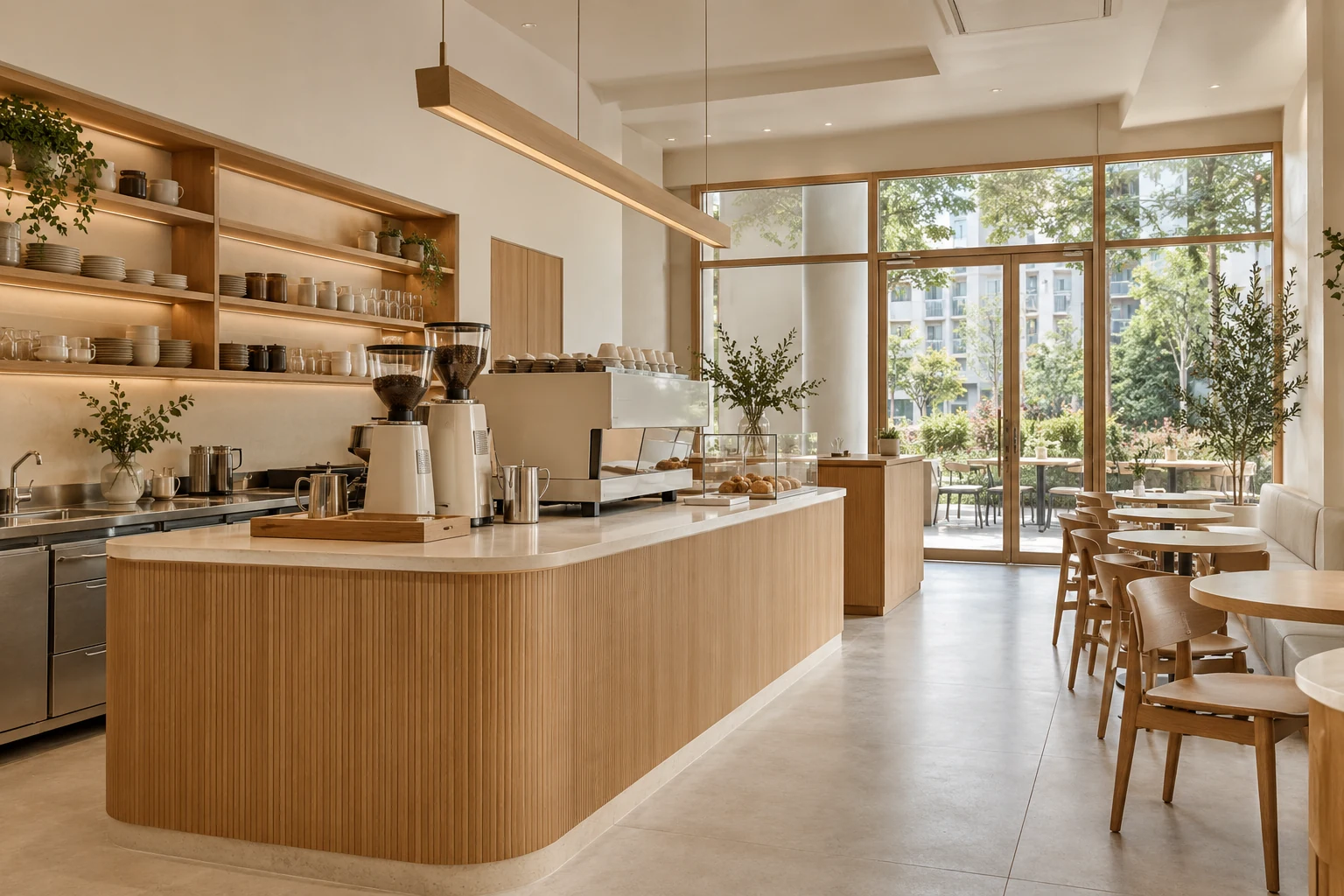
A cafe budget can become unclear when equipment purchase and renovation allowances are mixed together. An espresso machine, refrigerator or display unit also needs space, access and appropriate installation provisions. Buying the equipment does not settle those interfaces.
These eight decisions help define an equipment-led fit-out scope. They do not provide a startup investment forecast, size services or establish that premises are suitable for a food business.
1. Define the menu and service sequence
List the drinks, food preparation and service pattern the cafe actually intends to offer. Include takeaway collection and peak-time tasks. This brief determines which equipment and work areas need to be coordinated.
Avoid copying a larger cafe’s equipment list simply because it looks complete. An unnecessary appliance can consume counter space and budget while the essential preparation or cleaning task remains poorly supported.
2. Create a model-specific equipment schedule
Record the proposed make, model, dimensions and relevant supplier installation information. Identify what is owned, selected or undecided. Keep this schedule current as the concept develops.
Ask the equipment supplier which requirements must be passed to the fit-out team. A generic label such as coffee machine is not enough to finalise a counter opening, work surface or service provision.
3. Separate supply from installation
Identify who purchases, delivers, installs and commissions each item. Clarify which connections and supporting work sit with the equipment supplier and which sit with the renovation appointment. Do not assume the parties have included the same interface.
Where a supplier offers a bundle, request its actual boundaries. The useful comparison is the installed operational arrangement, not equipment purchase price alone.
4. Have service requirements assessed
Ask the appropriate specialists to review relevant electrical, water, drainage, ventilation and other needs for the selected operation and equipment. Existing services should not be treated as adequate without the relevant assessment.
Record confirmed findings and outstanding investigations before fabrication. Technical capacity and applicable requirements are not aesthetic decisions, and a finished counter cannot resolve an unsuitable service assumption.
5. Test the counter with staff movement
Draw equipment, preparation, payment and collection positions together. Check the everyday sequence with doors and access panels considered. A compact counter can become awkward if the operator must cross another task repeatedly.
Discuss the workflow with the actual operator and equipment supplier. Keep operational priorities ahead of decorative frontage, then develop the visual details around a workable arrangement.
6. Include cleaning and replenishment support
Plan where consumables, stock, cleaning items and staff supplies will be kept. Identify how the equipment is accessed for routine maintenance. A cafe’s visible counter is only one part of its working system.
Have the relevant food-premises requirements reviewed for the proposed operation. Avoid assuming that attractive materials or an existing food tenant’s layout establish suitability for the new business.
7. Compare new and retained equipment realistically
If used or retained equipment is considered, obtain appropriate condition and suitability checks. Include transport, servicing, adaptation and installation where relevant. A lower purchase amount may not represent the complete installed commitment.
Do not promise a standard saving percentage. Compare actual assessed options and note the information still needed. If an item changes, update the layout, service brief and quotation together.
8. Keep opening dependencies visible
Coordinate equipment lead times, site readiness, specialist installation and relevant licensing steps with the fit-out programme. Avoid advertising an opening date based only on cabinet fabrication or the arrival of one main appliance.
At handover, collect relevant commissioning information, manuals, care guidance and follow-up contacts. Distinguish outstanding fit-out tasks from the operator’s own readiness steps so responsibilities remain clear.
Compare the options
| Option | Useful when | Resolve first |
|---|---|---|
| Owner-purchased equipment | The operator selects and buys directly | Connection and commissioning boundaries |
| Supplier equipment package | A coordinated equipment offer suits the brief | Actual included installation work |
| Assessed retained equipment | Condition and operation support retention | Servicing, adaptation and full installed cost |
A practical planning example
Illustrative example: a cafe owner compares two espresso machines and initially looks only at purchase prices. The team then checks counter dimensions, supplier requirements and the work needed for each option. The owner reviews the full installed scopes before selecting a model. This is a planning example, not an equipment recommendation, service-capacity calculation or cafe investment forecast.
Frequently asked questions
Does buying equipment settle the renovation scope?
No. Space, connections, installation, commissioning and maintenance access still need coordination.
Can I keep an existing cafe counter?
Potentially after assessing its condition and compatibility with the intended workflow and equipment.
Should equipment be selected early?
Confirm models and requirements before the affected counters and service work are finalised.
Related planning: Cafe Interior Design Singapore: Layout & Fit-Out Guide · Cafe Counter Design: 6 Singapore Workflow Decisions · Cafe Pickup Counters: 7 Singapore Fit-Out Checks · Restaurant Takeover Fit-Out: 8 Singapore Checks.
References
- Skai Atelier: cafe budget scope context
- SFA: food retail licensing requirements
- EMA: licensed electrical workers
For firm selection, use the award-winning office interior design evaluation guide to check the recognised work, credited recipient and relevance to your own appointment.
Explore the related decision in Restaurant Fit-Out Quotes: 8 Singapore Scope Checks.
Plan your project with Crown Interior Design
Send your floor plan, photographs, intended use and budget priorities. Explore Crown Interior Design’s services and commercial projects, then request a tailored quotation. Confirm the scope and any specialist involvement for your actual premises.
For wider planning, explore interior design in Singapore with Crown Interior Design.