
Interior / October 20, 2026
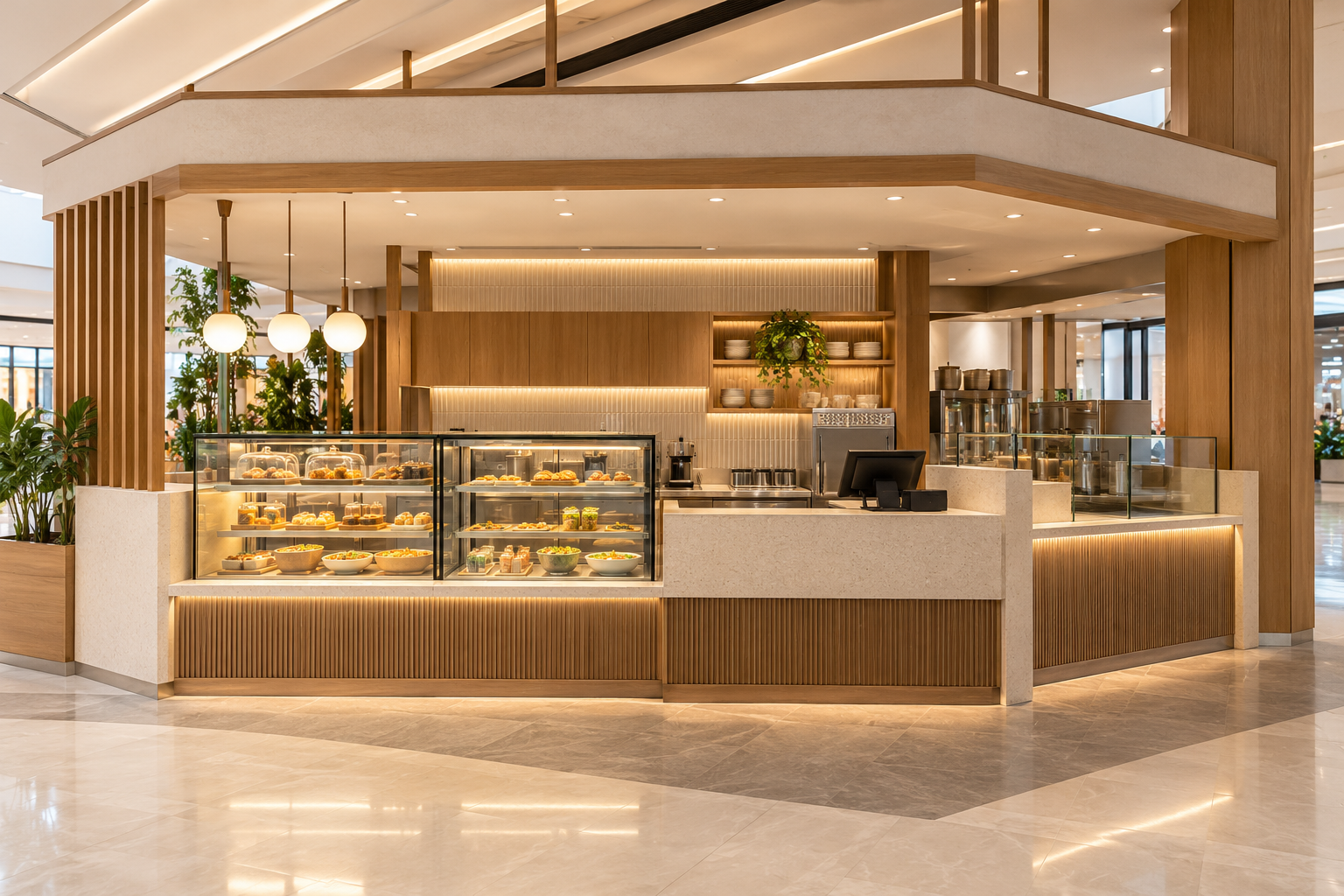
Takeaway kiosk design is an exercise in fitting a complete operation into a small footprint. Customers need to order and collect clearly while staff prepare, restock and clean within a restricted area. In a Singapore mall or standalone unit, those movements must also respect the actual premises and landlord requirements.

Interior / October 20, 2026
Jewellery shop interior design should make close viewing and personal consultation comfortable while supporting the operator’s stock-handling and security procedures. A luxurious finish does not by itself create a practical selling environment. Case dimensions, lighting, seating and staff reach deserve attention before decorative features.

Interior / October 20, 2026
Clothing boutique interior design should help customers browse, try on and pay without staff constantly moving stock out of the way. In a compact Singapore unit, rail density, fitting-room access and back-stock storage can matter more than a large decorative feature.
Interior / October 20, 2026
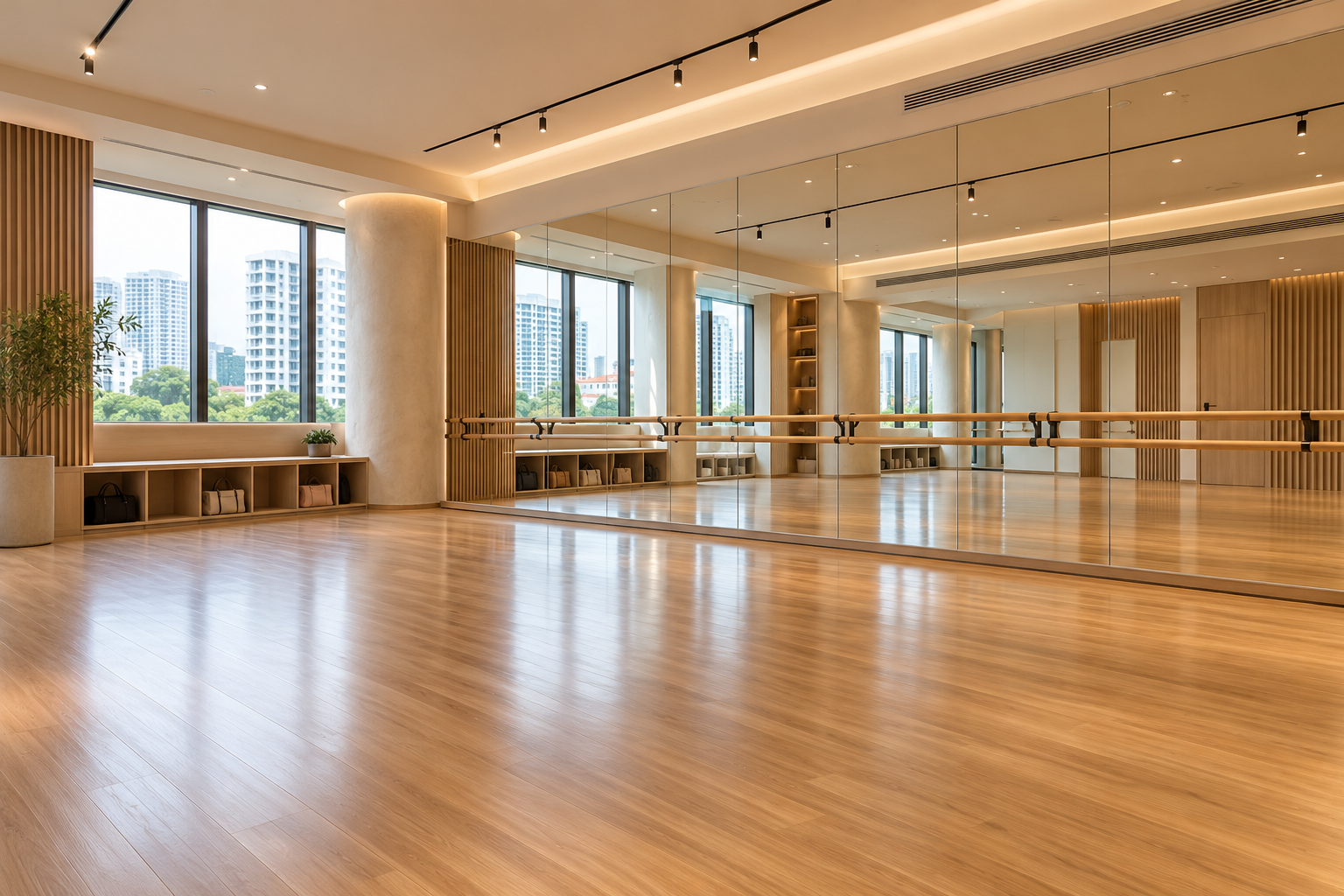
Dance studio renovation needs a performance and teaching brief before the mirror wall is designed. Ballet, contemporary, ballroom and other activities can place different demands on movement, flooring, sound and equipment. The operator should define the actual programme and involve appropriate specialists in decisions that affect performance and installation.

Interior / October 20, 2026
Yoga studio interior design should support the teaching format, not just a tranquil photograph. A mat-based class, a practice using substantial props and a studio offering several formats can require different layouts. In Singapore commercial premises, the usable class area also has to coexist with arrival, storage, services and the applicable building requirements.
Interior / October 20, 2026
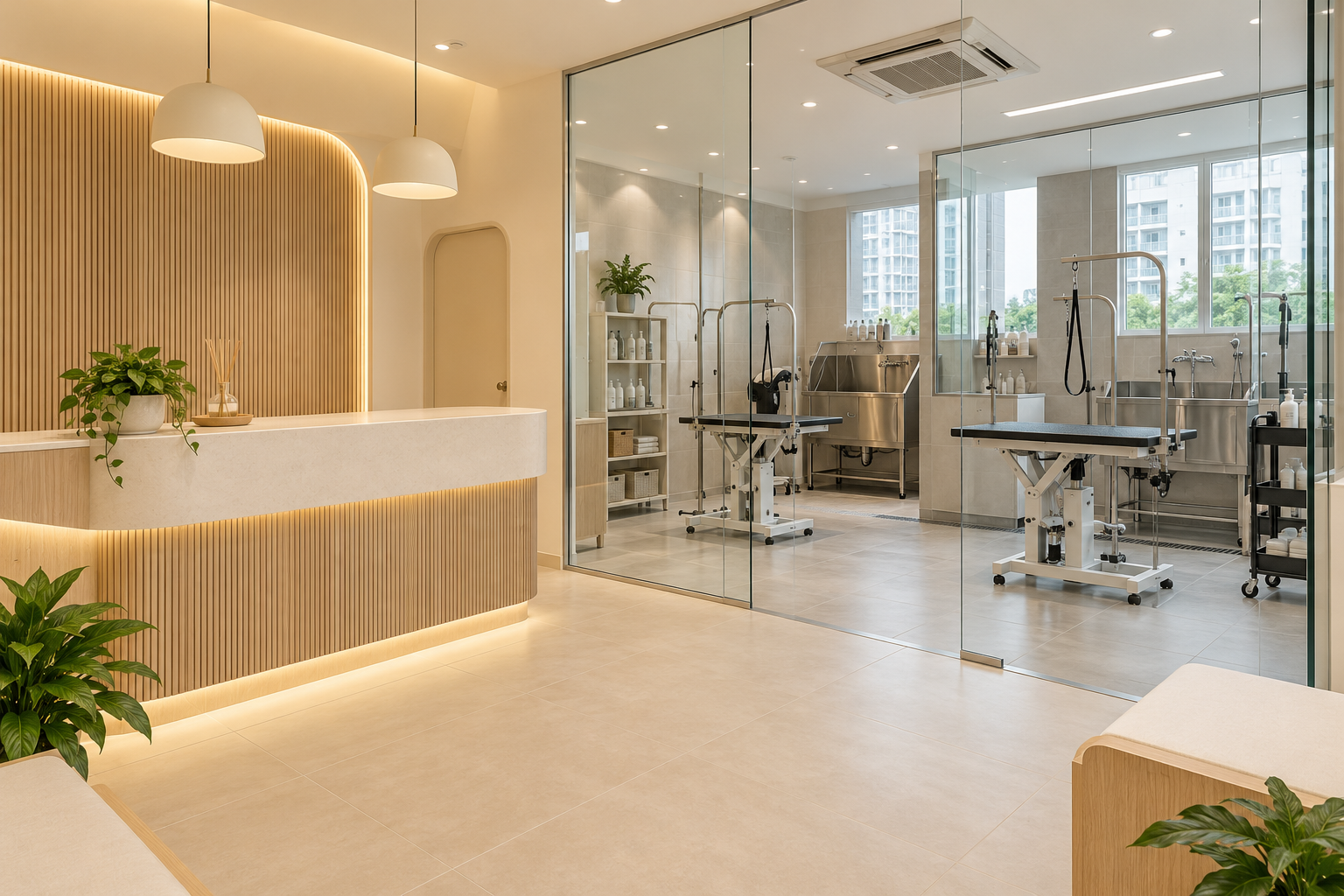
A pet grooming shop needs a clear relationship between arrival, grooming, washing, drying and collection. A charming retail front can attract attention, but it should not leave the working area cramped or difficult to clean. The operator’s handling and welfare routines should shape the interior brief from the start.